Nutrition guide
How Many Fruits and Vegetables Per Day? The 400g Target
How many fruits and vegetables per day should you eat? The World Health Organization says people older than 10 should aim for at least 400 grams per day—roughly five portions. This is a population-level healthy-diet target, not a pass/fail test or individualized prescription.
What counts?
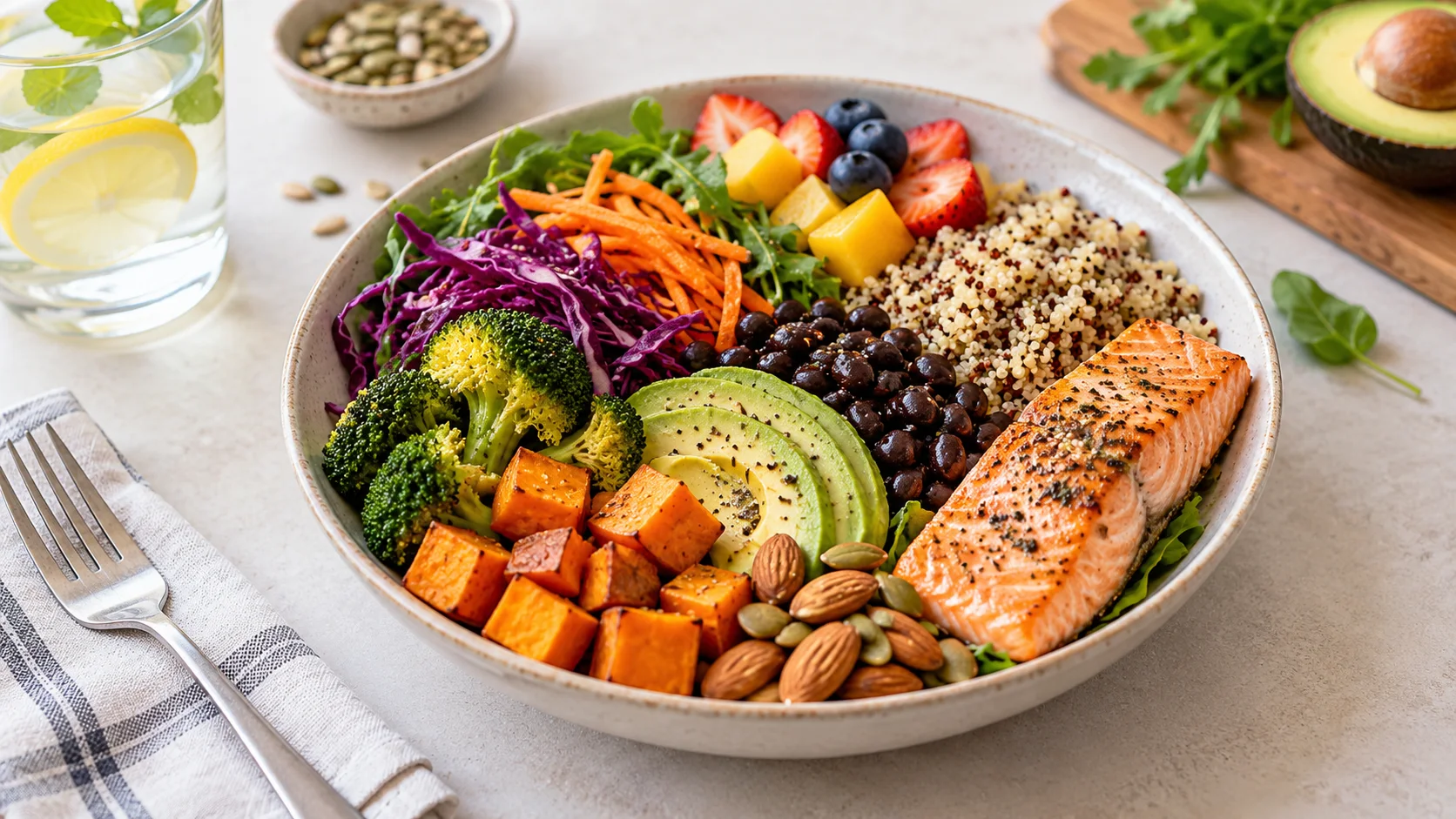
Vegetables, leafy greens, tomatoes, carrots, peppers, beans and fruit can all contribute. Whole fruit is generally more filling than juice because it retains fibre. Frozen and canned options can also be practical; check labels for added sugar or high sodium when relevant.
Make the target easier
- Add fruit to breakfast or a snack.
- Put vegetables into lunch and dinner before choosing extras.
- Keep washed, cut or frozen options available.
- Use beans, lentils and chickpeas in bowls, wraps and salads.
Portion size varies, so focus on a pattern across the day. If your diet is currently low in produce, add one portion at a time. Variety matters because different plants provide different nutrients, fibre and protective compounds. Harvard Health also emphasizes plant foods, legumes, whole grains, nuts and seeds as foundations of a healthy eating pattern.
For diabetes, kidney disease, allergies or other medical needs, food choices may need individualized adjustments. Use the conditions and safety guide and ask a qualified clinician or dietitian where appropriate.
Sources: WHO Healthy diet; Harvard Health.