Evidence-based guide
Nutrition Basics: How to Build a Balanced Eating Pattern
Nutrition advice is often reduced to a list of forbidden foods. A more useful approach is to build a pattern that supplies enough energy and nutrients, includes variety, and fits your culture, budget, schedule and health context.
The WHO’s four principles
The World Health Organization’s healthy-diet fact sheet describes four useful principles: adequacy, balance, moderation and diversity. Adequacy means meeting nutrient and energy needs. Balance means matching energy intake with needs and including appropriate proportions of carbohydrate, protein and fat. Moderation means limiting excess unhealthy fats, free sugars and sodium. Diversity means eating a wide range of foods rather than relying on a narrow menu.
WHO also states that people older than 10 should aim for at least 400 grams of fruit and vegetables per day and at least 25 grams of naturally occurring dietary fibre daily. These are population-level targets, not a personalized prescription.
A practical healthy plate
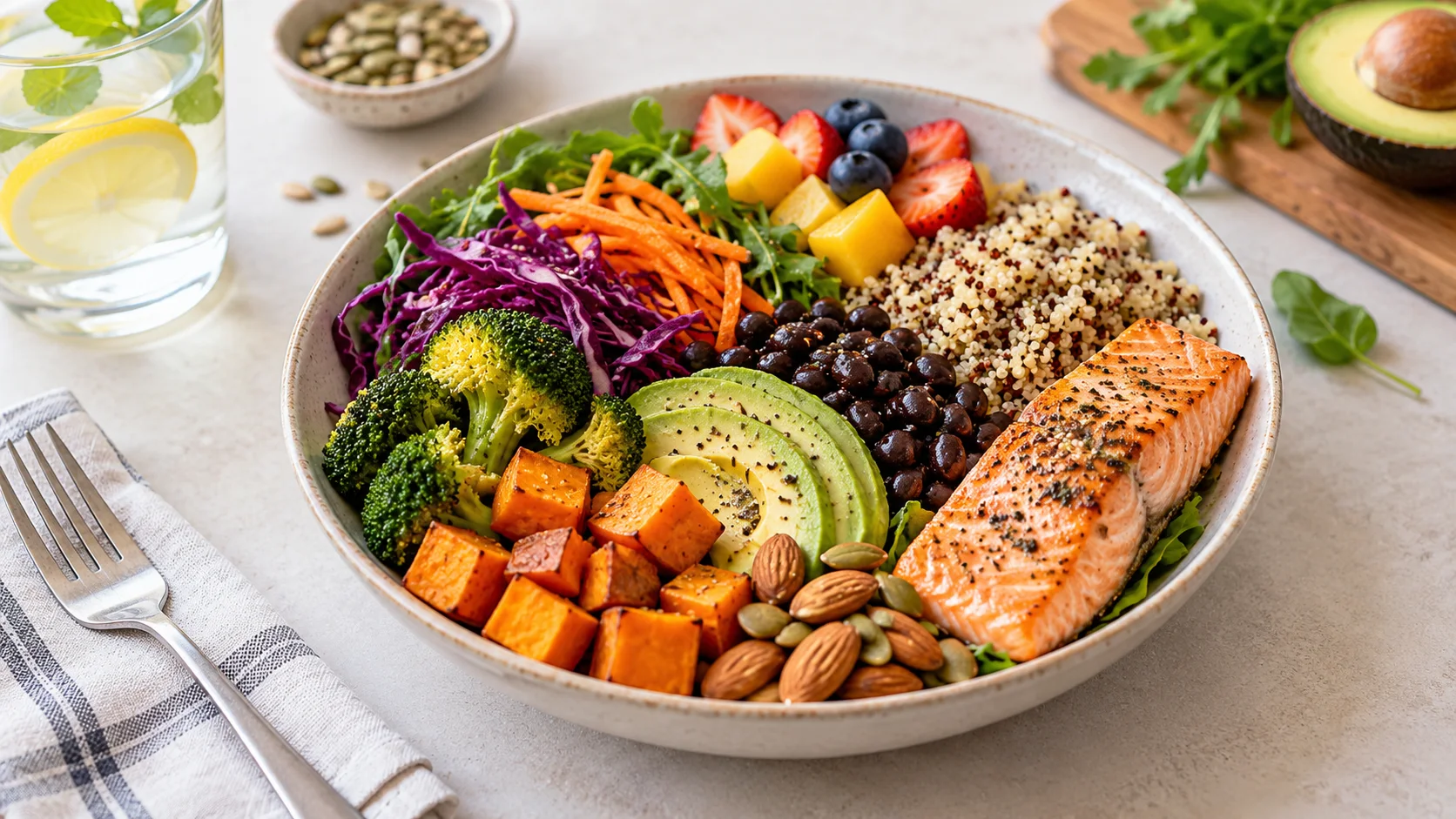
The Harvard Healthy Eating guidance emphasizes plants, adequate protein, minimally processed foods, and balance. At a practical level, start with vegetables or fruit, add a protein source such as beans, lentils, tofu, eggs, yogurt, fish or poultry, then choose an energy food such as oats, rice, potatoes, quinoa or whole-grain bread. Add flavour and fats in measured amounts through nuts, seeds, avocado, olive oil, herbs or dressings.
Use the pattern, not perfection
A healthy plan should survive real life. Use frozen vegetables when fresh produce is unavailable, repeat meals that save time, and keep a quick fallback meal ready. If you have diabetes, hypertension, kidney disease, celiac disease, food allergies, are pregnant, or have another medical condition, use our conditions and safety guide and seek individualized advice from a qualified professional.
Sources: WHO Healthy diet; Harvard Health principles; American Heart Association healthy eating.