Articles are currently available in English.
Nutrition
Cooked Rice for Tomorrow? Decide What to Chill or Freeze
By Sweat & Snack Editorial Team · 2026-10-19
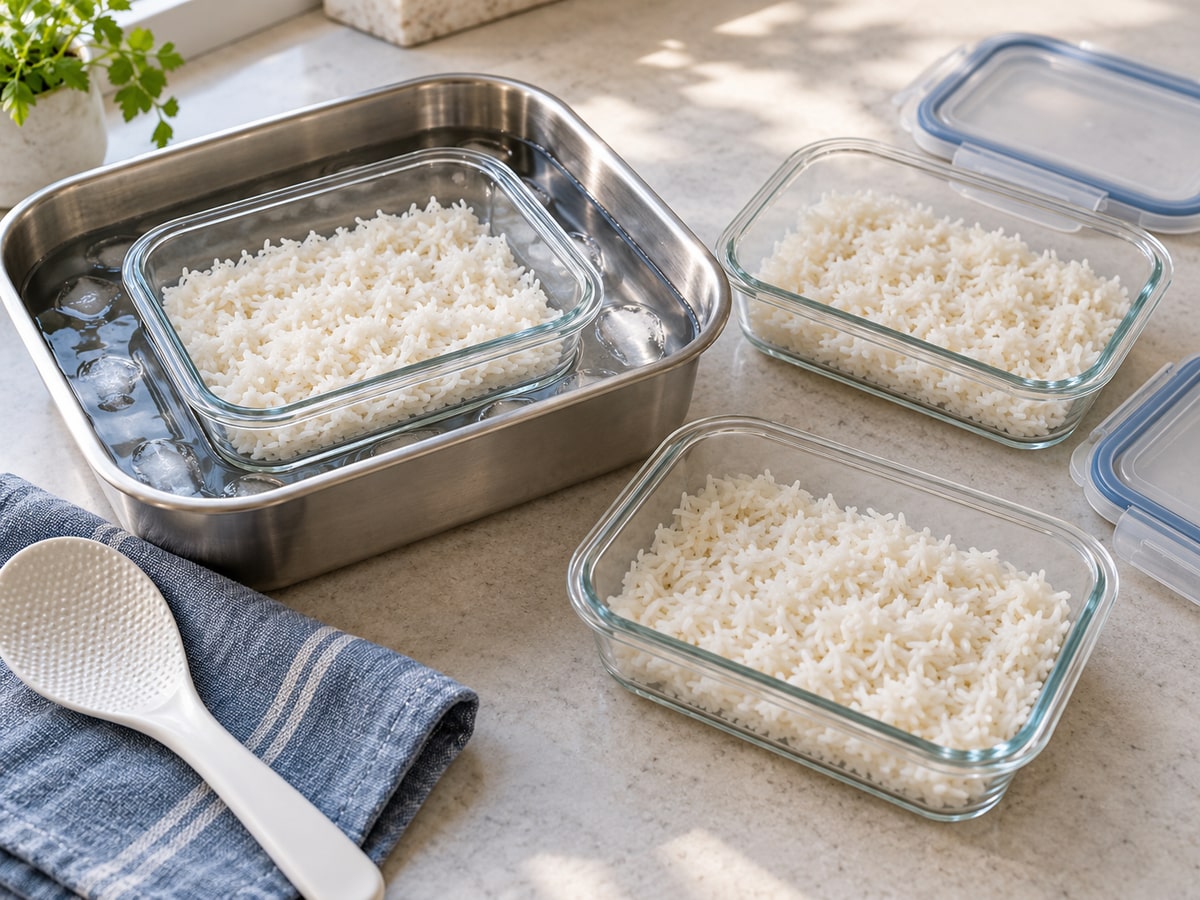
Choose the storage route before cooking the rice. Keep only the portion you will use within the rice-specific refrigerated window; plan to freeze later portions promptly. A large pot in the fridge is not automatically a plan for several days of lunches.
This guide uses the Food Standards Agency's household advice for England, Northern Ireland and Wales, checked on 19 October 2026. Readers elsewhere should follow their local food-safety authority and product instructions. The portion-planning examples are suggestions, not a tested recipe or a personal nutrition prescription.
Give each portion a destination
Before opening the packet, consider how many meals you actually want rice for. You might need one serving now, one for tomorrow's lunch and one for a later dinner. Those are three different destinations, rather than three boxes that all need to stay in the fridge.
A simple planning note
You could write: “Eat now; chill for tomorrow; freeze for later.” Put the containers and labels beside that note before cooking. If tomorrow's meal is uncertain, plan a smaller batch or a freezer portion from the outset. There is no need to cook extra simply to fill every container you own.
Choose the amount you usually use in that meal. Container size does not establish an appropriate serving, and this article does not assign a universal rice weight. For the broader planning process, see our flexible meal-prep system.
Use the rice-specific cooling rule
The FSA's rice guidance explains that spores of Bacillus cereus can survive cooking. Storage before reheating matters. It advises cooling leftover rice quickly, ideally within an hour, dividing it into smaller portions and avoiding cooling it in the cooker or pan.
For freezing, that guidance describes cooling small containers in cold water, then covering and freezing, with rice reaching the freezer within an hour of cooking. Keep the cooling water outside the food container. Plan the cooling step as part of cooking rather than an unrelated job to remember later.
Prepare the space first
A useful practical check is whether your containers, lids and cold-storage space are ready before the rice finishes. If your intended batch exceeds the space you can manage, reduce the batch. Photographing or labelling a tidy row of boxes is optional; handling the food promptly is the actual priority.
Separate tomorrow from later
Under that same FSA rice advice, refrigerated rice should be consumed within 24 hours and reheated no more than once. Rice can be eaten cold when cooled quickly and refrigerated correctly. Do not substitute a generic leftovers timetable for the rice-specific advice.
For the chilled portion, a label could include “plain rice”, the cooking date and time, and its intended meal. For the frozen portion, record what it is, when it was cooked and frozen, and the amount you normally use. These are suggested labels, not evidence that a poorly handled batch has become safe.
The FSA's chilling and freezing guidance recommends a fridge between 0 and 5°C, a freezer around -18°C, and suitable airtight containers or freezer packaging. Check appliance and container instructions. Keep rice separate from toppings if that makes your next meal easier to assemble.
Plan the return journey from the freezer
The FSA rice guidance advises defrosting rice in the fridge, then reheating until steaming hot throughout and eating immediately. Move only the amount needed for that meal. Do not turn the whole frozen batch into the portion you have to use next.
Follow the reheating instructions
The FSA's cooking guidance explains that microwave heating can leave cold areas. Follow the appliance instructions, including stirring and standing where specified, and check the food throughout. A hot container edge does not establish that the centre is hot.
This workflow starts with rice cooked at home whose handling you know. It is not a plan for repeatedly reheating takeaway rice or rescuing a batch with an uncertain storage history. If you cannot establish that the rice was handled within the relevant guidance, discard it rather than trying to fix the uncertainty by heating it again.
Change the meal around the component
For meal ideas, you could pair a planned rice portion with the ingredients in our sesame-cucumber tofu bowl, or serve it alongside our red lentil soup. Follow each component's own preparation and storage instructions. One rice label does not cover a mixed dish.
Use our nutrition examples for food context; values vary with the rice, portion and preparation. Interested in the planned Sweat & Snack app's connected meal-planning tools? Join the app waitlist for product updates.