Nutrition
10 Magnesium-Rich Foods: How Much Magnesium Do They Provide?
By Sweat & Snack Editorial Team · 2026-10-07
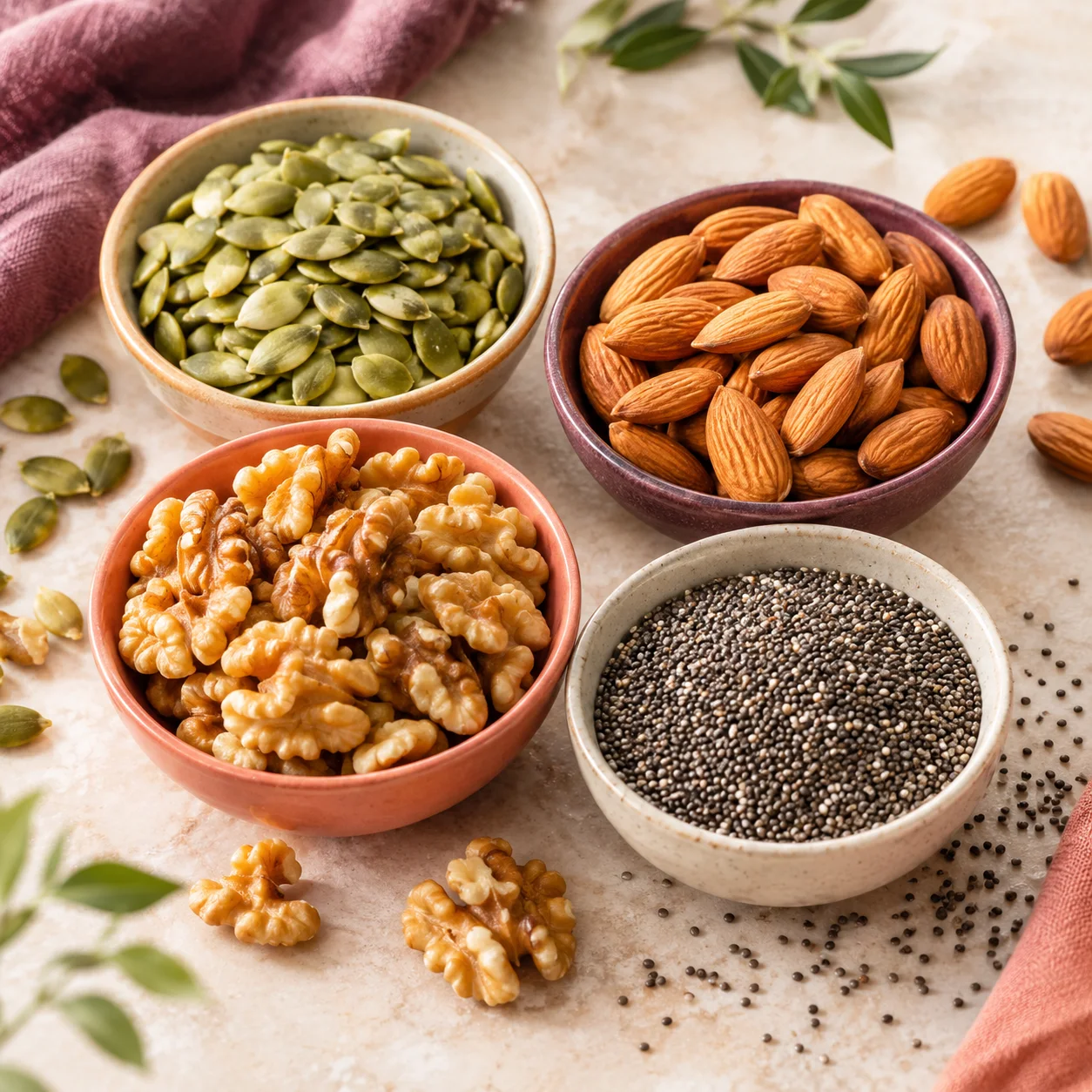
Magnesium is found across many foods, especially seeds, nuts, leafy vegetables, legumes and whole grains. Instead of treating one food as a “magic” source, it is more useful to compare realistic serving sizes and build several magnesium-containing foods into your normal meals.
The amounts below come from the US National Institutes of Health Office of Dietary Supplements food table. They are approximate values for the listed serving sizes; nutrient values vary by variety, brand, serving size and preparation method.
10 foods that provide magnesium
| Food | Serving | Magnesium | % Daily Value |
|---|---|---|---|
| Roasted pumpkin seeds | 1 oz (28 g) | 156 mg | 37% |
| Chia seeds | 1 oz (28 g) | 111 mg | 26% |
| Dry-roasted almonds | 1 oz (28 g) | 80 mg | 19% |
| Boiled spinach | 1/2 cup | 78 mg | 19% |
| Dry-roasted cashews | 1 oz (28 g) | 74 mg | 18% |
| Cooked black beans | 1/2 cup | 60 mg | 14% |
| Cooked shelled edamame | 1/2 cup | 50 mg | 12% |
| Smooth peanut butter | 2 tbsp | 49 mg | 12% |
| Baked potato with skin | 3.5 oz (about 100 g) | 43 mg | 10% |
| Cooked brown rice | 1/2 cup | 42 mg | 10% |
The FDA Daily Value used for nutrition-label comparison is 420 mg. Daily Value is a general reference for labels; individual magnesium requirements vary with age, sex and life stage.
What the numbers mean in a real meal
A tablespoon of chia in breakfast, beans at lunch and a serving of greens at dinner can all contribute. You do not need every item in the table on the same day. Variety matters because these foods also bring different amounts of protein, fibre, fats, vitamins and other minerals.
Seeds
Pumpkin and chia seeds are among the most concentrated foods in the NIH table. Use them as additions rather than assuming more is always better. Seeds are energy-dense, and the serving size matters when you compare nutrient values.
Nuts and nut butter
Almonds, cashews and peanut butter contribute magnesium while also providing fat and some protein. Choose portions that fit the rest of your meal, and use seed-based alternatives when nut allergy is a concern.
Beans and edamame
Black beans and edamame can work in bowls, salads, soups and wraps. They are useful when you want a food that contributes magnesium alongside fibre and protein.
Leafy greens
Cooked spinach appears high on the NIH list because cooking reduces volume, allowing more leaves to fit into a half-cup serving. Raw and cooked serving sizes should not be compared as though they are identical.
Whole grains and potatoes
Brown rice and potatoes with the skin provide smaller amounts per serving than seeds, but they can still contribute meaningfully across a day. NIH notes that refining grains can remove nutrient-rich germ and bran and substantially lower magnesium content.
Simple ways to add magnesium-rich foods
- Stir chia into oats or yogurt.
- Add pumpkin seeds to a salad or soup.
- Use black beans or edamame in a grain bowl.
- Serve cooked spinach beside eggs, tofu, fish or lentils.
- Swap some refined grains for whole-grain options when they suit the meal.
- Spread peanut butter on whole-grain toast or fruit.
For meal ideas, browse our nutrition reference and healthy recipes. The planner can help distribute foods across the week instead of trying to “hit” every nutrient in one meal.
Do you need a magnesium supplement?
A list of magnesium-rich foods is not a recommendation to take a supplement. Supplements can interact with medicines and may not be appropriate for everyone. If you are considering magnesium because of symptoms, a diagnosed deficiency or a medical condition, review our conditions guidance and discuss the reason and dose with a qualified health professional.
Frequently asked questions
Which food in this list has the most magnesium?
In the NIH table used here, roasted pumpkin seeds provide 156 mg per 1-ounce serving, the highest amount among these ten examples.
Are bananas a major magnesium source?
A medium banana provides about 32 mg in the same NIH table. It contributes magnesium, but it is lower than pumpkin seeds, chia, almonds, cooked spinach or black beans per listed serving.
Does water contain magnesium?
It can. NIH notes that tap, mineral and bottled water may contain magnesium, but the amount varies widely by source and brand.
Sources and editorial notes
Food values were checked against the NIH Office of Dietary Supplements Magnesium Fact Sheet for Health Professionals, and the 420 mg label Daily Value was checked against FDA Daily Value guidance on 8 October 2026. Serving values are rounded as shown by NIH and should not be treated as laboratory analysis of every brand or recipe.
General educational information only; individual nutrition needs and medical circumstances vary.