Nutrition
7 Easy Protein Snacks for Work: A Practical Packing Guide
By Sweat & Snack Editorial Team · 2026-10-06
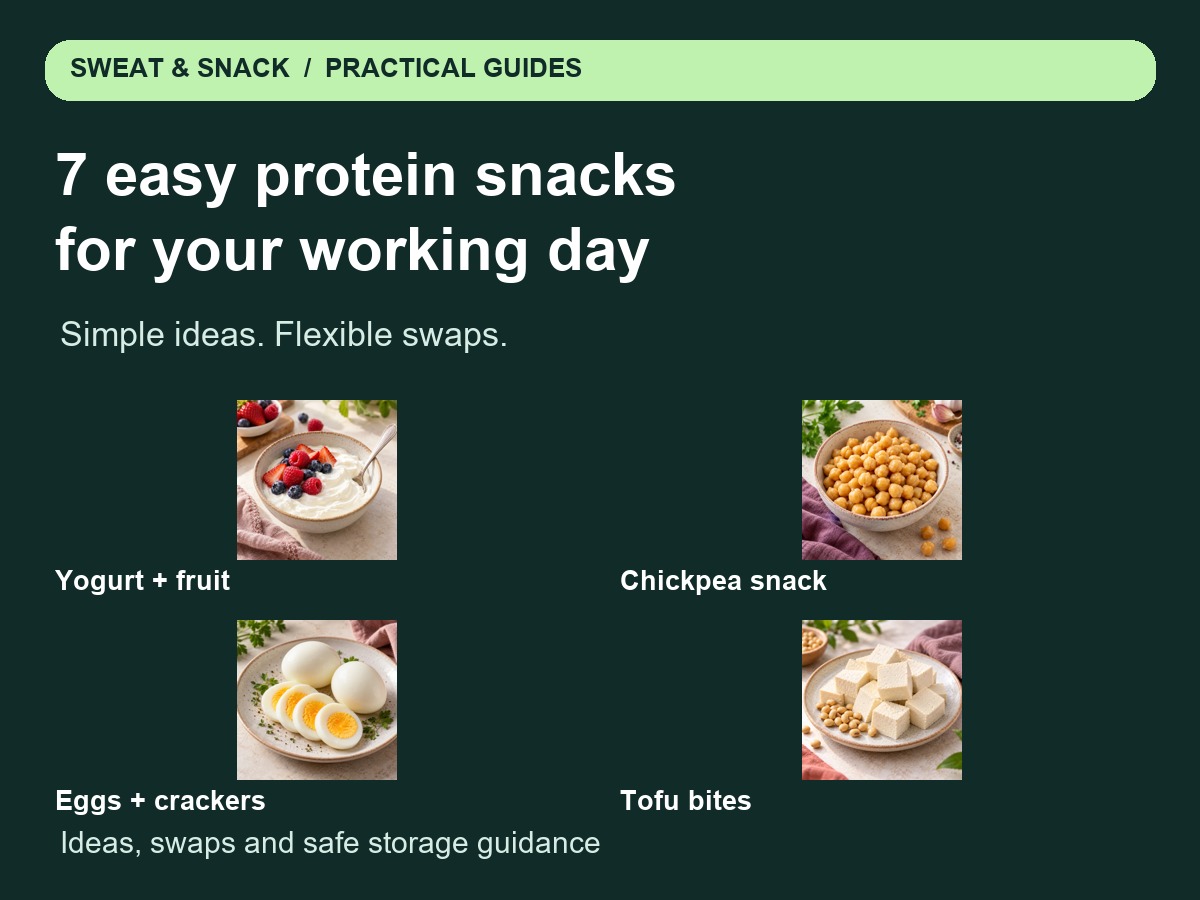
A useful work snack should fit your appetite, food preferences and storage options. Start with one protein-containing food, add fruit, vegetables or a grain if you want, and pack it in a form you can actually eat between meetings.
You do not need a special bar or powder to make this work. This guide offers seven combinations, with swaps for vegetarian and vegan diets. The combinations are practical suggestions, not a prescribed diet. Protein amounts vary with the product and portion, so use the nutrition label when you need an exact figure.
Choose a snack that fits your working day
Before you choose the food, answer three questions: Will you have a refrigerator? How long will the snack be in your bag? Do you want something crunchy, creamy or more meal-like? A chilled yogurt pot works well when cold storage is available. A sealed packet of dry roasted chickpeas may be more convenient when it is not.
For a broader weekly routine, use our practical meal-prep system. For ingredient ideas, explore the nutrition reference.
Seven protein snack ideas to pack
1. Plain Greek yogurt or skyr with fruit
Pack the yogurt and fruit separately if you prefer a firmer texture. Choose a product you enjoy and check the label rather than assuming every yogurt contains the same amount of protein. For a plant-based swap, compare soy yogurt labels; plant-based products differ considerably. Keep the snack chilled.
2. Dry roasted chickpeas with a piece of fruit
A commercially packaged roasted-chickpea snack can be a convenient desk option when its label allows room-temperature storage. Choose seasonings you like, check the sodium information and close the packet after opening. Home-cooked chickpeas have different storage needs and should not be treated as a shelf-stable snack.
3. Cooked eggs with whole-grain crackers
Pack fully cooked eggs with crackers and a vegetable you enjoy. Keep the eggs chilled during transport and at work. If eggs do not suit your diet, try a small portion of cooked tofu instead and follow the same cold-storage approach.
4. Hummus with vegetables and whole-grain bread
Use a small sealed container for hummus, with cucumber, carrot or another preferred vegetable alongside it. This is an easy way to combine legumes with produce. Hummus recipes and brands vary, so check the ingredients for sesame or other allergens. Keep hummus and prepared vegetables chilled.
5. Tofu bites with a simple dip
Prepare tofu as part of a meal-prep session, then pack a snack-sized portion with a dip in a separate container. Choose the portion based on your appetite and the rest of your meals. For more ways to use plant ingredients, see our vegan lentil power bowl.
6. Cottage cheese or paneer with fruit or vegetables
Choose a product and serving style that fit your preferences: a spoonable cottage-cheese pot, for example, or paneer prepared according to the package directions. Check the protein and sodium on the label. Keep dairy foods chilled, and use a soy-based alternative if dairy does not suit you.
7. Nut or seed butter on whole-grain toast
Pack the spread and bread separately when possible to avoid sogginess. Nut and seed butters provide protein alongside fat, so compare the label and portion you actually use. If your workplace restricts nuts, choose an allowed alternative. Check allergy information before sharing food.
How to compare a bar, yogurt or packaged snack
Compare the serving you will eat, not just the figures per 100 grams. Look at protein, energy, added sugars and sodium together. A package may contain more than one serving. The most useful choice is one that fits your preferences, budget and overall eating pattern; a large protein number alone does not answer all those questions.
Keep chilled snacks cold
The FDA advises keeping refrigerators at or below 4°C (40°F). Foods that require refrigeration should not sit at room temperature for more than two hours, or one hour when the air is hotter than 32°C (90°F). Follow the product's storage instructions, use an insulated bag with a cold source when needed, and refrigerate promptly at work. A normal lunch bag does not automatically keep food at a safe temperature.
If you cannot maintain cold storage, choose a product specifically labelled for shelf-stable storage and follow its instructions after opening. Do not use appearance or smell as proof that a perishable snack is safe.
A simple packing routine for tomorrow
- Choose one combination and check its ingredients and storage requirements.
- Pack it in a clean, sealed container, keeping wet and dry components separate.
- Arrange a refrigerator or suitable cold transport for perishable foods.
- Keep an allowed shelf-stable backup for days when the plan changes.
For a snack that doubles as a small breakfast, try our make-ahead overnight oats. Use the meal planner to place snacks around the meals you already intend to eat.
Frequently asked questions
Do I need protein powder for a work snack?
No special supplement is required to use the combinations in this guide. Eggs, legumes, soy foods and suitable dairy products offer ordinary-food options. Choose foods that fit your diet and individual needs.
Which ideas can be vegan?
Roasted chickpeas, hummus, tofu, and suitable nut or seed butters can work. Check the ingredients in bread, crackers, dips and packaged snacks, and choose a plant-based yogurt with a label that suits your needs.
How much protein should my snack contain?
There is no single amount that fits every person or workday. Check the product and portion, consider your meals as a whole, and get individualized advice when you have a medical condition or a specific nutrition plan.
Sources and editorial notes
These snack combinations are original practical suggestions. Food-group context comes from USDA MyPlate's protein foods guide; temperature and timing advice comes from FDA food-storage guidance. Sources checked 6 October 2026. Nutrition values are deliberately not estimated without a specified product and serving.
General educational information; individual nutrition and allergy needs vary.