Exercise
20-Minute Backpack Workout at Home: Beginner Full-Body Plan
By Sweat & Snack Editorial Team · 2026-10-07
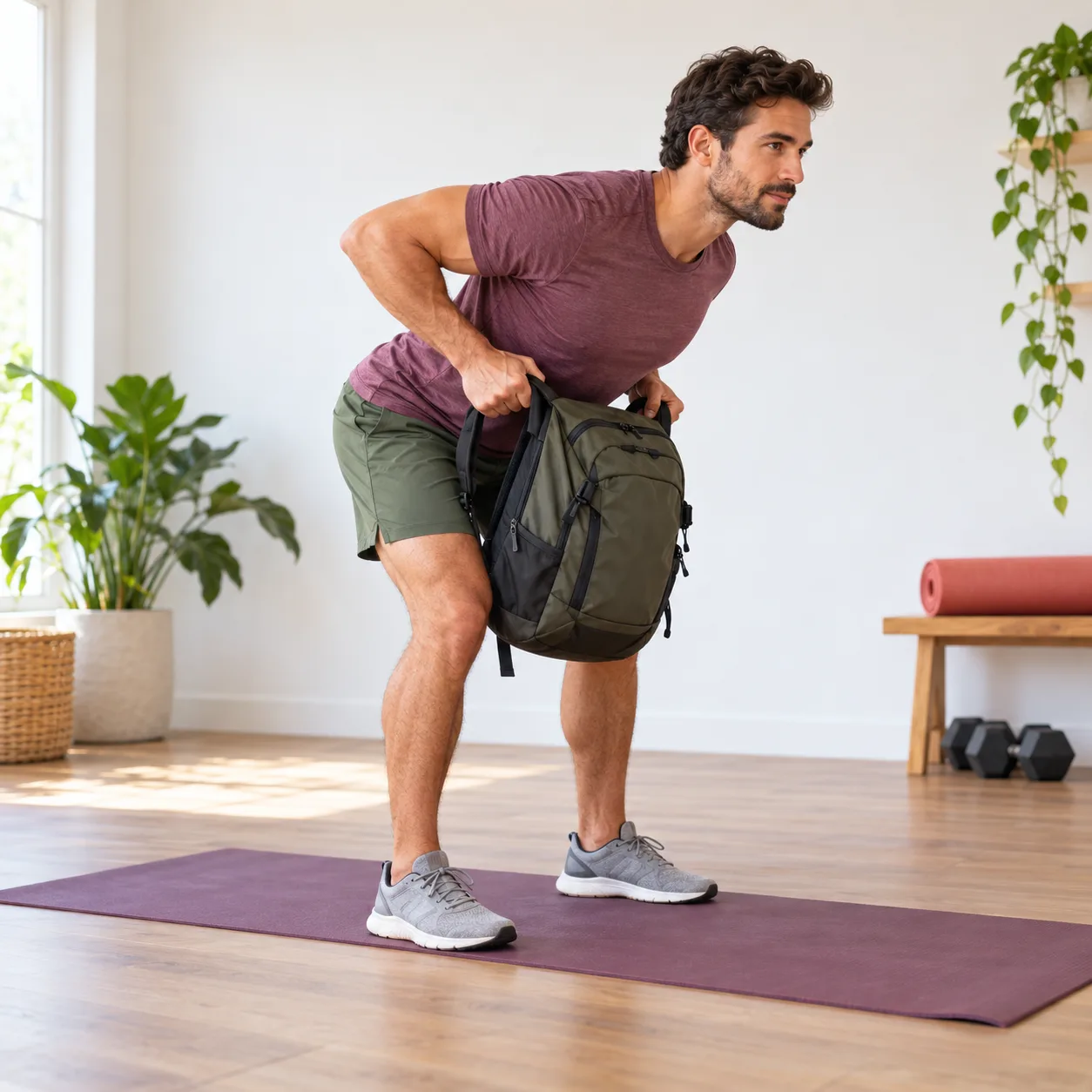
A backpack can turn everyday household weight into a simple home-training tool. This 20-minute routine uses controlled squats, rows, presses and carries so you can train several major muscle groups without buying a complete gym setup. Start with a light load, move deliberately and stop if a movement causes sharp pain, dizziness, numbness or loss of control.
This is a general beginner workout, not rehabilitation or personalized medical advice. If you have a health condition, recent injury, surgery or significant balance limitation, get individual guidance before starting a new exercise routine.
What you need
- A sturdy backpack with secure straps and zips
- Books, water bottles or other stable items for adjustable load
- A clear floor area
- A stable chair or wall if you want balance support
Pack the weight so it does not shift around dramatically. Begin lighter than you think you need; you can add load later. The goal is controlled repetitions, not making the backpack as heavy as possible.
The 20-minute backpack workout
Use about three minutes to warm up, fourteen minutes for the main circuit and three minutes to slow down. Complete the four exercises below in order, rest as needed, then repeat the circuit if time and technique allow.
1. Backpack squat
Hold the backpack close to your chest or wear it securely. Stand with a comfortable foot position, bend at the hips and knees, and lower only as far as you can control. Keep the load close to your body and stand back up without bouncing. If depth is difficult, use a chair behind you as a target.
2. Supported backpack row
Hold the backpack by its top handle or straps. Hinge forward from the hips while keeping the movement comfortable, support one hand on a stable chair if useful, and pull the backpack toward your torso. Lower it slowly. Use less weight if you need to twist or jerk to complete the repetition.
3. Backpack floor press or incline push-up
If you are comfortable getting to the floor, you can hold a securely packed backpack with both hands and press it upward from chest level while lying down. A simpler no-floor option is an incline push-up against a stable counter or wall. Choose one version and keep the repetitions controlled.
4. Backpack carry
Hold the backpack at one side or wear it normally and walk through a clear area for 20–40 seconds. Stay tall and avoid leaning dramatically toward the load. Switch sides if you are carrying it in one hand. Stop immediately if the load interferes with balance.
How many repetitions?
For the strength exercises, a practical starting range is 8–12 controlled repetitions. CDC guidance uses 8–12 repetitions as one set for muscle-strengthening activity and notes that adults should work the major muscle groups. You do not have to reach failure on a first session. Leave a few good-quality repetitions in reserve while you learn the movements.
For the carry, use time rather than repetitions. Start with 20 seconds and increase gradually if your posture and grip remain comfortable.
A simple circuit
- Backpack squat — 8–12 repetitions
- Supported backpack row — 8–12 per side
- Floor press or incline push-up — 8–12 repetitions
- Backpack carry — 20–40 seconds
- Rest 45–90 seconds, then repeat if appropriate
You can also do only one circuit on a busy day. Some activity is better than none, and the routine can sit alongside walking, cycling, sport or other activity you enjoy.
How to progress without rushing
Change one variable at a time. You might first improve movement control, then add a repetition, then add a small amount of backpack weight. Another option is to add a second or third circuit. Avoid increasing weight, repetitions and total rounds all at once.
If the backpack becomes awkward to grip or its seams are under strain, switch to purpose-built equipment instead of continuing to add household items.
Where this fits in a weekly plan
CDC guidance says adults should include muscle-strengthening work on at least two days each week alongside aerobic activity. This 20-minute session can be one strength-training option, but it is not a complete weekly program by itself.
Use the Sweat & Snack planner to schedule training days, and browse the exercise library for alternatives. If you spend long periods at a desk, pair your strength days with our desk mobility routine on workdays.
Frequently asked questions
How heavy should the backpack be?
There is no universal starting weight. Use a load you can control through the full movement without jerking, holding your breath excessively or losing balance. Start light and increase gradually.
Can complete beginners do this?
Yes, provided the movements are appropriate for you. Use fewer repetitions, a lighter load and supported versions while learning. A qualified trainer can help assess technique if you are unsure.
Can this replace a gym?
A backpack can provide useful resistance, but it has limits. As you become stronger, purpose-built weights or gym equipment may provide more predictable loading and easier progression.
Sources and editorial notes
Weekly activity and muscle-strengthening context was checked against CDC adult activity guidance and CDC guidance on what counts as muscle strengthening on 8 October 2026. The routine and progression examples are original practical suggestions from Sweat & Snack.
General educational information only; it does not replace individualized medical or exercise advice.