Exercise
10-Minute Desk Mobility Routine for Office Workers
By Sweat & Snack Editorial Team · 2026-10-06
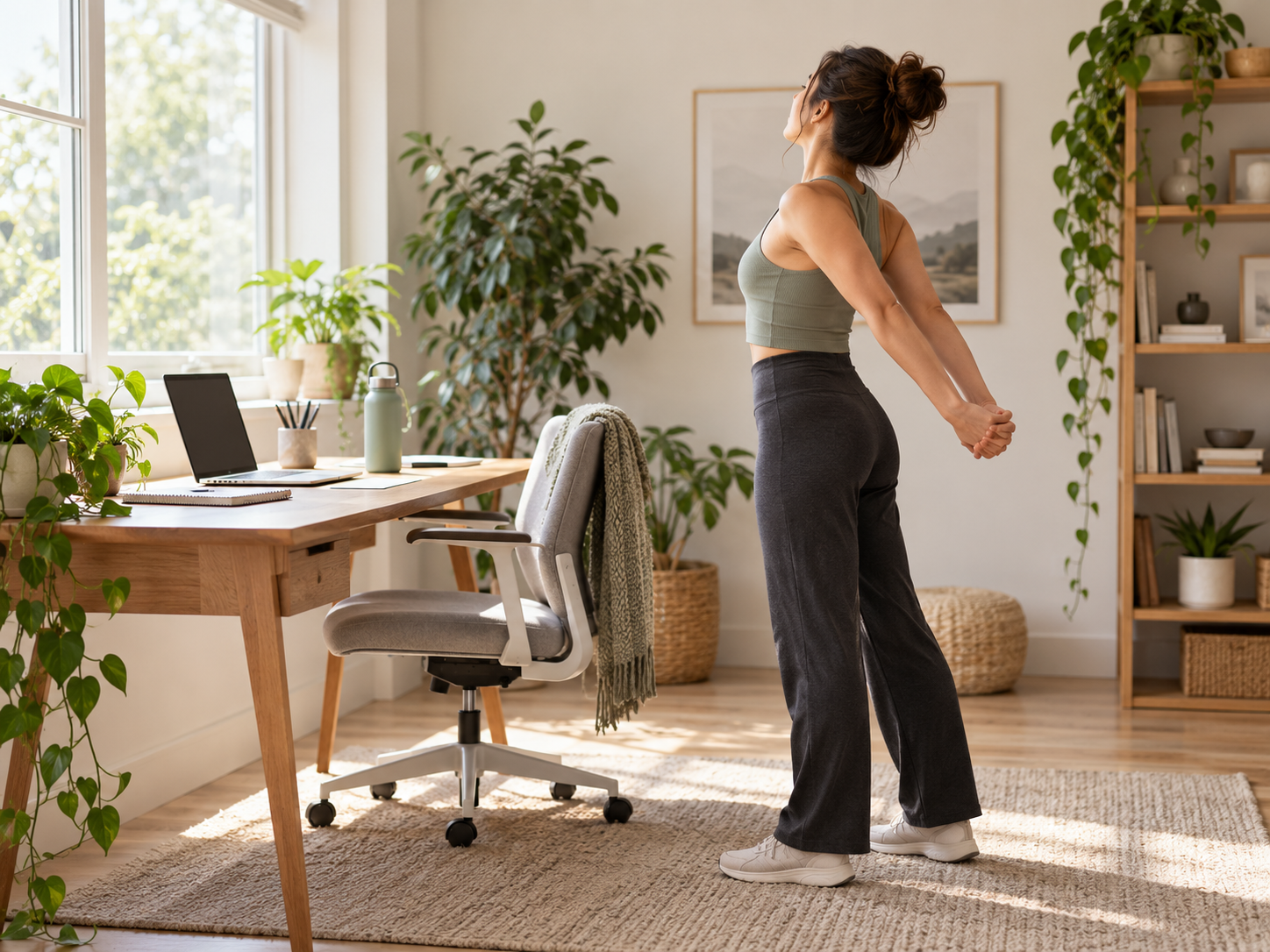
A desk-mobility break is a short, gentle movement session you can fit between work tasks. It is not a replacement for medical care, rehabilitation or a complete exercise plan. The aim is simply to interrupt a long spell of sitting with movements that feel comfortable for you.
This 10-minute routine is designed for a clear patch of floor beside a stable chair or desk. No movement should cause sharp pain, dizziness, numbness or a feeling of instability. If you have an injury, recent surgery, balance concerns or a health condition that changes what movement is suitable, get individualized advice before trying a new routine.
Why use a short workday movement break?
Current CDC guidance says that adults can divide physical activity across the week, and that some activity is better than none. That does not mean a single desk routine meets every activity need. Think of it as one practical way to add movement to a workday alongside walks, cycling, strength training, sport or other activities you enjoy.
For a broader weekly approach, use the meal and movement planner. You can also explore our exercise library for options that fit your space and experience.
Set up your 10-minute desk mobility routine
Wear shoes or stand on a surface where you feel secure. Move the chair out of the way if it rolls easily. Work at a comfortable pace and breathe normally; there is no need to force a stretch or chase a particular range of motion. Use a timer only as a prompt, not a test.
Minute 1: Easy walk or march
Walk around your work area or march gently in place. Let your arms swing in a relaxed way. Choose a pace that allows you to speak in full sentences. This first minute is only a transition from sitting to moving.
Minutes 2–3: Shoulder rolls and arm reaches
Roll your shoulders slowly backward several times, then forward. Next, reach both arms overhead only as far as feels comfortable, lower them, and repeat. Keep your ribs relaxed instead of forcing your back into a large arch. If overhead reaching does not feel right, reach forward at shoulder height instead.
Minutes 4–5: Seated or standing upper-back movement
Sit tall near the front of a stable chair or stand with a soft bend in the knees. Gently round your upper back while your hands reach forward, then return to a neutral upright position. This is a controlled movement, not a long held stretch. Keep your neck in a position that feels easy.
Minutes 6–7: Supported hip shift
Stand beside the desk or chair and keep one hand lightly supported if useful. Shift your weight slowly from one foot to the other. Add a small knee bend if it feels comfortable. The goal is a smooth transfer of weight, not a deep squat. Reduce the range or remain seated if standing balance is a concern.
Minutes 8–9: Calf raises or ankle pumps
With a hand near a stable support, rise onto the balls of your feet and lower with control. A seated option is to lift and lower the heels or alternate ankle pumps. Use a small range and stop if you feel cramping, pain or loss of balance.
Minute 10: Slow breathing and a brief check-in
Stand or sit comfortably and take a few unhurried breaths. Notice whether you feel ready to return to work, or whether a glass of water, a short walk or a different position would help. The routine is flexible: you can use one or two movements during a busy day instead of all ten minutes.
How this fits a fuller activity week
WHO and CDC guidance describes weekly activity targets for adults, including aerobic activity and muscle-strengthening activity. A desk-mobility break can support a routine, but it should not be presented as a complete substitute for those recommendations. Add movement gradually and choose activities that suit your preferences, schedule and physical capacity.
If you want to pair work breaks with a simple eating plan, see our protein snacks for work guide and the healthy meal-prep system.
Frequently asked questions
How often should I do a desk-mobility break?
There is no universal schedule. Use a frequency that feels realistic, such as one short break between tasks or after a block of focused work. The useful routine is the one you can repeat comfortably.
Can I do this routine at my desk?
Yes, if the area is clear and the desk or chair is stable. Keep movements small when space is limited. Do not use a rolling chair or unstable furniture as a support.
Will this routine fix pain from sitting?
This article does not make that claim. Pain can have many causes. Stop movements that worsen symptoms and seek professional advice for persistent, severe or concerning symptoms.
Sources and editorial notes
The routine is an original, low-intensity work-break suggestion. Weekly activity context is drawn from CDC physical activity guidance for adults and WHO adult activity recommendations, checked 6 October 2026.
General educational information only; it does not diagnose, treat or replace personalized medical advice.