Nutrition
Balanced Vegetarian Lunch: 5 Easy Meal Combinations
By Sweat & Snack Editorial Team · 2026-10-08
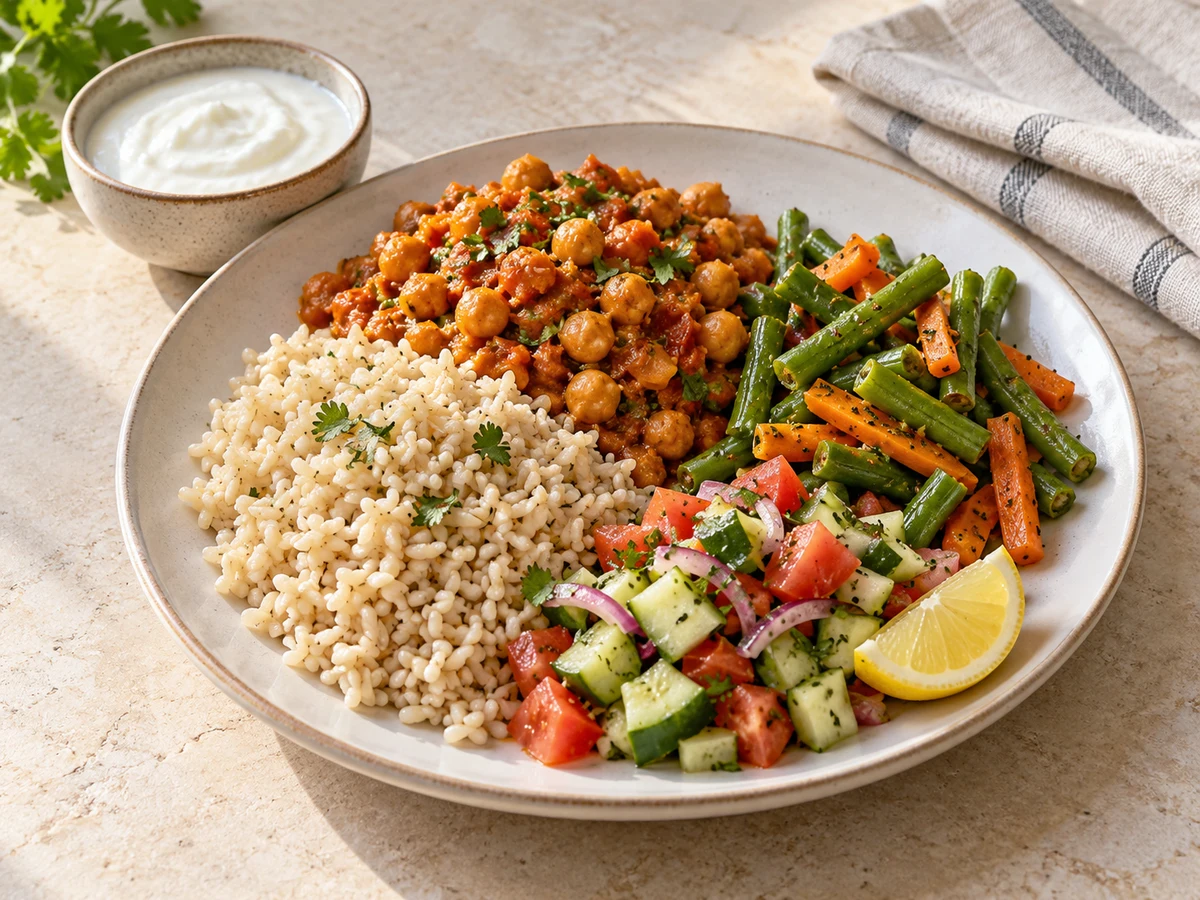
To build a balanced vegetarian lunch, choose a protein food, a rice, roti or other starchy base, and vegetables. Add fruit, dairy or a suitable fortified alternative where it fits your day. The five combinations below are practical suggestions you can adapt to your kitchen, appetite and budget.
Lunch does not have to fit a perfect diagram. The NHS Eatwell Guide describes balance across a day or week, rather than requiring every meal to cover every food group. This article helps you assemble one ordinary lunch; it is not an individual nutrition prescription.
Start with a flexible lunch checklist
As a planning suggestion, name the main parts of your lunch before cooking: a protein choice, a starchy base and a vegetable component. This can be a bowl, a thali, a sandwich with sides or leftovers served on a plate. Use portions that fit your needs, rather than copying the photograph as a portion target.
Choose a protein food you actually enjoy
The NHS vegetarian-diet guide identifies beans, peas and lentils as foods providing protein and fibre, and includes tofu and eggs among other vegetarian protein choices. For lunch planning, you might choose dal, chickpeas, rajma, tofu or eggs if you eat them. Pick one as the starting point, then decide what tastes good alongside it.
Add a familiar base and vegetables
The Eatwell Guide recommends higher-fibre or wholegrain versions of starchy foods where possible. Brown rice, wholewheat roti and wholegrain bread are options, not compulsory ingredients. Choose vegetables you can obtain and prepare: leftover sabzi, frozen green beans, roasted carrots or a cucumber salad are all possible additions to your own menu.
Five vegetarian lunch combinations to try
These are original meal suggestions, not fixed recipes or laboratory-tested nutrition totals. Ingredients, nutrient values and serving sizes vary by brand, variety and preparation. Change the seasoning, use different vegetables or swap the base to make each idea your own.
1. Chickpeas, rice and two vegetable sides
Serve cooked chickpeas in your preferred tomato-based masala with rice, cooked green beans and carrots, and cucumber-tomato salad. Add plain curd if you eat dairy. This is the combination shown in our feature photograph. For an easier version, use cooked chickpeas from your fridge or a can and just one vegetable side. Lemon and coriander are optional finishing touches.
2. Dal, roti and leftover sabzi
Build lunch around the dal you already make, with roti and a vegetable dish from the previous evening. Put the dal in a separate container if you are packing it. For variety, rotate between familiar lentils and change the sabzi, rather than changing every part of the meal. Keep chutney or a crisp salad separate if you prefer to add it at serving time.
3. Tofu and vegetable rice bowl
Combine cooked tofu, rice and vegetables such as cabbage, peppers or beans. Season with a sauce you enjoy and serve it in a bowl or lunch box. One practical shortcut is to cook the tofu and vegetables together while reheating the rice safely. If tofu is unfamiliar, try it in a small batch first; there is no need to buy a large pack for an untested weekly menu.
4. Bean wrap with a crunchy side
Fill a roti or wholegrain wrap with cooked beans, shredded cabbage and your chosen dressing. Serve with carrots, cucumber or a piece of fruit. If a packed wrap becomes soggy, carry the filling separately and assemble it at lunch. This is a useful format for people who prefer finger food to a rice bowl; select the ingredients for taste and practicality, not a promised health result.
5. Lentil salad with bread and an optional side
Mix cooked lentils with chopped cucumber, tomato and herbs, then serve with bread. Add plain yogurt or another side if it suits the rest of your day. Keep the dressing separate until serving when you want a firmer texture. If you dislike cold lentils, turn the same components into a warm lentil bowl and keep the salad on the side.
Adapt the lunch to your dietary choices
For a vegan version, use beans, lentils or tofu and replace dairy where appropriate. The NHS vegetarian guide discusses fortified dairy alternatives and the need to plan reliable sources of vitamin B12 and iron. A bowl with a few vegetables is not evidence that the entire diet meets every nutrient requirement.
Check labels and choose ingredients that suit you. If an allergy or medical condition limits your choices, start with our conditions guidance and ask a qualified dietitian for individual adaptations. This guide does not set targets for pregnancy, children or medical diets.
Pack lunch with food safety in mind
The FDA food-storage guide advises keeping refrigerators at 4°C (40°F) or below and refrigerating perishables within two hours, or within one hour above 32°C (90°F). A closed lunch box does not keep food cold by itself. Plan a way to maintain refrigeration during travel, such as an insulated bag with cold packs, and use the workplace fridge when available.
For meal organisation, choose two combinations to begin with, write the shared ingredients on your shopping list and label prepared containers. See our practical meal-prep system for workflow ideas. Keep the storage plan separate from the menu: a convenient combination still needs safe handling.
Questions that make lunch planning easier
Do I need an exact protein number for each idea?
These suggestions do not come with calculated nutrient totals. If you need a specific target, use the actual ingredients and portions with suitable nutrition data, or work with a dietitian. Our nutrition reference can help you explore food choices without treating a generic photo as a measured meal.
What if I only have leftovers?
List what is ready, choose a base and protein component, then add an available vegetable. If today's combination is simple, plan different foods later in the week. The meal planner can help you rotate lunches; our magnesium-rich foods guide offers another ingredient-focused angle.
Sources and editorial notes
NHS vegetarian-diet and Eatwell guidance, and FDA food-storage guidance, were checked on 8 October 2026. The five meal combinations, packing format and shopping ideas are original practical suggestions. The feature and Pinterest creative are AI-assisted food photographs illustrating a meal idea. General educational information only; individual needs vary.