Articles are currently available in English.
Recipe
Lemon-Paprika Chicken & White Bean Traybake for Two
By Sweat & Snack · 2026-10-31
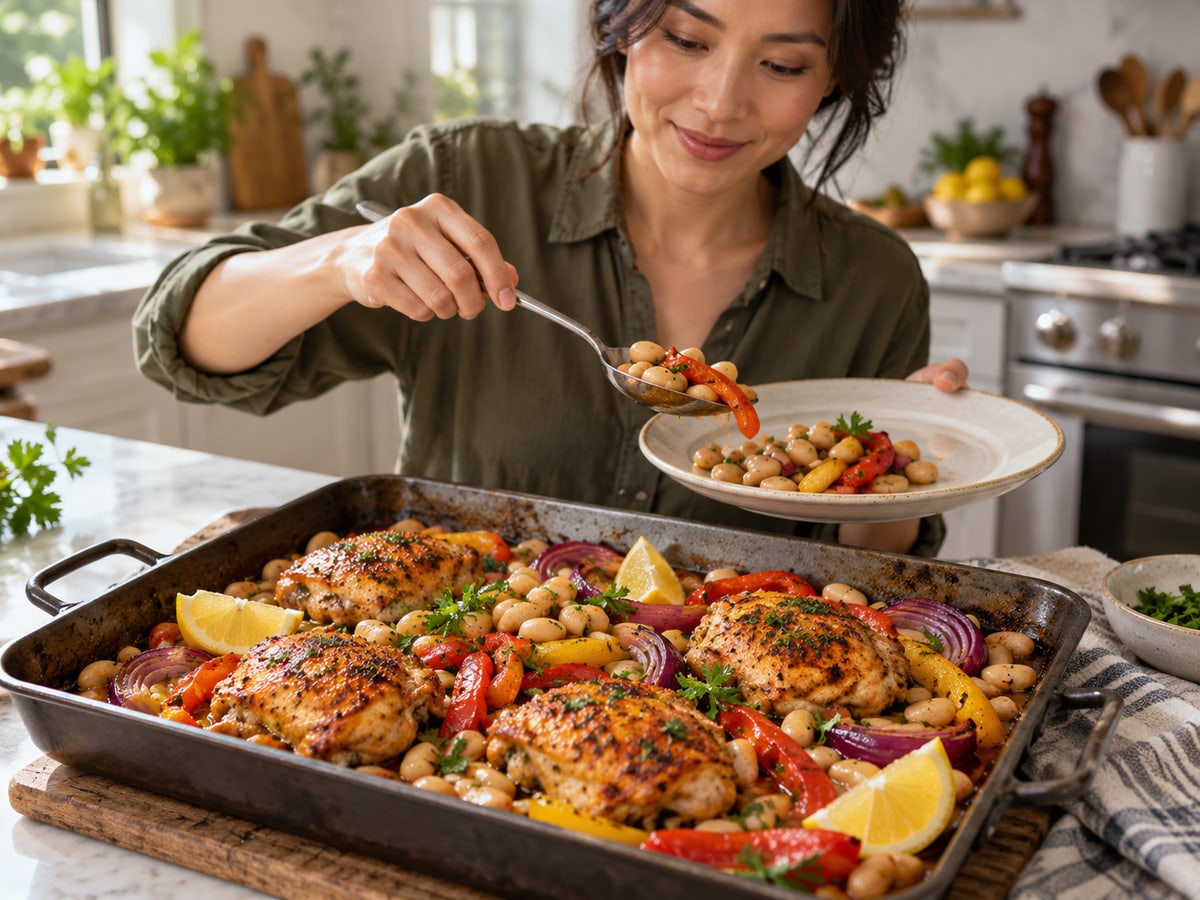
Roast lemon-paprika chicken with peppers and onion, then add cooked white beans near the end so they warm through in the tray juices. This small-batch dinner makes two servings without a separate pot of grain or a sauce to blend. The beans are already cooked; the chicken is the ingredient whose doneness needs a thermometer.
Allow about 15 minutes for preparation and roughly 30–40 minutes in the oven, plus preheating. These are planning estimates, not a safety test. This is an original editorial recipe that has not been kitchen-tested. Chicken thickness, tray size and ovens change the timing; use the temperature check below even if the outside looks browned.
Ingredients for two servings
- 400g boneless, skinless chicken thighs, about four small pieces, fully thawed
- One 400g can cannellini beans, about 240g drained, rinsed and drained again
- Two bell peppers, about 300g total, deseeded and cut into 2cm-wide strips
- One small red onion, about 100g, cut into thin wedges
- One tablespoon olive oil, divided
- One teaspoon mild paprika
- Half a teaspoon dried oregano
- Half a teaspoon garlic powder
- One teaspoon finely grated lemon zest and one tablespoon lemon juice
- Two tablespoons water, with a little more only if the tray dries out
- A quarter teaspoon salt, optional, and black pepper to taste
- One tablespoon chopped parsley and lemon wedges, optional, for serving
Choose plain cooked beans rather than beans in a seasoned sauce. Dried beans cannot go straight into this recipe: cook them fully using their package instructions before measuring 240g cooked and drained. Use thawed chicken, not frozen pieces, and do not substitute bone-in thighs using the same clock.
Equipment and safe preparation
Use a rimmed metal roasting tray about 25 × 35cm, oven gloves, a food thermometer and separate utensils for raw and cooked chicken. There should be room for the chicken and vegetables in one layer. A deep crowded casserole will cook differently.
Wash the peppers, lemon and parsley under running water before cutting; the FDA produce guide advises against soap. Prepare the vegetables first. Then use a separate board for chicken and wash hands and equipment after raw-meat contact. CDC chicken guidance advises keeping raw juices away from ready-to-eat food and says raw chicken does not need washing.
Roast, add the beans, then check
- Heat the oven. Set it to 220°C conventional or 200°C fan. Toss the peppers and onion in the tray with half the oil and a little pepper. Spread out.
- Season the chicken. In a separate bowl mix the remaining oil, paprika, oregano, garlic powder, zest and optional salt. Coat the chicken and unfold each thigh into an even piece rather than leaving it tightly bundled. Place among the vegetables without overlapping. Wash the bowl and raw-chicken utensils.
- Start roasting. Roast on the middle shelf for about 20 minutes. Carefully turn the vegetables with tongs; treat these tongs as contaminated until washed. This first interval is a cooking step, not a claim that the chicken is ready.
- Add the cooked beans. Mix the drained beans with the measured water and lemon juice in a clean bowl. Carefully spoon around the chicken. Return to the oven for roughly 10–20 minutes. All food on the tray has shared the chicken's cooking environment; do not take early tastes from it.
- Measure doneness. Check the thickest part of every chicken piece with a clean food thermometer, inserting from the side if necessary to reach its centre. CDC specifies at least 74°C (165°F). If any piece is below that, continue cooking and check again. Colour and clear juices do not replace this measurement. The vegetables should also be tender and beans thoroughly hot.
- Serve with clean utensils. Divide the chicken, beans and vegetables between two plates. Add optional parsley and lemon at the table. Set the hot tray on a heatproof surface and use oven gloves whenever handling it.
Adjust the texture without changing the safety check
If the tray looks dry when the beans go in, add another tablespoon or two of water around them. Aim for lightly moistened beans, not a pool deep enough to cover the chicken. If the food browns too quickly, loosely cover the tray with foil while it finishes. These are practical cooking suggestions; the final chicken temperature remains essential.
Different-sized thighs may finish at different times. Move a verified cooked piece to a clean plate with clean tongs while the remaining pieces finish, keeping it hot for immediate serving. Wash the thermometer probe between checks according to its instructions. A larger batch needs more tray space and its own cooking checks, rather than simply doubling the oven time.
Shopping and serving choices
Use whichever colour peppers are available locally; this recipe does not call them seasonal everywhere. In cool weather serve the traybake warm as written. For a warm-weather meal, cook it by the same method and offer a separately prepared salad at serving, keeping salad tools away from raw chicken. Follow local availability and climate rather than assuming every October market has the same produce.
Butter beans can replace cannellini beans at the same cooked drained weight. Mild paprika keeps the spice gentle; add chilli at the table if wanted. Chicken breast is not a direct timing substitution for thighs. For a meat-free oven meal with its own method, see the sweet potato and chickpea traybake.
This combines chicken, beans and vegetables as an ordinary dinner idea, with bread or another accompaniment if you want it. Nutrient values vary with brand, drained weight, preparation and serving size; no exact calorie or protein calculation is claimed. Our nutrition hub explains broader food choices.
Chill and reheat the second serving
Divide leftovers into shallow containers and refrigerate promptly. CDC advises refrigerating or freezing chicken within two hours, reduced to one hour above 32°C (90°F). Do not leave the full tray out to cool completely. Keep your refrigerator at 4°C or below.
USDA storage guidance gives three to four days for cooked chicken in the refrigerator; freeze sooner if you will not use it within that window. Reheat leftovers to 74°C (165°F), checking the centre with a thermometer, following USDA reheating guidance. Follow stricter local guidance where applicable. Date the container and use our meal-prep guide to plan its next use.
Recipe and photograph notes
Food-safety sources checked 31 October 2026. Ingredient amounts, staging and flavour choices are editorial suggestions; this recipe has not been kitchen-tested. The feature and Pin are separate AI-generated photographs of a fictional adult and an illustrative finished dish. They do not show a tested batch or promise a nutrition or physique outcome.