Articles are currently available in English.
Nutrition
Dry or Cooked Lentils? Match the Weight to the Nutrition
By Sweat & Snack Editorial Team · 2026-10-17
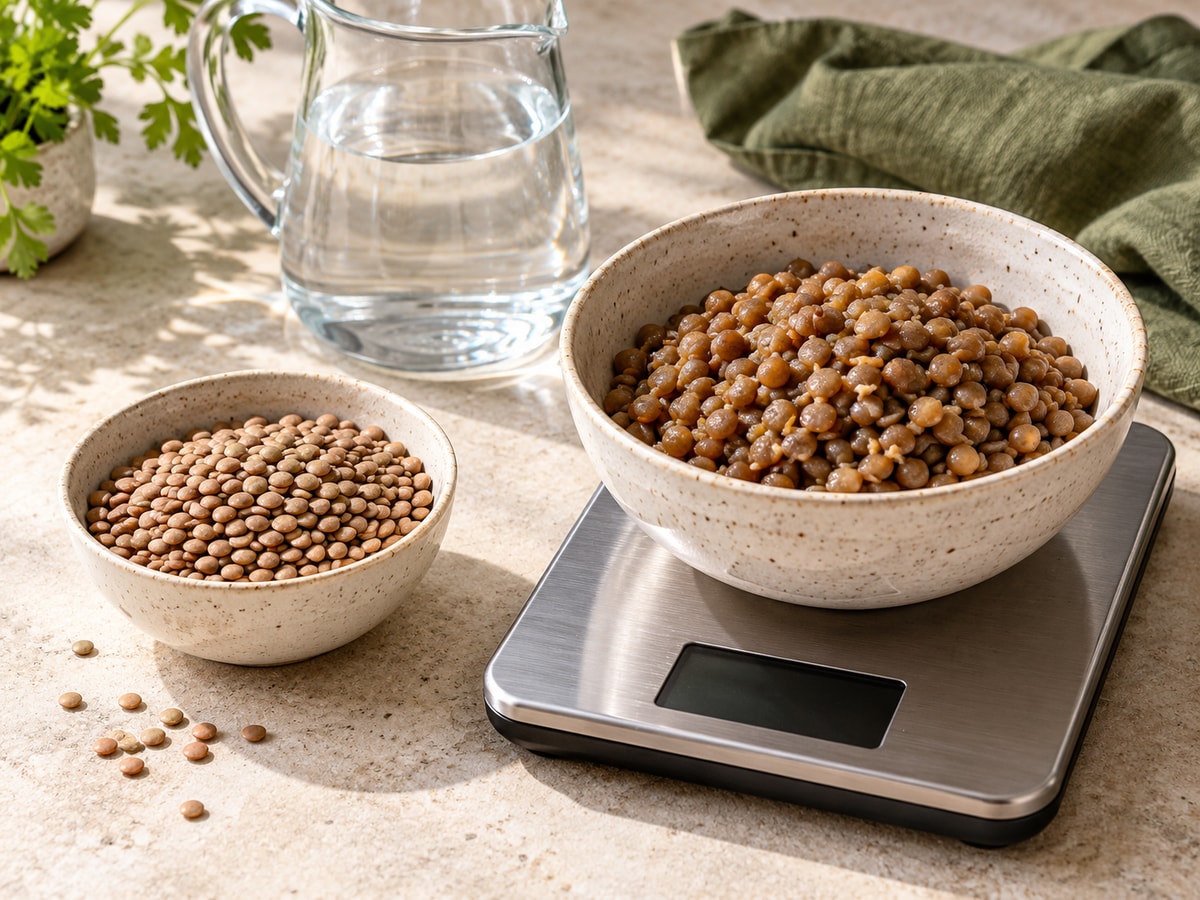
If you weigh lentils dry, use nutrition information for dry lentils. If you weigh them after cooking, use an entry for the cooked preparation you actually have. A dry packet and a cooked-food entry describe different states, so their numbers per 100 g are not a like-for-like comparison.
This guide explains how to keep those weights straight when preparing a batch at home. The weighing routine is a practical organisation suggestion. The example numbers demonstrate arithmetic, not a recommended portion, a measured cooking yield or a precise nutrition analysis.
Start with the word beside the weight
Before comparing a packet with an app or database, read the whole description. Look for dry, uncooked, cooked, boiled, drained, or prepared. Also check the lentil type and whether the entry includes salt, oil or other ingredients. A generic lentil entry does not automatically describe your finished dal.
The FDA's label guide explains that the nutrient amounts on a US Nutrition Facts label refer to its stated serving size, and that this size is not advice about how much to eat. Labels in other countries can use different layouts. Read the basis on your own packet rather than assuming every panel uses the same convention.
A simple matching check
- Dry lentils on the scale: look for the same dry product and its stated weight basis.
- Plain cooked lentils: choose an appropriately described cooked entry, including draining or added salt where specified.
- A finished soup or dal: use the recipe's ingredients and final batch amount, or information for that prepared dish.
For the separate question of reading fibre across different serving sizes, see our food-label guide. Here, the first check is the food's preparation state.
Why the cooked bowl weighs differently
Lentils are cooked with water. As a practical yield example, North Dakota State University Extension's pulse guide describes one cup of lentils cooked with water producing about two and a half cups of cooked lentils. That is a volume example from its method, not a universal multiplier for grams.
Added cooking water helps explain why the same weight of dry and cooked food represents different amounts of the starting ingredient. A lower protein number per 100 g in a cooked entry, by itself, does not tell you how much protein a particular batch lost during cooking. The two entries are not a before-and-after laboratory test of your pot.
NDSU identifies pulses as foods that provide protein and dietary fibre. This guide does not assign an exact amount to your bowl: product, preparation and portion information still matter. Avoid copying a dry-food figure onto the same number of cooked grams.
A batch-weighing routine you can use
1. Record the starting ingredient
If you want a record, note the lentil variety and dry amount before adding water. Keep the packet or take a photo of its panel. Follow the packet or a suitable recipe for preparation; this is a weighing guide, not a cooking method.
2. Record the finished batch consistently
Weigh the food without its container, using the scale's tare function where appropriate. Note whether the weight includes cooking liquid. For plain drained lentils, use that description consistently. For a soup, record the whole finished soup instead of calling its weight plain lentils.
3. Keep the portion and batch on the same basis
Illustrative arithmetic: suppose you start with 100 g dry lentils and your measured plain cooked batch weighs 250 g. A 125 g portion is half that measured batch. It therefore represents half the starting dry amount, or 50 g dry lentils, as an ingredient allocation.
The calculation is portion weight divided by finished batch weight, multiplied by starting dry weight. Those example weights are invented only to show the calculation. They do not predict your cooking yield or establish exact retained nutrients. Treat an ingredient-based nutrition calculation as an estimate, and do not enter both the dry ingredient allocation and the cooked portion as two separate foods.
What changes when you make dal or soup?
A finished dish needs a different description. Record the lentils plus any oil, vegetables, yogurt or other ingredients you actually use. If you divide the complete recipe into portions, divide its ingredient estimate across the finished batch consistently. Adding more water changes the weight of the dish without making it a larger amount of dry lentils.
Our red lentil soup for one is an example of a prepared dish with several ingredients. Its bowl weight should not be matched to a plain boiled-lentil entry. For planning several meals, the flexible meal-prep guide can help organise the recipes and portions you intend to prepare.
Quick questions before you save the entry
Can I always multiply dry grams by the same number?
Use your own measured batch when you need a batch-specific allocation. Do not turn a cup-yield example or an online calculator into an exact gram conversion for every lentil dish.
What if I forgot to weigh them dry?
Use a cooked entry that best matches the food you have and label any estimate as an estimate. You do not need to invent a starting weight. Next time, record whichever stage is easiest for you and match the information to that stage.
Does weighing tell me the right portion?
No. This routine helps describe food consistently; it does not set an individual nutrition target. If you follow a clinician's or dietitian's plan, use their portion and recording guidance. A clearer entry is useful without becoming a requirement to track every meal.
Sources and scope
- FDA: Understanding serving information on Nutrition Facts labels.
- NDSU Extension: Pulses—nutrient context and lentil preparation yield. Its approximate cup yield is not used as a gram conversion.
Sources checked 17 October 2026. Weighing steps and batch numbers are practical suggestions and illustrative arithmetic. No exact nutrient totals, medical outcomes or weight-loss claims are made.