Nutrition
How to Read Fibre on Food Labels: A Practical Guide
By Sweat & Snack Editorial Team · 2026-10-09
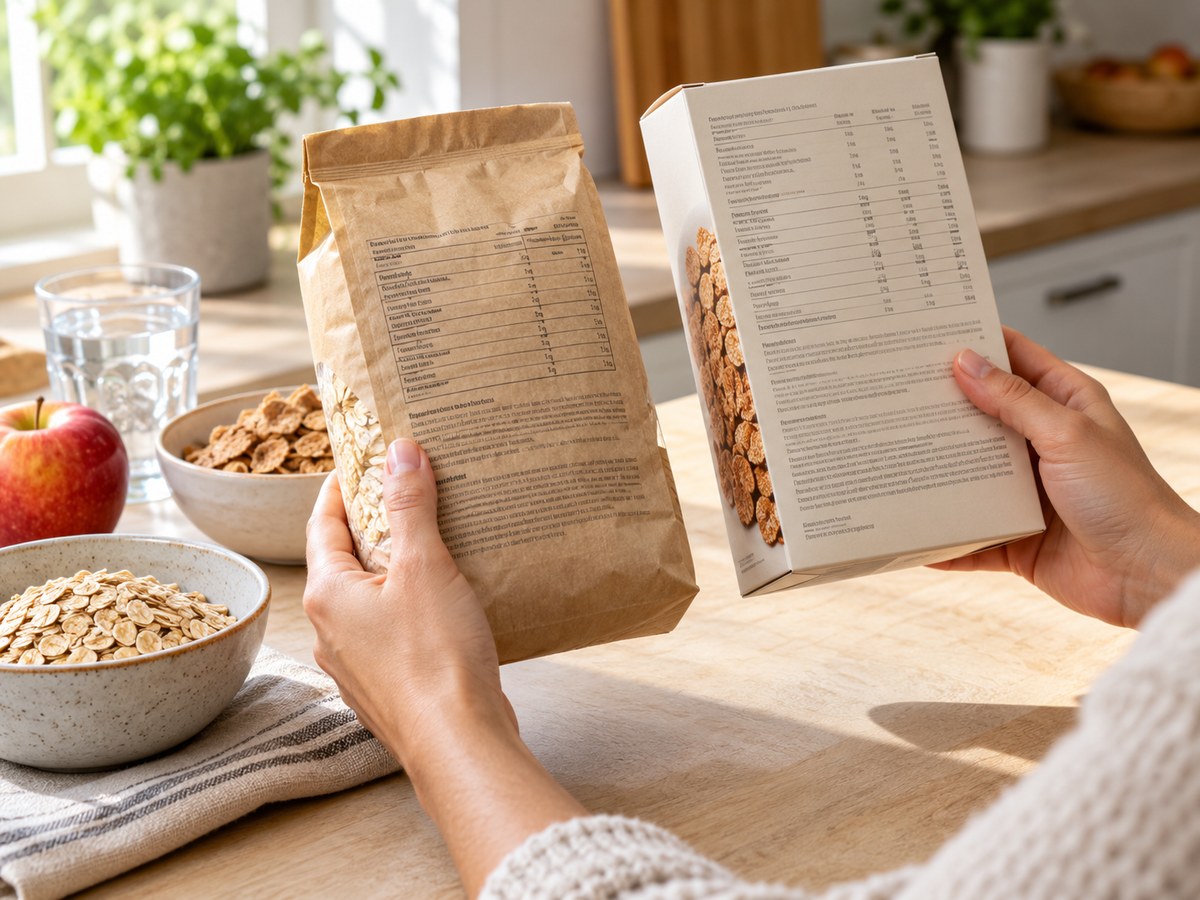
To compare fibre on food labels, first check the amount of food the numbers describe. Find dietary fibre in grams, then compare the same weight or serving across products. If the package uses a US Nutrition Facts panel, percent Daily Value adds context. This guide shows the steps with an invented cereal example you can practise before shopping.
Use this as a companion to our daily fibre-intake guide. That article covers the wider daily picture; this one helps you interpret a package. Our nutrition reference offers another way to explore foods, including ingredients that do not come with a printed panel.
Start with the label's serving information
The FDA serving-size guide explains that a US label serving reflects what people typically consume, rather than the amount you are advised to eat. Nutrient figures refer to that serving. Eating twice the labelled serving means twice the listed nutrient amount.
Check the basis before comparing
As a shopping habit, read the heading above the figures before choosing a product. Does it say per serving, per package or per 100g? Look for the serving's weight too. Copy those details onto a note if two boxes use different amounts. A large number is hard to interpret until you know its denominator.
This article uses US labels to explain percent Daily Value. For a package sold elsewhere, read the units and reference statement printed on that actual label. Keep any per-100g calculation separate from a per-serving figure; do not assume a percentage printed in another country uses the US reference.
Find dietary fibre in grams
On the US panel, look for Dietary Fiber within the carbohydrate section. The FDA label guide explains how nutrient amounts relate to a serving and lists a 28g Daily Value for fibre. That is a labelling reference, not an assessment of your individual needs.
For your own comparison, write three things together: the product, its reference amount and its fibre grams. For example, “Cereal A, 40g serving, 4g fibre.” Keeping the unit beside the number makes the note useful when you return to it later.
A worked comparison with fictional cereals
These numbers are invented to demonstrate arithmetic. They are not measurements of the packages in our photograph, real product recommendations or proposed portion sizes.
- Cereal A lists 4g fibre per 40g serving.
- Cereal B lists 6g fibre per 60g serving.
Put both products on the same basis
For A, divide 4 by 40, then multiply by 100: that gives 10g fibre per 100g. For B, divide 6 by 60, then multiply by 100: that also gives 10g per 100g. The larger per-serving figure on B comes with a larger labelled serving. In this example, their fibre concentration is the same.
If you measured 30g of either fictional cereal, the calculation would be 10 × 30 ÷ 100 = 3g fibre. Use the amounts on the food you actually buy. Real nutrient values vary by brand, variety, serving and preparation, so these sample numbers should stay on the practice page.
Use US percent Daily Value as context
The FDA percent Daily Value guide calls 5% DV or less per serving low and 20% DV or more high. Those benchmarks help interpret a US panel. Compare products using equivalent serving amounts before drawing a conclusion.
A practical approach is to check grams first, then use the percentage for context. Keep taste, price, the rest of the label and how you will serve the food in the decision too. A shopping choice does not need to become a contest for the largest fibre number.
Make one useful shopping note
Try comparing two foods you already buy, such as bread or breakfast cereal. Note the label basis, fibre grams, price and which one you enjoy eating. Choose a single question for the next shop: “Am I comparing the same amount?” is enough to begin with.
The NHS fibre guide recommends varied sources, including wholegrains, pulses, fruit and vegetables. Labels are one tool for packaged foods. You can also plan ordinary meals with our vegetarian lunch combinations and meal-prep guide.
Change food choices gradually
NIDDK guidance advises adding fibre a little at a time and getting individual advice about fluid needs. If a health condition affects your diet, follow your clinician's plan and use our conditions guidance as a starting point for questions. This label exercise is general education.
Sources and image notes
FDA, NIDDK and NHS pages linked above were checked on 9 October 2026. The cereal arithmetic, shopping note and comparison workflow are original educational examples and suggestions. Images are original AI-generated photographic illustrations; package print is illustrative and should not be used as nutrition data.