Recipe
Protein Overnight Oats Without Powder: Easy Make-Ahead Recipe
By Sweat & Snack Editorial Team · 2026-10-07
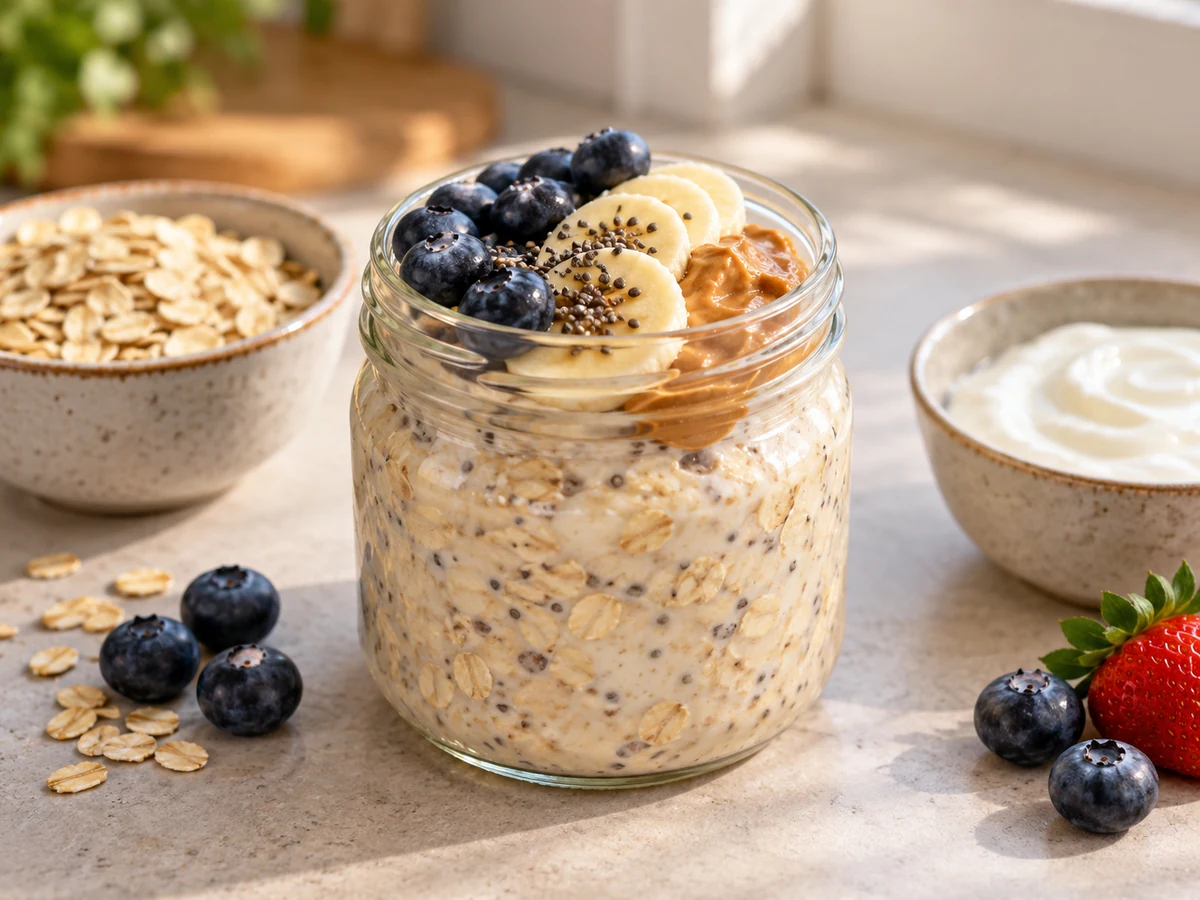
These protein overnight oats use ordinary foods—plain strained yogurt, milk, rolled oats, chia seeds and peanut butter—rather than protein powder. Mix one jar in the evening, refrigerate it, and adjust the fruit and texture when you are ready to eat. The exact protein depends on the brands and portions you use, so check the labels if a precise amount matters to you.
This recipe is a practical breakfast suggestion, not a prescribed nutrition plan. It works best when you choose products that fit your dietary needs, allergies and storage options. For a wider preparation routine, pair it with our healthy meal-prep system or browse protein snacks for work.
Ingredients for one jar
- 1/2 cup (about 45 g) rolled oats
- 1/2 cup (about 120 g) plain strained yogurt, such as Greek-style yogurt
- 1/3 cup (about 80 ml) pasteurized milk, plus more if needed
- 1 tablespoon chia seeds
- 1 tablespoon unsweetened peanut butter
- 1/2 small banana, sliced
- 1/4 cup berries, fresh or frozen
- Optional: a pinch of cinnamon
Use a clean jar or covered container with enough room to stir. Ingredient thickness varies: strained yogurt may need a little more milk, while a thinner yogurt may need less. Choose oats labelled gluten-free if medically required, and check every package for relevant allergen statements.
How to make protein overnight oats without powder
- Mix the base. Add the rolled oats, yogurt, milk, chia seeds and cinnamon to the jar. Stir thoroughly, scraping the bottom so no dry pockets remain.
- Add the peanut butter. Stir it fully into the base for an even flavour, or leave a small swirl on top. If the mixture looks dry, add milk one tablespoon at a time.
- Cover and refrigerate. Seal the container and place it in the refrigerator immediately. Let it chill for at least four hours, or overnight, so the oats and chia can hydrate.
- Check the texture. Stir before eating. Add a splash of milk for a looser consistency or a spoonful of yogurt for a thicker one.
- Add fruit. Top with banana and berries just before eating, or add frozen berries before chilling if you prefer their juices mixed through the oats.
Why these ingredients work together
Yogurt and milk make the creamy base
Plain strained yogurt gives the jar body, while milk loosens it enough for the oats to hydrate. USDA MyPlate includes milk and yogurt, along with lactose-free and fortified soy versions, in its Dairy Group. Products are not nutritionally identical, so compare labels for protein, added sugars and ingredients instead of assuming every yogurt or milk provides the same result.
Chia and peanut butter change texture and add protein foods
Chia absorbs liquid and helps thicken the jar. Peanut butter adds a creamy contrast. USDA MyPlate lists seeds and nut or seed butters among protein-food choices. This does not make one serving amount suitable for everyone; use the portion that fits your meal and check labels when you track nutrients.
Fruit keeps the recipe flexible
Banana adds sweetness and a soft texture, while berries add a brighter flavour. Use one or both, or choose another fruit you enjoy. Fresh fruit can be added when serving for a firmer texture. Rinse fresh produce under running water before preparation.
Vegan, nut-free and Indian-friendly swaps
For a vegan version, use plain fortified soy yogurt and pasteurized fortified soy milk, then confirm that the products meet your preferences. Other plant drinks and yogurts can behave differently and may contain less protein, so compare labels and adjust the liquid gradually.
For a nut-free jar, replace peanut butter with an allowed seed butter, such as sunflower-seed butter, and verify facility allergen information if cross-contact matters. In India, plain thick curd can be used when it suits your diet, but its moisture and protein vary; start with less milk and adjust after stirring. You can use local banana, apple or seasonal fruit instead of imported berries.
Texture fixes before breakfast
- Too thick: stir in milk one tablespoon at a time.
- Too thin: add a spoonful of oats or yogurt, then wait a few minutes before checking again.
- Too bland: add cinnamon, extra fruit or a small amount of your preferred sweetener.
- Too soft: keep the fruit and any nuts or seeds for the morning.
These are practical adjustments rather than fixed rules. Note the brand and ratio that you like so the next jar is easier to repeat.
Refrigeration and taking the jar to work
FDA refrigeration guidance says refrigerators should stay at or below 4°C (40°F), and covered containers help protect refrigerated food. Put the jar in the refrigerator promptly after mixing and follow the use-by instructions on the dairy or soy products.
Perishable food should not remain at room temperature for more than two hours, or more than one hour when the air temperature is above 32°C (90°F). For commuting, use an insulated bag with a cold source and refrigerate the jar when you arrive. A normal bag does not guarantee a safe temperature.
Frequently asked questions
Do I need protein powder?
No. This recipe uses yogurt, milk, chia and peanut butter. If you use different products, check their labels because the protein content can change substantially.
Can I make several jars at once?
You can multiply the ingredients, but check the earliest product use-by date, use clean covered containers and keep every jar properly refrigerated. Add delicate toppings later when you want a fresher texture.
Can I eat the oats warm?
This recipe is designed to be eaten chilled. If you prefer warm oats, transfer a suitable portion to a microwave-safe bowl and follow the appliance and ingredient instructions rather than heating a sealed jar.
Sources and editorial notes
Food-safety guidance was checked against the US FDA refrigerator-safety guide. Ingredient-group context was checked against USDA MyPlate pages for dairy and fortified soy alternatives and protein foods on 7 October 2026. The recipe, ratios and texture adjustments are original practical suggestions from Sweat & Snack. The feature and Pin images are AI-assisted original food photographs and show a serving suggestion.
General educational information; individual nutrition, allergy and food-safety needs vary.