Articles are currently available in English.
Nutrition
Bagged Salad: Should You Wash It Again?
By Sweat & Snack · 2026-10-20
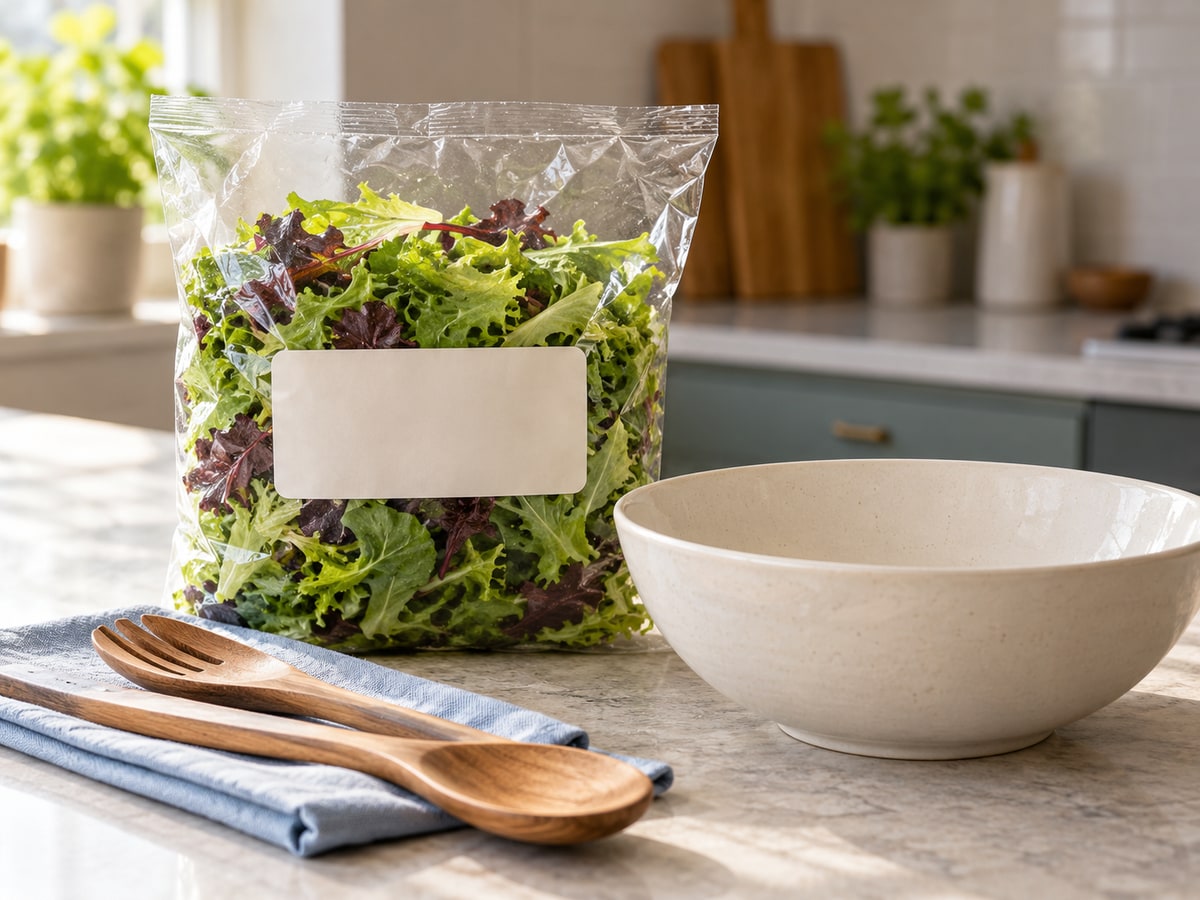
Check the instructions on the bag before reaching for a colander. The US Food and Drug Administration says produce labelled pre-washed or ready to eat can be used without another wash. A bag of leaves that says to wash before use needs a different preparation step. Being sold in a bag alone does not answer the question.
This guide uses US FDA household guidance, checked on 20 October 2026. Follow your product's instructions and your local food-safety authority where they differ. The shopping notes and lunch examples below are suggestions for organising preparation, not a guarantee that any particular bag is safe.
Read the preparation line, not just the front picture
Turn the package over and find the words about washing or preparation. Look separately for storage instructions and any after-opening directions. A serving suggestion on the front is not the same thing as an instruction telling you whether the leaves need washing.
If the pack says ready to eat
The FDA's produce-handling guidance explains that pre-washed, ready-to-eat produce does not require further washing. If you choose to rinse it anyway, the FDA cautions against contact with unclean utensils or surfaces.
As a practical routine, put a clean serving bowl and utensil on the counter before opening the bag. Read the directions first, then portion the amount you intend to use. You do not need to build an extra washing step into a product that explicitly does not require one.
If the pack says wash before use
Follow that instruction. FDA advice for produce that needs washing is to use running water; soap, detergent and commercial produce washes are not recommended. Its cleaning tips also advise clean hands and drying washed produce with a clean cloth or paper towel.
You could keep the bowl, colander and drying materials together as a preparation station. Choose equipment you can clean and store conveniently. If the wording is missing or ambiguous, consult the manufacturer rather than inferring ready-to-eat status from the colour, price or appearance of the packaging.
Try two different lunch setups
Imagine you are building the same lunch twice: leaves, a separately prepared bean component and bread. In the first version, the leaves come from a bag explicitly marked ready to eat. Your preparation note might simply read: “Check pack; use clean bowl; return remainder as directed.”
In the second version, the packet instructs you to wash the leaves. Your note needs space for that step and for the equipment it requires. The finished lunch may look similar, but the instructions you followed were different. These examples illustrate reading a label, not a tested meal or a prescribed serving.
For the bean component, our canned-bean guide addresses a separate question about draining and liquid. Do not transfer the bean method to the salad just because both ingredients are being added to one bowl.
Keep the serving area separate from raw-food preparation
FDA guidance says to keep produce eaten raw apart from raw meat, poultry, seafood and utensils used for them. Begin with clean hands. Reusing a board from raw-chicken preparation is not covered by the salad's ready-to-eat label.
A useful planning suggestion is to prepare your salad area before starting a separate raw-meat task. Check what is already on the counter and choose a clean place for the serving bowl. If your kitchen is small, do the tasks in separate stages with appropriate cleaning between them.
Keep the storage question separate from washing
The FDA's storage guidance advises a refrigerator at or below 4°C (40°F), prompt refrigeration of foods that need it and following label directions. Its produce guidance specifically includes refrigerated storage for packaged, pre-cut produce. Ready to eat does not mean shelf stable.
Make the next use visible
You could retain the original packaging instructions with the remaining leaves and write down when you opened it. Use the manufacturer's after-opening directions where supplied; this article does not assign every brand the same number of fridge days. Buy a pack size that fits the meals you actually intend to make.
A suggested shopping note is “leaves for two named meals” rather than “large bag because it looks useful.” For more ideas about planning components without repeating complete meals, see our flexible meal-prep guide.
Know what the label cannot establish
The FDA notes that washing reduces, but does not eliminate, bacteria. Its storage advice also explains that food may be unsafe without looking or smelling spoiled. Neither a rinse nor an attractive appearance is proof of safety.
Keep a product's handling instructions distinct from any specific recall or public-health notice that applies to it. Follow that notice directly rather than treating this general guide as a way around it. If you are unsure about a particular product, ask the manufacturer or your local food-safety authority.
Nutrient values vary by variety, brand, serving size and preparation. For food context beyond preparation, explore our nutrition examples. To hear about the planned Sweat & Snack app's connected meal-planning and preparation tools, join the app waitlist.