Articles are currently available in English.
Nutrition
Hard-Boiled Eggs for Tomorrow: Peel Now or Later?
By Sweat & Snack · 2026-10-21
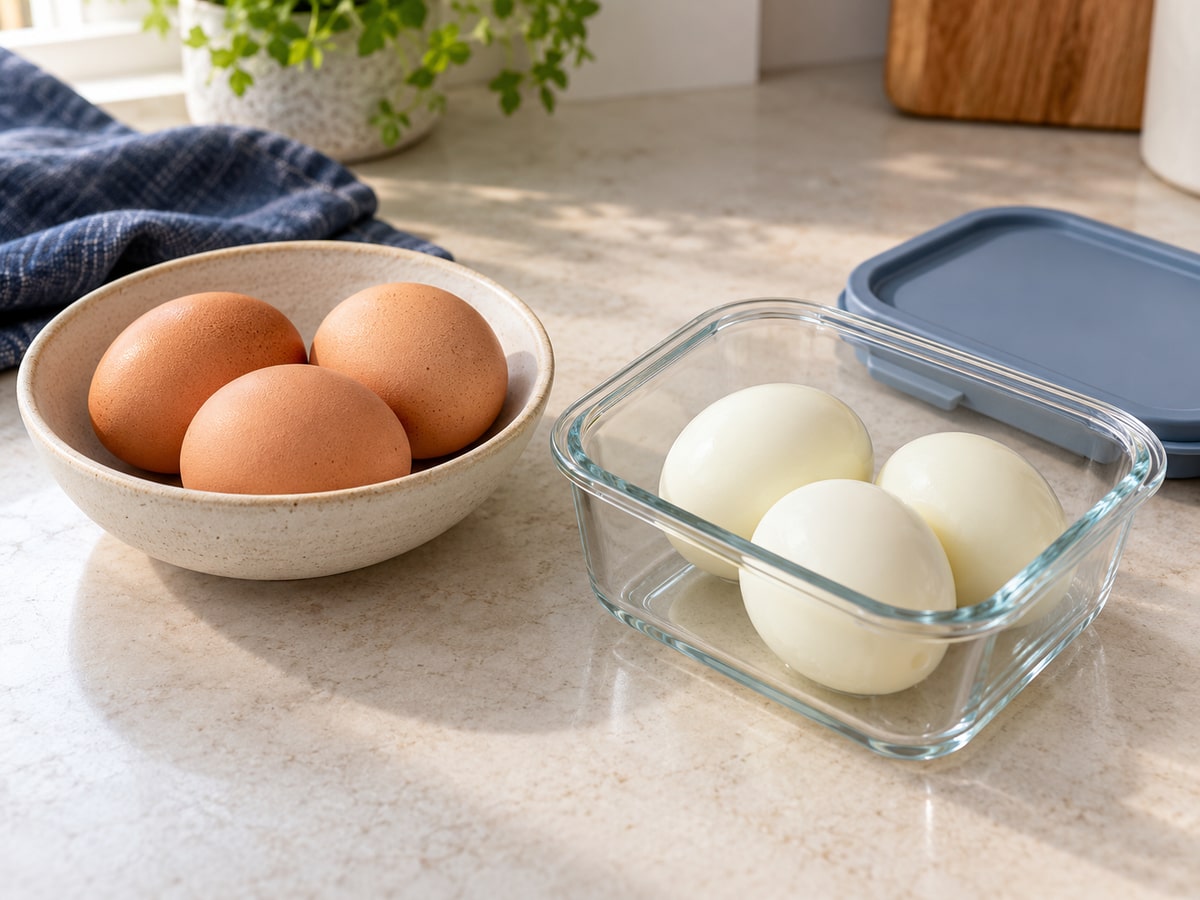
You can peel hard-boiled eggs before refrigerating them or leave the shells on. The FDA gives both the same limit: use within one week of cooking, with proper refrigeration. Peeling tomorrow does not start a new storage week.
For tomorrow's breakfast or lunch, choose the option that fits your preparation time and eating place. This guide separates that convenience decision from the storage rules. It covers fully hard-cooked eggs prepared at home, using US household guidance; follow local food-safety advice and any stricter product instructions where you live.
Choose when you want to do the peeling
As a practical suggestion, peel ahead if you want to open a lunch container and eat without finding a bin for shells. Leave the shells on if you prefer to finish the preparation at home immediately before serving. Neither choice gives permission to leave cooked eggs unrefrigerated all afternoon.
Peel now for a ready-to-use component
You could prepare only the eggs you plan to use tomorrow, put them in a clean covered container and leave dressings in a separate pot. This is an organisation suggestion, not evidence that a particular container or dressing extends storage life. Avoid adding extra preparation steps just because a large batch seems more efficient.
Peel later when you will eat at home
You could keep the cooked eggs together in their own labelled container, then peel the number needed for breakfast. Make the label clear enough to distinguish the cooked batch from uncooked eggs. Choose this version if you would rather do the final assembly at home than carry a ready-made lunch.
Put the cooking date on the container
A useful label might read “hard-cooked Wednesday evening; Thursday lunch”. Add the actual calendar date when you make your own. The FDA's one-week limit is measured from cooking, whether the shell stays on or comes off. Moving an egg into a different container is not a reason to replace the original cooking date.
As a planning habit, write the date before putting the container away. If two batches are made on different days, keep their dates separate. This makes the next decision visible instead of asking someone else in the household to remember which eggs were prepared when.
Keep the cold-storage decision separate
The FDA's storage guidance calls for a refrigerator at or below 4°C (40°F), checked with an appliance thermometer, and covered containers or sealed storage bags. Refrigerate perishables promptly. Cooked eggs should not remain out for more than two hours, reduced to one hour when the air temperature is above about 32°C (90°F).
Do not use normal appearance or smell as proof that an egg is safe after poor storage: FDA explains that harmful bacteria can be present without obvious spoilage. When the storage history is uncertain, choose another meal rather than trying to rescue the plan with a new label.
Work through one evening-to-lunch example
Suppose you want eggs with toast at home and a separate lunch the next day. As a suggested workflow, first decide which serving actually needs to be ready to eat. Peel that portion, label the batch with its cooking date and refrigerate promptly. Keep tomorrow's bread, dressing and utensils in the places you normally pack them.
In the morning, check the label and the cold-storage plan before assembling lunch. If you decide to use the eggs in a mixed dish, look up the storage guidance for that finished dish rather than automatically assigning every mixture the plain egg's one-week limit. FDA distinguishes hard-cooked eggs from leftover cooked egg dishes.
If the eggs are travelling
FDA advises packing cooked eggs in an insulated cooler with enough ice or frozen gel packs to keep them cold. For a work or school lunch, it specifically mentions a frozen gel pack or frozen juice box. A shell is not a substitute for cold transport. Our no-fridge gym-bag guide helps you consider a different packing plan when chilling is unavailable.
Use the component in a meal you already like
For serving ideas, you could slice an egg onto toast at home or add it to a separately packed lunch just before eating. Treat these as suggestions for using the component, not a prescribed portion, complete nutrition plan or guaranteed exercise-recovery strategy. Our meal-prep system guide offers ways to organise components without making every lunch identical.
For nutrition references, start with the actual food and serving in our nutrition guide. Nutrient values vary by variety, brand, serving size, and preparation; USDA FoodData Central distinguishes sample, survey and branded-food data. No calorie or protein total is calculated here. Adapt food choices to your dietary needs and see our conditions and allergy guidance when relevant.
Leave tomorrow one clear instruction
Finish with a short note: “peel at breakfast” or “already peeled; pack cold”. Keeping that practical instruction beside the cooking date makes the plan easier to follow. For planned tools to organise meals and preparation reminders, join the Sweat & Snack app waitlist.