Articles are currently available in English.
Nutrition
After the Gym With No Fridge: A Practical Snack-Packing Guide
By Sweat & Snack Editorial Team · 2026-10-12
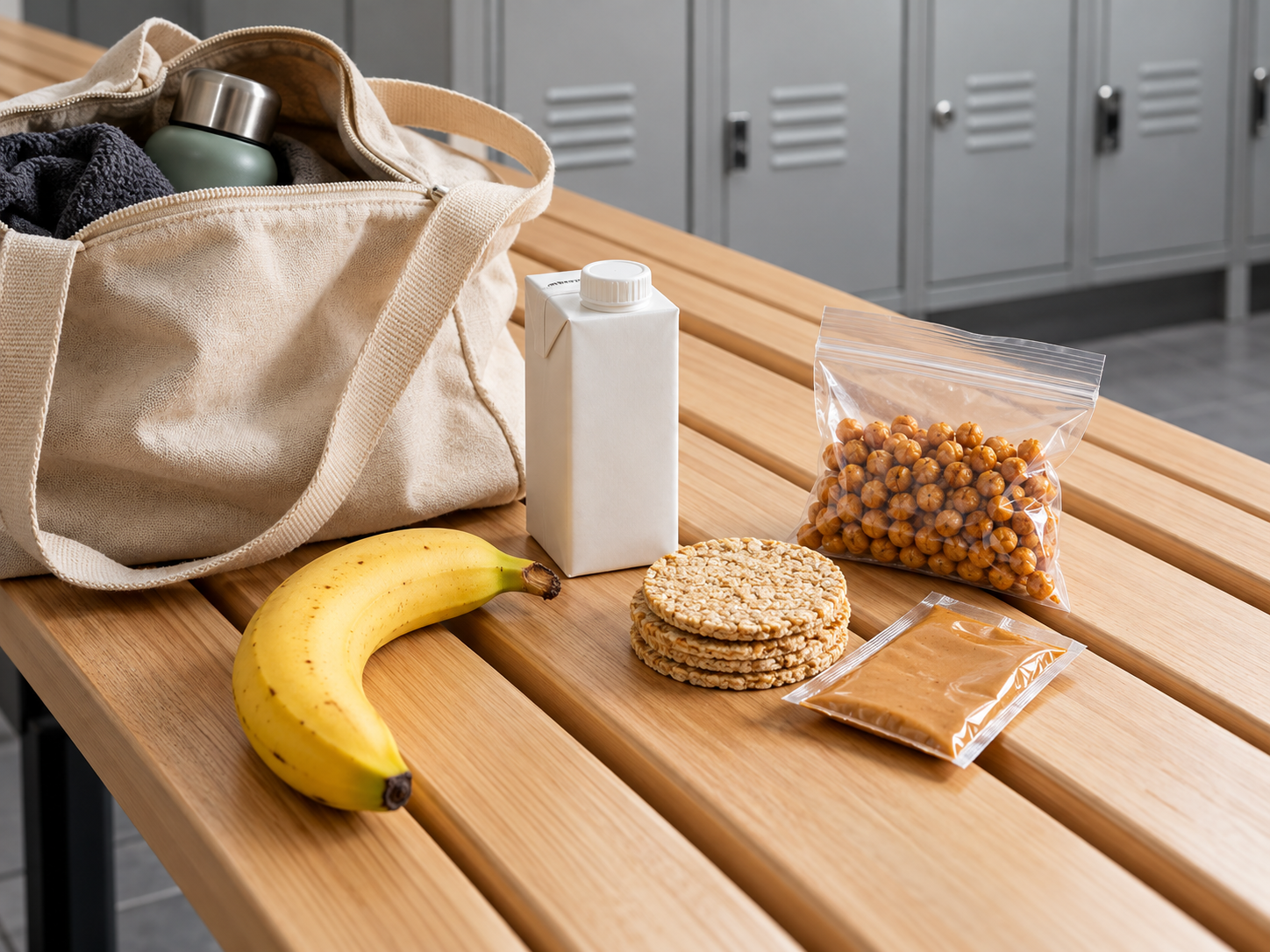
The no-fridge journey home is a different food question from a normal snack list. Start with the time you will be away, whether you have an insulated bag and what needs refrigeration. Then pack a small option you can store safely and actually eat, rather than buying something you have to guess about later.
This guide is for the practical gap between finishing a gym session and reaching a refrigerator. It does not claim that everyone needs a snack after every workout. If dinner is soon, our snack-or-dinner guide can help you decide whether a small stopgap makes sense for your plans.
First divide the bag into two groups
A useful packing habit is to separate foods that are shelf-stable while unopened from foods that need refrigeration. A banana, sealed oatcakes, plain crackers, a sealed pouch of roasted chickpeas or an unopened packet of nut or seed butter can be straightforward bag options when their labels allow room-temperature storage. Their exact ingredients, allergy warnings and serving sizes vary by brand and preparation, so use the pack label for the food in your hand.
Yogurt, cooked leftovers, cut fruit, egg-based foods and many ready-made drinks belong in the chilled group. Pack those only when you can keep them cold in an insulated bag with a suitable cold source, then refrigerate them when you arrive. A regular gym bag does not keep a perishable food cold by itself.
Build one small combination, not a giant recovery kit
For a journey where you have no cold bag, you might pack one fruit and one sealed shelf-stable companion. Examples include a banana with oatcakes, an apple with a sealed nut or seed butter sachet, or crackers with a sealed roasted-chickpea pouch. These are food ideas, not a prescription or a promise about recovery.
For a journey where you do have an insulated bag and a cold source, you could choose a chilled option you already enjoy and plan to refrigerate it promptly at the other end. Keep the bag closed between the gym and home. If you are unsure how long the trip will take or whether the food stayed cold, choose a shelf-stable option instead.
A packing timeline that works on busy days
Before leaving home
Choose the journey length first. Put a shelf-stable item in an easy-to-reach pocket. If you are using chilled food, add the cold source and keep it separate from warm gym clothes. Check the package date, storage instructions and allergens before you leave rather than when you are tired after a session.
At the gym
Keep food away from damp towels and open drink bottles. Leave the snack sealed until you are ready to eat. Wash or sanitise your hands before eating when you can. These simple steps are practical suggestions, especially when lockers and benches have shared surfaces.
When plans change
If the journey becomes longer than expected, do not treat a chilled snack as shelf-stable because it still looks fine. Choose another food, get home and refrigerate it, or discard it when the storage limits have been exceeded. Use the package instructions as well as the food type; different products can have different handling requirements.
Use labels to keep the suggestion personal
There is no single ‘best’ snack for every gym bag. Check the allergen statement, ingredients and portion on the food you buy. Beans, peas, nuts, seeds and soy foods can fit a range of eating patterns, but a packaged product may also contain ingredients or allergens that do not suit you. If you track nutrients, compare the specific product labels instead of assuming two foods with the same name are interchangeable.
For a recipe you can make after getting home, try our savoury pea-and-oat pancakes. For a broader work-bag planning approach, see protein snacks for work; this article adds the gym-to-home timing and cold-storage decision that a general desk-snack list does not cover. Browse the nutrition hub for more everyday food-planning ideas. For personal allergy or condition questions, use our conditions guidance to organise the discussion with a clinician.
Sources
General educational information. Packing examples are Sweat & Snack suggestions and do not guarantee food safety, recovery or a health outcome. Follow package storage instructions and individual allergy or clinician guidance. The feature and Pin images are AI-generated illustrations of fictional products.