Articles are currently available in English.
Recipe
Lemon-Dill Salmon Traybake with Potatoes and Green Beans
By Sweat & Snack · 2026-11-05
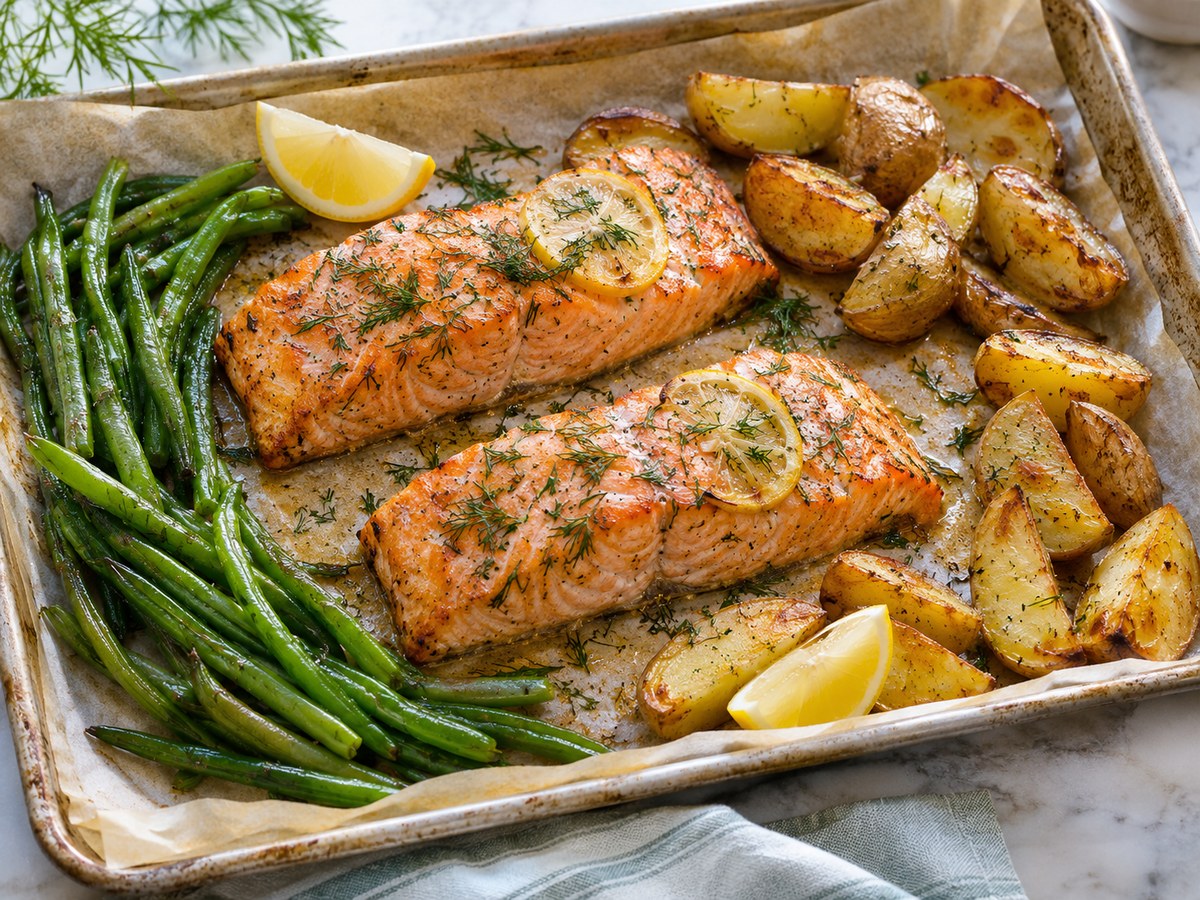
Potatoes and salmon rarely finish at the same moment if they go into a hot oven together. This tray gives the potatoes a head start, then adds the fish and green beans for a short final roast. Lemon and dill go on at the end so their flavour stays bright. The result is a practical two-serving dinner, not a claim that one timer fits every oven.
This is an original editorial recipe, not kitchen-tested. Allow roughly 15 minutes of preparation and 30–40 minutes of oven time, depending on potato size, fish thickness and your oven. Use a food thermometer to check the fish. The FDA seafood guide gives 63°C/145°F as the safe internal temperature for fish.
Ingredients for two servings
- 350 g small potatoes, halved or cut into roughly 2 cm pieces
- 2 salmon fillets, about 120–150 g each, fully thawed if previously frozen
- 200 g green beans, trimmed
- 1 tablespoon olive oil for potatoes, plus 1 teaspoon for beans and fish
- 1 lemon, half sliced and half kept for juice
- 2 tablespoons chopped fresh dill, divided
- ¼ teaspoon salt, optional, plus black pepper to taste
- Optional plain yogurt or a familiar sauce to serve separately
Use one sturdy rimmed baking tray large enough to leave some space between the ingredients, parchment if suitable for your oven temperature, a chopping board, oven gloves and a food thermometer. Wash hands and surfaces after handling raw fish; keep it away from ready-to-eat food.
Roast in two stages
- Heat and prepare. Set the oven to 220°C conventional or 200°C fan, about 425°F. Wash and dry the potatoes and beans. Toss potato pieces with 1 tablespoon oil, optional salt and pepper. Spread them in a single layer on the tray.
- Give potatoes a head start. Roast for 18–22 minutes, turning once. A fork should enter the surface but meet a little resistance at the centre. If pieces are still very firm, give them more time before adding the fish.
- Add fish and beans. Carefully move potatoes to the sides. Put the salmon portions in the centre with space around them; arrange beans nearby. Drizzle the remaining teaspoon of oil over beans and fish. Add black pepper, a little dill and a few lemon slices. Do not put raw fish on a utensil or plate that will later hold cooked food.
- Finish and measure. Roast another 10–15 minutes, checking sooner for thin fillets. Insert a cleaned thermometer into the thickest part of each fillet. Continue cooking until it reads at least 63°C/145°F. Potato centres should be tender and beans as cooked as you like. If the fish finishes first, move it to a clean plate and let the vegetables continue.
- Serve. Divide fish, potatoes and beans between two plates. Add remaining dill and a squeeze of lemon. Taste before adding more salt.
Adjust the tray without sacrificing the fish
Thick potato wedges can take longer than small halves; the fork check matters more than a precise minute count. If beans are colouring too quickly, move them to a less exposed part of the tray or remove them to a clean plate. Do not turn up the heat just to force the fish and vegetables to finish together. A crowded tray steams food and changes browning.
Use a different firm fish only after checking its safe cooking guidance. For a vegetarian meal, this method is a starting point for a different recipe, not a claim that a substitution has identical cooking time or nutrition. If buying frozen salmon, thaw it safely in the refrigerator according to package directions and the FDA guidance.
Store a spare portion safely
Serve promptly. Refrigerate leftovers in a shallow covered container within two hours, or one hour when it is above 32°C/90°F, and keep the refrigerator at 4°C/40°F or below, following FDA handling guidance. USDA FSIS says cooked fish can be kept refrigerated for three to four days. For this small batch, eating the spare portion the next day is simple; discard food left out past safe limits.
The portion is a serving idea, not a nutrition prescription. Nutrient values vary by variety, brand, serving and preparation; no calculated panel or recovery promise is made. For a different fish dinner, see our fish and chickpea skillet. For a plant-based tray, see aubergine and lentils. See our nutrition guide for broader food context. The photographs are AI-generated food illustrations; rely on your thermometer and the actual food rather than the image for doneness.