Articles are currently available in English.
Recipe
Fish & Chickpea Skillet for Two: Sauce First, Fish Last
By Sweat & Snack · 2026-11-03
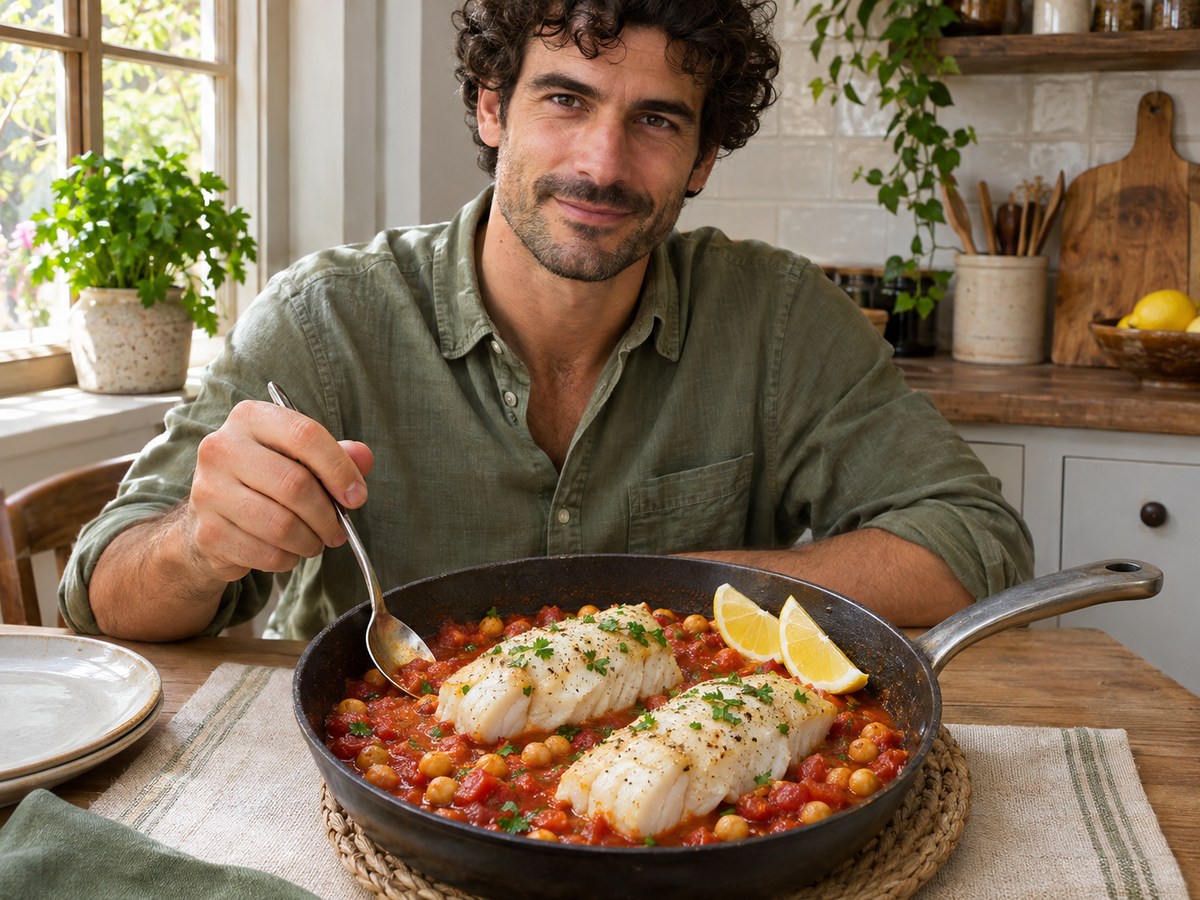
A tomato sauce can take a steady simmer; a fish fillet needs gentler handling. This small skillet dinner solves that mismatch by cooking the onion, tomatoes and chickpeas first, then laying the fish on top for the final covered stage. You do not need to brown or repeatedly turn the fillets.
This is an original editorial recipe, not kitchen-tested. Allow about 15 minutes for preparation and 25–35 minutes at the stove, with extra time if the fish needs it. Thickness, starting temperature and pan size change the cooking time. The thermometer check below, rather than the clock, decides when to serve.
Ingredients for two servings
- 2 skinless, boneless cod fillets, about 150 g each and 2–3 cm thick, fresh or fully thawed
- 240 g drained canned chickpeas, rinsed
- 400 g canned chopped tomatoes, including their juice
- 1 small onion, about 100 g, finely chopped
- 2 garlic cloves, finely chopped
- 1 tablespoon olive oil, 15 ml
- 1 teaspoon sweet paprika
- 60 ml water, plus 1 tablespoon at a time if needed
- 1 small lemon: 2 wedges for serving and 1–2 teaspoons juice for the sauce
- 1 tablespoon chopped parsley
- Black pepper and up to ¼ teaspoon salt, adjusted after tasting the sauce
- Optional: 2 slices of bread to serve alongside
Use a deep 24 cm frying pan or sauté pan with a close-fitting lid, a flexible spatula, a clean plate and a food thermometer. A very wide pan evaporates the sauce faster; a small crowded pan makes it harder to place the fillets in one layer. Keep a clear heatproof place for the lid.
Prepare the cold ingredients first
Keep fish chilled while you chop the vegetables and measure the sauce ingredients. Check the fillets for bones and remove any you find. Follow frozen-fish pack instructions, including any directions about opening packaging before thawing. Use fully thawed fish here; a frozen centre changes this method.
FDA seafood guidance advises refrigerator thawing and keeping raw seafood separate from ready-to-eat foods. Store at 4°C/40°F or colder and use fresh seafood within two days of purchase, or freeze it. Wash hands and clean equipment after raw-fish contact. Do not put cooked fish back on its raw-fish plate.
Cook the sauce, then add the fish
- Soften the onion. Heat the oil over medium heat. Add the onion and cook for 6–8 minutes, stirring, until softened. If it starts catching before softening, lower the heat and add a tablespoon of the measured water.
- Add the flavour base. Stir in garlic and paprika for about 30 seconds, just until fragrant. Add tomatoes, chickpeas and the remaining measured water. Scrape the pan gently to loosen the onion.
- Simmer before the fish goes in. Bring to a gentle bubble, then lower the heat. Cook uncovered for 8–10 minutes, stirring occasionally. The sauce should be spoonable, with enough liquid to surround the fish rather than a dry paste. Add water by the tablespoon if it becomes too thick.
- Make room for both fillets. Taste the sauce now and adjust salt and pepper. Lay the fish in one layer on top, nestling it slightly into the sauce. Spoon a little sauce over each piece. Cover and maintain a gentle simmer, not a vigorous boil.
- Start checking, rather than declaring it done. Check after about 8 minutes. Insert a clean thermometer into the thickest part of each fillet, preferably from the side so the tip reaches the centre without touching the pan. Continue covered cooking and recheck if either piece is below 63°C/145°F. Clean the probe between checks.
- Finish gently. Once both pieces meet the temperature check, take the pan off the heat. Lift fish to clean plates with the spatula. Stir lemon juice into the sauce, taste, then spoon chickpeas and tomatoes around each fillet. Add parsley and a lemon wedge; serve bread separately if wanted.
The FoodSafety.gov temperature chart lists 63°C/145°F for fin fish. Opaque flesh that separates easily is a useful visual cue, but this recipe uses a thermometer to avoid guessing from the sauce or the surface colour. A thin tail section may finish earlier than a thick loin; check each piece.
If the sauce or fish behaves differently
Sauce drying before the centre cooks? Add a tablespoon or two of water around the fish, cover again and lower the heat. Sauce too thin after the fish is ready? Move the fish to warm clean plates, then reduce the sauce briefly without it. Leaving cooked fish bubbling while you fix the sauce can break it into fragments.
Haddock or another boneless white fish of similar thickness can replace cod; the temperature check still governs doneness. A thicker piece needs more time. Use a labelled no-added-salt tomato or chickpea option if it suits your needs, then season to taste. Fish is an allergen; a chickpea-only version is a different meal, not an allergy-safe swap if it shares contaminated equipment.
Serving, leftovers and another dinner idea
Divide the two fish pieces and sauce between two plates. This combines fish, pulses and vegetables, but we have not calculated a nutrient panel or a protein target. Add bread or another suitable side according to appetite. Canned tomatoes make this practical across seasons without claiming fresh tomatoes are locally in season everywhere.
Refrigerate leftovers promptly in shallow covered containers: within two hours, or one hour above 32°C/90°F, following FDA guidance. For this small batch, our practical plan is to eat the refrigerated portion the next day rather than keep a large batch. Reheat to 74°C/165°F throughout, as the FoodSafety.gov chart advises for leftovers; use a thermometer and avoid repeated warming. Discard food that exceeded the safe room-temperature window.
For an oven dinner with a different cooking method, try our chicken and white-bean traybake. If you are deciding which canned-bean liquid to keep, see drain, rinse or keep the liquid. You can also join the Sweat & Snack waitlist for future planning tools.
Nutrient values vary by fish variety, brand, preparation and serving size. Use our nutrition guide for label-reading context, and our conditions information for the limits of general food advice.