Articles are currently available in English.
Recipe
Lemon-Tahini Sauce: One Batch, Two Useful Textures
By Sweat & Snack · 2026-10-21
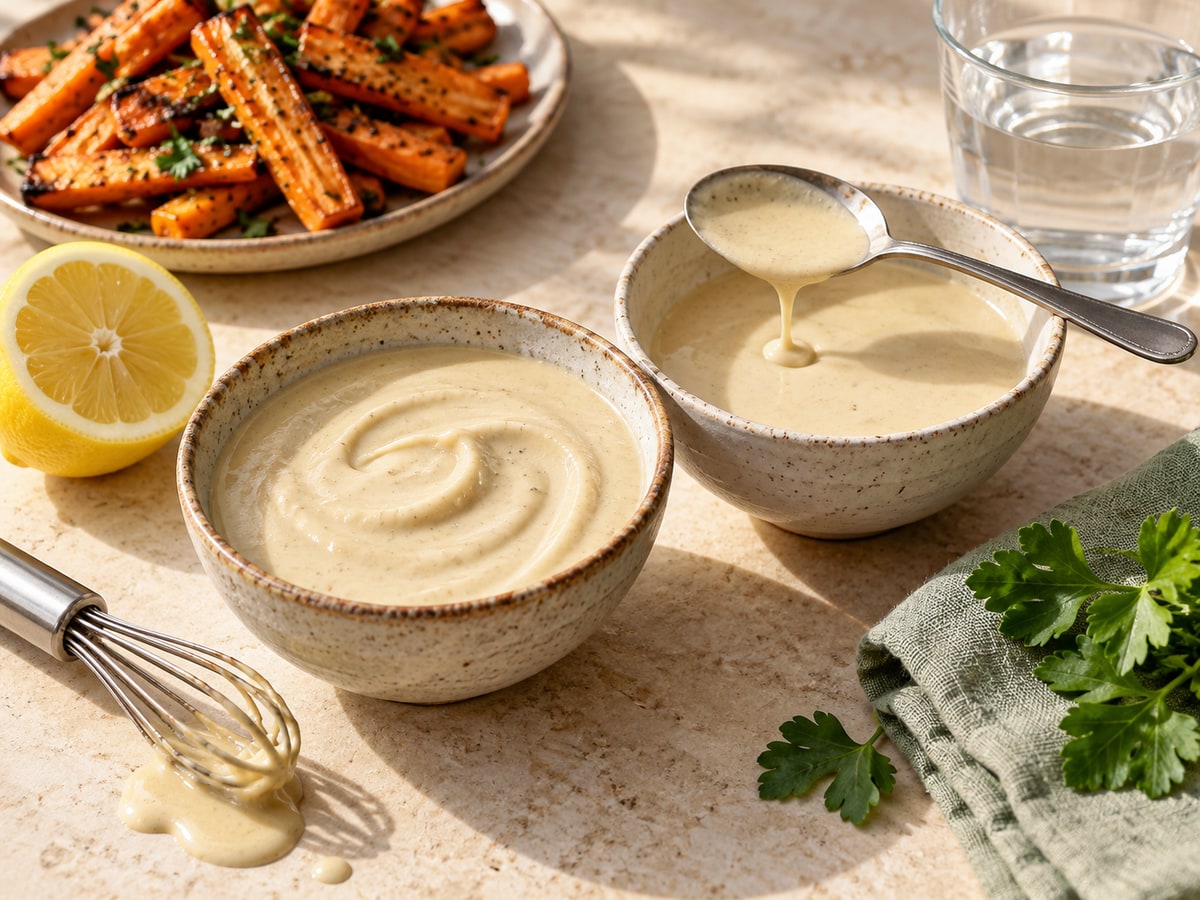
If lemon-tahini sauce turns into a thick paste, keep whisking in cold water a little at a time. Tahini producer Soom describes this thickening stage and gradual-water method. Stop when the sauce suits the food you want to eat, rather than treating one fixed water quantity as the finish line.
This suggested small-batch recipe adds a useful checkpoint: reserve some sauce while it is spoonable, then thin only the rest. You get a topping for a savoury snack and a drizzle for another meal without making two recipes. It is inspired by lemon-sesame sauces used around the Eastern Mediterranean, with a simplified garlic-powder option; it is not presented as a traditional regional formula.
Ingredients for one small batch
Allow about 10 minutes. The suggested quantities make roughly 120–150 ml, depending on the water you add. Use a small bowl, fork or whisk, measuring spoons and two clean containers. Here, a tablespoon means 15 ml and a teaspoon means 5 ml.
- 60 g plain tahini, stirred in its original jar before measuring
- 20 ml lemon juice, plus a little extra only if wanted after tasting
- 45 ml cold drinking water to start, with another 15–30 ml available for adjustment
- One-eighth teaspoon garlic powder, optional
- One-eighth teaspoon ground cumin, optional
- A small pinch of salt, optional and adjusted to taste
- One tablespoon chopped flat-leaf parsley, optional, added only to the portion you are serving
Choose plain sesame paste rather than a sweetened tahini spread or a ready-made sauce. Read the ingredient and storage labels. These measurements are a starting formula: different jars and your preferred texture can require different amounts of water.
Whisk, check, then split
- Combine the base. Put the measured tahini, lemon juice and optional garlic powder, cumin and salt in the bowl. Mix until evenly combined. If it becomes stiff, pause before adding more tahini; work through the water step first.
- Add the first water gradually. Whisk in 15 ml cold water, then another 15 ml. Scrape around the bowl so dry-looking pockets are incorporated. Add the remaining 15 ml only as needed, continuing to mix until the sauce is smooth.
- Check the spoonable texture. Lift a spoonful and return it to the bowl. For the thicker portion, aim for a soft mound that spreads with the back of the spoon. If it is still a stiff paste, add water one teaspoon at a time and whisk again.
- Reserve half now. Move roughly half the spoonable sauce to a clean container. This is your stopping point for a topping; leave it alone while you adjust the other half.
- Make the drizzle. Add water to the remaining sauce one teaspoon at a time. Test after each addition. Stop when it falls from a spoon in a continuous narrow ribbon that you would be happy to pour over a bowl.
- Taste each portion. Adjust the seasoning separately. Add parsley only if wanted, then use promptly or cover, date and refrigerate the portions.
Give each texture a different job
Spoonable: finish a savoury snack
As a serving suggestion, spread a little sauce on toast and add prepared vegetables, or spoon it beside roasted carrots. Put a small serving on the plate instead of dipping repeatedly into the stored batch. Keep the amount flexible for your appetite and meal; this is not a prescribed recovery portion.
Pourable: dress a bowl just before eating
Keep the thinner portion separate until serving. Try it with the components in our lentil power bowl, adjusting that recipe's existing dressing to avoid adding two sauces. For a different base, use a little over mushroom bulgur. The aim is to change a finishing component rather than cook every part of lunch again.
Adjust the part that needs fixing
Still too thick? Add another teaspoon of water, whisk fully and check again. Too thin? Whisk a little plain tahini into a separate spoonful of sauce, then combine it with the thin portion. Treat this as a texture adjustment, not a reason to keep expanding the entire batch.
Too sharp for your taste? Try a small amount of tahini and water in a separate spoonful before changing everything. Use that taste test to decide whether to adjust the rest. No lemon? Lime juice is a possible flavour swap, added gradually; it changes the taste and does not make the sauce shelf-stable.
Cover, date and keep cold
For this small batch, plan to use one portion now and the other tomorrow, with prompt refrigeration. That is a meal-planning suggestion, not a tested shelf-life guarantee. Do not transfer the original tahini jar's storage instructions to the diluted sauce.
FDA household guidance advises covered storage, a refrigerator at or below 4°C (40°F), and prompt refrigeration of perishables. Its limit out of refrigeration is two hours, or one hour above about 32°C (90°F). Follow local guidance and stricter ingredient instructions. Lemon juice is not a substitute for refrigeration; normal appearance or smell cannot establish safety after poor storage.
Check sesame and keep nutrition in context
Tahini contains sesame. The FDA identifies sesame as a major food allergen and advises checking labels. This recipe is unsuitable for someone with a sesame allergy; do not assume replacing one ingredient resolves cross-contact. See our conditions and allergy guidance for general context.
No calorie or protein total is calculated here. Nutrient values vary by variety, brand, serving size, and preparation; USDA FoodData Central explains its different data sources and sample variability. Use the actual label and serving alongside our nutrition guide. For planned tools to organise components and preparation reminders, join the Sweat & Snack app waitlist.