Articles are currently available in English.
Recipe
Mushroom Bulgur: One Base, Two Different Lunches
By Sweat & Snack · 2026-10-20
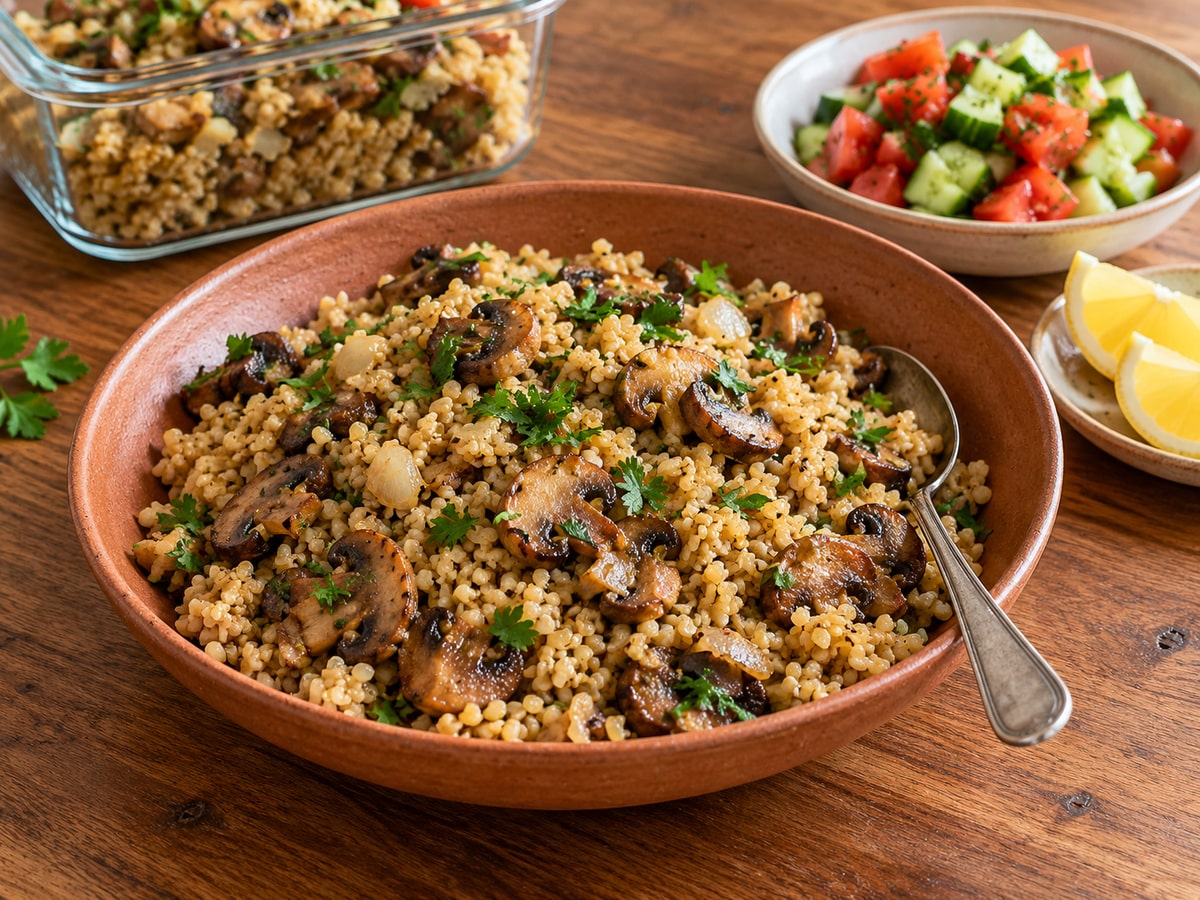
Cook the mushroom-and-bulgur base without the lemon or crunchy vegetables, then finish only the portion you are about to eat. That is the suggested approach here: a warm parsley plate first, followed by a chilled cucumber-and-tomato lunch from a separately stored portion.
This is a small component-prep recipe for cooks who already make simple grain dishes and want two lunches with different textures. It is a flexible home preparation, not a traditional regional recipe or a personalized meal plan. For the broader idea, see our prepare-once meal-prep system.
Choose the bulgur before you start
Use medium or coarse bulgur with stovetop instructions on its packet. Bulgur is made from partially cooked wheat; this producer's preparation guide describes one cup of bulgur to two cups of water as an example. Grinds and products differ, so use your packet's liquid amount and cooking time. Fine bulgur intended for soaking is not the version used below.
If a shop sells something labelled only cracked wheat or dalia, check its preparation directions rather than assuming it behaves like bulgur. If your product needs a different method, cook it separately and fold it into the browned mushrooms afterwards.
Ingredients for two lunch bases
Allow roughly 35–45 minutes, depending on the packet and your pan. This makes two suggested base portions; add accompaniments and adjust the amount to your appetite.
For the undressed base
- 150 g dry medium or coarse bulgur
- 300 g cultivated button or chestnut mushrooms, cleaned and sliced
- 1 small onion, finely diced
- 1 tablespoon olive oil
- 1 small garlic clove, finely chopped, optional
- Water: the amount stated on your bulgur packet for 150 g
- Black pepper and a small pinch of salt, to taste
Keep these separate until serving
- 2 tablespoons chopped parsley
- 1 lemon, cut into wedges
- Half a cucumber, diced
- 1 medium tomato, diced
- Optional accompaniments: ready-to-eat chickpeas or plain yogurt, with their labels checked
Method: brown, simmer, then divide
- Check the packet. Measure its required water before cooking. Have a wide, lidded sauté pan and two shallow food containers ready. Wash hands and prepare ingredients with clean equipment.
- Brown the mushrooms. Heat the oil over medium-high heat. Add the mushrooms in a loose layer; use two batches if the pan is crowded. Cook, stirring occasionally, until their released liquid has evaporated and the slices show brown edges. Transfer them to a plate.
- Soften the onion. Reduce the heat to medium. Cook the onion in the same pan, stirring, until softened. Add a tablespoon of water if it catches. Add the optional garlic for the final minute.
- Cook the bulgur. Stir in the dry bulgur, measured water, pepper and salt. Bring to a simmer, cover and cook gently for the packet's stated time. Return the mushrooms near the end and fold them through. If the grains are still firm when the pan looks dry, add a little hot water and continue cooking; if tender but visibly wet, briefly uncover over low heat.
- Rest and split. Remove from the heat when the bulgur is tender. Rest for about five minutes, then loosen with a fork. Serve one portion now if wanted. Promptly transfer the portion for later to a shallow container and refrigerate as described below. Do not leave the whole pan out to become cold.
- Finish at the meal. Add parsley and lemon only to the portion being served. Keep the cucumber, tomato and any yogurt separately refrigerated until needed.
Two finishes, rather than two identical boxes
Lunch one: a warm parsley plate
Serve a freshly cooked portion with half the parsley and a squeeze of lemon. Suggested additions are ready-to-eat chickpeas, plain yogurt or another accompaniment you enjoy. Keep the base visible rather than covering it in sauce. If you want a yogurt side, our small cucumber raita gives a separate preparation method.
Lunch two: a crisp, chilled bowl
Use the promptly chilled, continuously refrigerated portion. Just before eating, fold in the cucumber, tomato, remaining parsley and lemon to taste. Store and carry it cold; a lunch bag alone does not establish refrigeration. Our no-fridge packing guide explains why chilled food needs a different transport plan.
For a warm second lunch instead, reheat the base first, then add the raw vegetables separately. The same base does not have to become a salad if that is not what you want tomorrow.
Substitutions and texture fixes
- No bulgur available: cook quinoa separately according to its packet, then fold it into the mushroom mixture. This changes the recipe and liquid method; do not use a direct dry-grain swap.
- No parsley: try chives, or leave the herbs out and finish with lemon.
- Mushrooms look pale: use a wider pan or smaller batches next time. For this batch, let visible liquid evaporate before combining with the grain.
- Tomorrow's bowl looks wet: drain the diced tomato before adding it, and dress only the portion you will eat.
Bulgur contains wheat and is not gluten-free. Check ingredient and allergen labels, including those of any substitutes and accompaniments; yogurt introduces milk. The FDA allergen guide explains label checking. Our conditions and allergy information provides general context.
Chill, store and reheat safely
The following uses US household guidance. Refrigerate perishables within two hours, or one hour above 32°C/90°F, and keep the fridge at or below 4°C/40°F. See the FDA storage guidance. Lemon does not replace refrigeration.
Divide leftovers into shallow containers and chill promptly; hot food can go directly into the refrigerator. USDA gives properly handled refrigerated leftovers three to four days, although the plan here is the next day's lunch. If reheating, reach 74°C/165°F throughout, checked with a food thermometer. See USDA leftovers guidance. Follow stricter local or pack instructions. Discard food whose time or temperature history is uncertain; smell is not a safety test.
Nutrition context and your next preparation
This recipe is a grain-and-mushroom base, not a calculated complete meal or a prescribed exercise-recovery portion. Nutrient values vary by variety, brand, serving size and preparation. For your own estimate, match ingredient amounts and preparation to the packet or an appropriate USDA FoodData Central record; this article supplies no invented calorie or protein total. Explore our nutrition references for more context.
After making it, note your bulgur brand, the liquid it required and the finish you preferred. That small note is more useful for the next batch than committing to five identical lunches. Want help turning components into a routine? Join the Sweat & Snack app waitlist for updates on planned personalized preparation and shopping tools.