Articles are currently available in English.
Exercise
Missed a Workout? How to Rearrange the Rest of Your Week
By Sweat & Snack Editorial Team · 2026-10-13
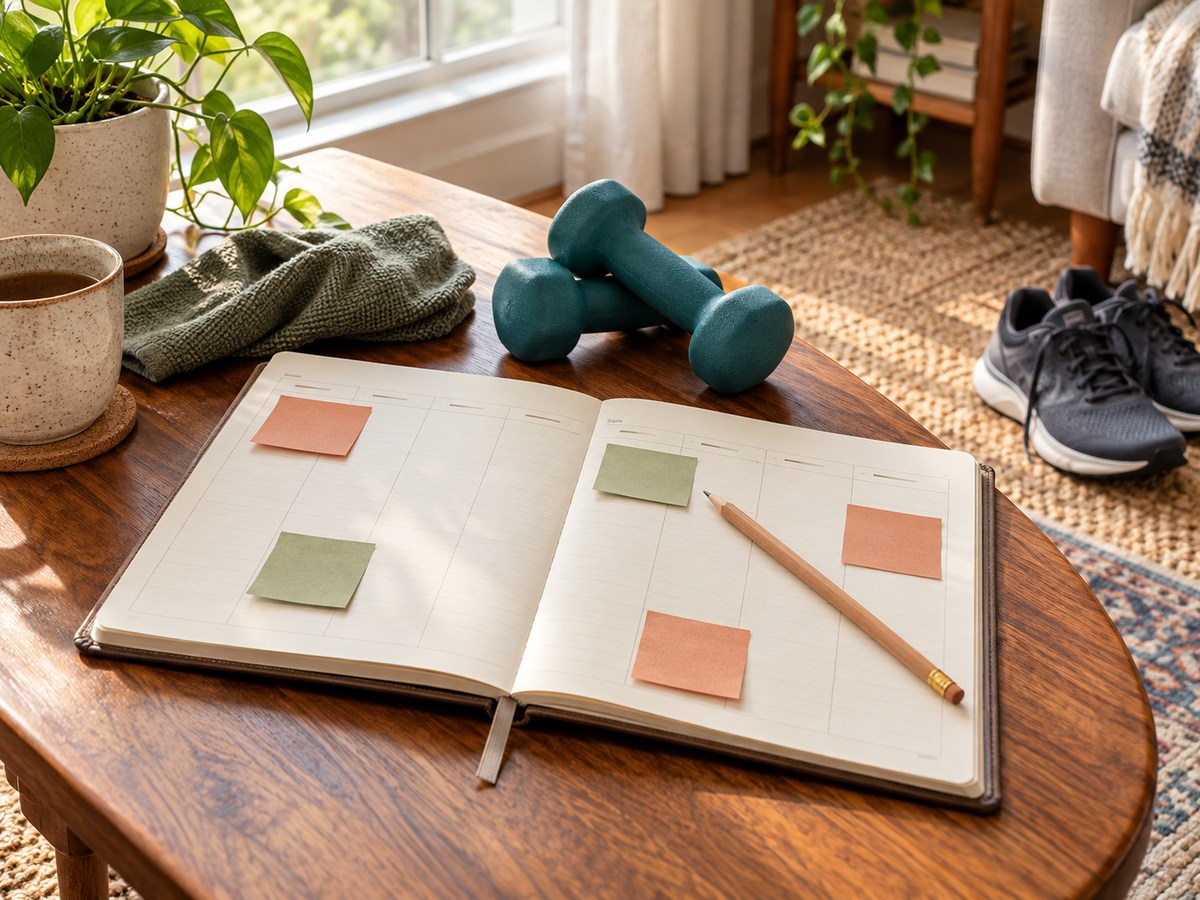
Missed a workout because the day ran late? Start with the next realistic opening in your calendar. You could move the session, shorten what you planned, or resume at your next usual time. A useful default suggestion is to choose one manageable next session instead of automatically doubling the next workout.
This guide is for an ordinary scheduling interruption: a late meeting, travel delay or changed family plans. The examples are practical planning suggestions, not a personalised training programme. If you missed exercise because of illness, injury or a health restriction, get advice appropriate to that situation before rearranging training.
First, separate the missed appointment from the weekly plan
Write down what you actually completed and what still fits. Include the activity itself, the available time and any travel or setup. A thirty-minute gap does not automatically mean thirty minutes of exercise if you also need to get home and change.
For general context, adult guidance includes at least 150 minutes of moderate-intensity aerobic activity a week and muscle-strengthening activity on two days. Aerobic activity can be spread across the week, and some activity is better than none. These are general targets to build towards, not a demand to squeeze every missed minute into Sunday. Our weekly activity target guide explains the broader framework.
Ask three questions before changing anything
- Was this a one-off diary problem, or does this time slot repeatedly fail?
- Is there another opening that leaves the rest of my plan workable?
- Am I following a coach’s programme with specific session order or recovery instructions?
If someone is directing your training, ask how they want missed sessions handled. A general calendar example cannot account for the demands of a particular strength programme, sport or rehabilitation plan.
Choose between moving, shortening and resuming
Move it when another opening genuinely works
Moving a session can be a convenient choice when the problem was timing. Check the sessions on both sides of the new appointment, including the beginning of next week. Keep any recovery arrangements in your existing plan; moving every remaining workout forward may create another clash.
For example, imagine you planned familiar home-strength sessions on Tuesday and Friday. Tuesday was lost to a late shift. If Wednesday is available and still fits the recovery arrangements you normally follow, moving Tuesday’s session there may work. Keep Friday under review rather than treating the new dates as a rule everyone should copy.
Shorten it when the original time commitment no longer fits
As a planning suggestion, choose a shorter version you already know how to do, with enough time for its preparation and breaks. For walking, you could use a smaller time window or familiar shorter route. For strength work, use a previously planned short session or ask your instructor which parts to prioritise.
A shorter appointment should not mean squeezing the same work into less time by rushing. Our rest-between-sets guide discusses a separate question: how to think about breaks within a home-strength session. Record the shorter session honestly instead of counting it as an identical replacement.
Resume when the remaining diary is already full
If there is no practical opening, leaving the missed session off this week’s calendar is another option. Keep the next ordinary appointment visible. You can acknowledge that the week contained less activity without turning the next session into a punishment or abandoning the plan altogether.
For example, if Friday’s workout is missed and the weekend is occupied, you might resume on Monday at your familiar level. Whether a particular training plan needs a different adjustment is a question for its instructor. This example is about choosing the next appointment, not predicting fitness changes from one missed day.
If you miss a walk, look for a realistic smaller window
Suppose you planned a twenty-minute walk but only ten minutes remain before you need to leave. A ten-minute walk on a familiar suitable route could be your revised plan. If useful, consider another short opportunity later; do not assume you must replace the missing time that same evening.
For weekly aerobic targets, intensity matters as well as time. Moderate-intensity activity generally lets you talk but not sing. A leisurely stroll and a brisk walk may therefore belong in different parts of your activity record. Use the talk test as a general guide rather than treating a particular speed as right for everyone.
If weather caused the change, our small-room indoor walking guide offers a different setting to consider. Choose it only if the available space and activity suit you.
Check the boundary between this week and next week
A Sunday box on a planner is a calendar boundary, not an instruction to add a demanding session. Before moving a workout into the weekend, look at Monday’s plan too. As an organisation suggestion, keep both days visible while you decide, especially if your strength sessions use similar movements.
Write the next step in one line: “Wednesday after work: familiar home session; review Friday before confirming.” That is easier to act on than a long list of overdue workouts. You can use the weekly planner to keep the revised appointment beside the rest of your week.
Use the missed session to improve next week’s setup
If the same evening repeatedly disappears, change one practical detail. You might choose a different day, prepare your equipment earlier, reduce travel by using a suitable home option, or keep a familiar short alternative available. Pick an adjustment you can actually try next week.
Here is a reusable note: “I missed ___ because ___. My next available session is ___. If that window changes, my fallback is ___.” Review whether that fallback worked before adding more appointments. A realistic plan can include revisions; your record does not need to look perfect.
Sources
- CDC: Adding Physical Activity as an Adult — adult weekly aerobic and strengthening guidance, activity spread across the week and individual health considerations.
- CDC: Measuring Physical Activity Intensity — the talk test for relative intensity.
- NIDDK: Changing Your Habits for Better Health — tracking, anticipating barriers and regrouping after setbacks.
Sources checked 13 October 2026. The decision framework, examples and note template are original practical suggestions from Sweat & Snack. Images are AI-generated planning scenes.