Articles are currently available in English.
Nutrition
Workout Done, Dinner Soon: Do You Need a Snack?
By Sweat & Snack Editorial Team · 2026-10-10
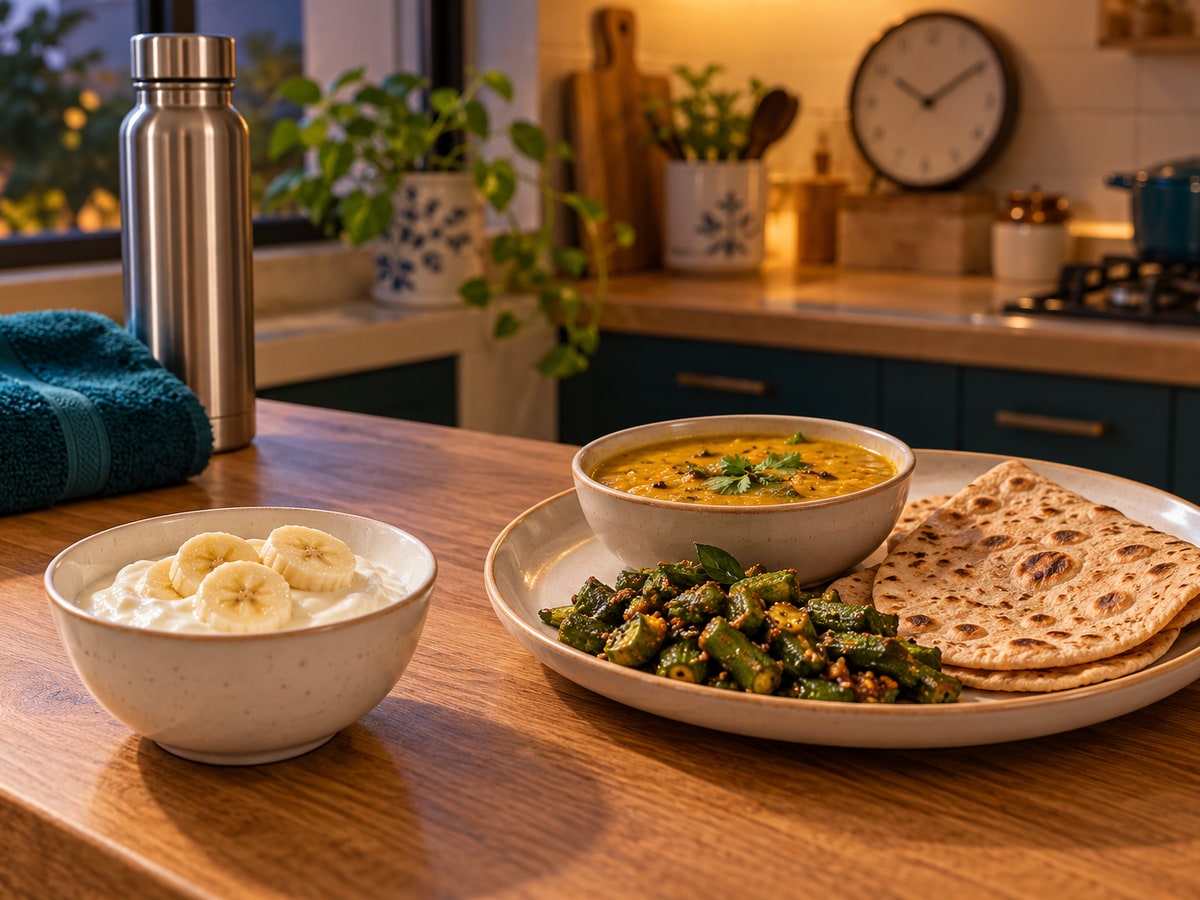
Workout finished and dinner is about 30 minutes away? You do not automatically need a separate snack. A useful starting point is to make the coming meal your after-exercise food, while leaving room for a snack if you are hungry or dinner gets delayed. The practical choice depends on the session, your earlier meals and when you will train again.
This guide is for everyday meal planning around recreational exercise. The examples below are suggestions, not a prescribed eating schedule. A short walk before supper and two demanding training sessions in one day deserve different questions.
First ask three questions
- Is dinner actually close? Count cooking and travel time, not just the time you hope to sit down.
- How do you feel about eating now? If you are hungry, eating something is an option even when a meal is planned.
- What comes next? Note whether this was your only session or another demanding session is approaching.
Write down your likely dinner time before starting the workout. “Dal and roti at 8” gives you a more useful plan than “I will sort food out later.” If someone else is cooking, a quick message about timing may be the most helpful preparation.
Dinner in 30 minutes: start with the meal
HPRC, part of Uniformed Services University, explains that a meal planned within two hours can take the place of a separate post-workout snack. Its guidance has a military and performance context; its numerical food targets are not a universal prescription for every adult.
For an ordinary evening routine, try treating dinner as the next eating occasion rather than adding a snack by habit. If you would like food while cooking, you could eat a little of a planned component first. For example, serve some yogurt now and finish preparing the rest of dinner. There is no need to make the clock a rule that prevents you from responding to hunger.
An illustrative evening
You finish a home workout at 7:30 and expect dinner at 8. Dal, chapatis and vegetables are already being prepared. One possible plan is to cool down, change and eat that dinner. Another is to have a small bowl of yogurt while helping in the kitchen. These are ordinary planning choices, not two competing tests of willpower.
Dinner delayed: choose a bridge you enjoy
If “half an hour” turns into a long commute or a late delivery, reconsider. As a practical suggestion, keep one familiar food combination available rather than relying on a particular bar or shake. You could choose yogurt with fruit, toast with an egg, or bread with hummus. Pick foods that suit your allergies, preferences and storage arrangements.
Choose an amount that feels useful now, then return to your usual meal when it is available. These examples do not carry a fixed calorie or protein target. If the snack effectively becomes a meal, you can plan the rest of the evening around that change rather than forcing the original timetable.
Keep the packing question separate
Our work-snack packing guide covers portable combinations. For anything needing refrigeration, the FDA food-storage guide advises keeping it at 4°C or below and limiting time at room temperature to two hours, or one hour above 32°C. Count the whole unrefrigerated period, including time during your workout and journey. Follow the actual product's storage label.
Another hard session soon? Use an individual plan
The Australian Sports Commission's recovery overview explains that effective recovery approaches should be tailored to the individual and that recovery involves several disciplines, including nutrition. It is a broader performance topic than the timing of one snack.
For repeated demanding sessions, competitions or a training programme with specific nutrition instructions, follow your sports dietitian's plan rather than this household dinner example. A useful note to take to that discussion is your training timetable, last meal, travel time and foods you can realistically access. This guide does not set athlete recovery targets.
Build dinner from familiar food
The NHS Eatwell Guide identifies rice, bread and potatoes as starchy foods, and beans, lentils, eggs, fish and meat as protein foods. It also explains that overall balance can be achieved across a day or week rather than in every individual meal.
Try one of these combinations as an ordinary dinner idea, adjusting ingredients and quantities for your needs:
- Dal, roti and cooked vegetables, with yogurt if you enjoy it.
- Rice, tofu and vegetables, using our sesame cucumber tofu bowl for cooking inspiration.
- Potatoes, beans and vegetables, or our sweet potato and chickpea traybake.
For more combinations, adapt our vegetarian meal ideas to dinner. Explore ingredients in our nutrition reference, then use the meal planner to put food you actually enjoy beside your evening schedule. None of these dishes promises a particular recovery or weight outcome.
Make the decision easier next time
Try a simple note after your next evening session: when you finished, when you ate, what was convenient and what you would change. You might discover that dinner is reliably ready, that cooking takes longer than expected, or that packing one snack would help. Use the note to organise food, not to score yourself.
What if my diet already has medical instructions?
Follow your existing clinical nutrition plan. The NHS advises people with special dietary or medical needs to ask a registered dietitian how to adapt general food guidance. Our conditions guidance can help you organise questions; it does not replace individual advice.
Sources and editorial notes
HPRC, Australian Sports Commission, NHS and FDA guidance was checked on 10 October 2026. The 30-minute scenario, household examples and planning checklist are original practical suggestions, not clinical thresholds. The photographs are original AI-generated illustrations. Nutrient values vary with the ingredient, brand, serving and preparation; no exact nutrient totals or guaranteed health outcomes are claimed.