Articles are currently available in English.
Recipe
Skillet Apples for Two: Toast the Oats First
By Sweat & Snack · 2026-10-22
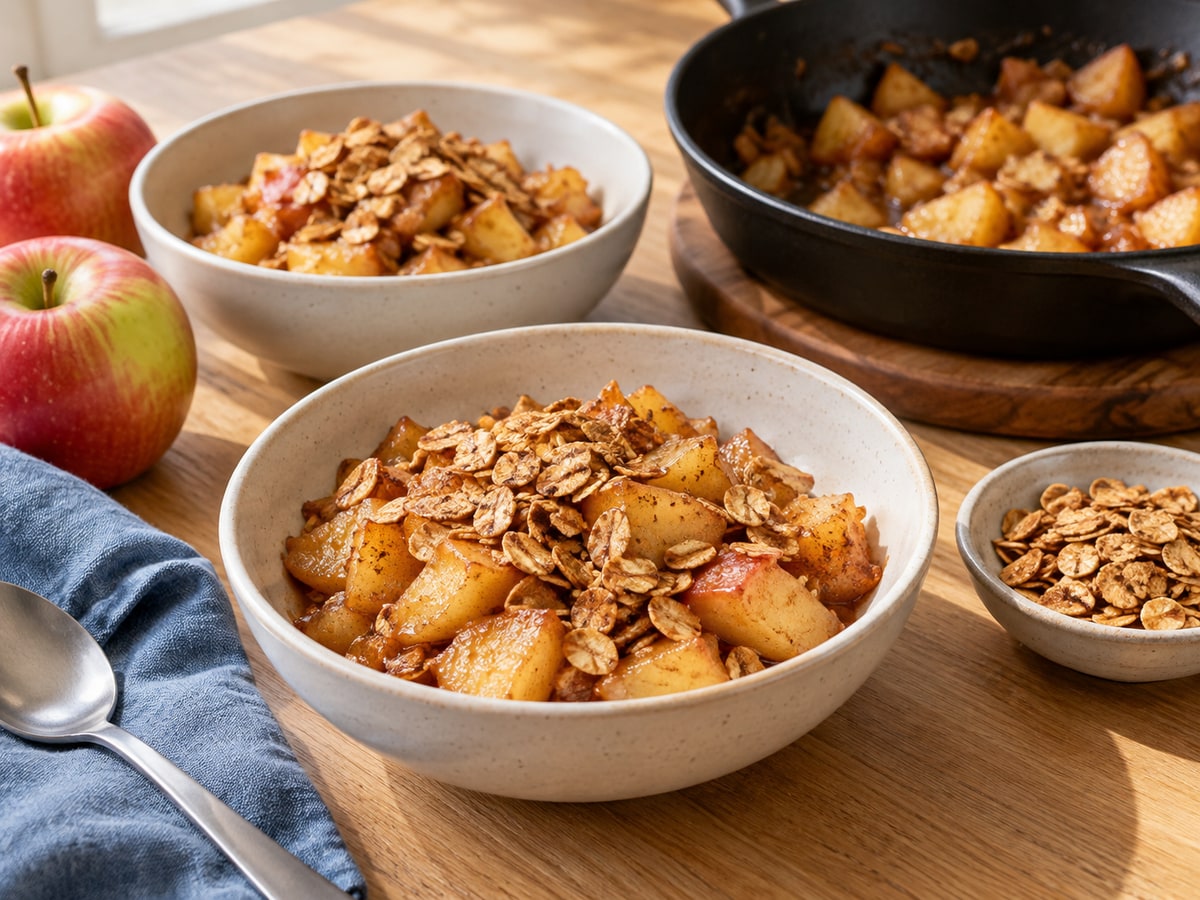
For two small portions of warm skillet apples, toast the oats first and move them out of the pan before adding the fruit. Cook the apples with a little water, then scatter the oats over each bowl at serving time. You can use one pan without leaving the topping in the apple juices.
This suggested formula is a loose, oat-topped alternative to an oven-baked crumble, rather than a baked crust. It borrows the familiar apple-and-cinnamon combination, with a small batch and a useful second-serving plan. Cooking times are estimates: apple size, variety and your pan will change the finish. Follow the texture cues below.
Ingredients for two small bowls
Allow roughly 20–25 minutes, including chopping. Use a 20–24 cm skillet with a lid, a chopping board, a plate for the oats and a spatula. A teaspoon here is 5 ml; a tablespoon is 15 ml. A kitchen scale makes the oat quantity easier to repeat.
- 2 medium apples, about 300–350 g after coring, cut into roughly 1 cm pieces
- 40 g plain rolled oats, rather than a flavoured instant-oat packet
- 10 g butter, divided into two 5 g portions
- One-quarter teaspoon ground cinnamon
- 1 teaspoon lemon juice
- 2 tablespoons water, plus an extra tablespoon if needed
- 1 teaspoon sugar, optional, added to the apples after tasting
Choose apples you enjoy eating, with no rotten areas. Peel them if you prefer a smoother finish, or leave the skins on for a more textured bowl. The FDA advises washing produce under running water before preparation, including before peeling; do not use soap. Start with clean hands, utensils and work surfaces.
One pan, with a pause between components
- Toast the oats first. Melt 5 g butter in the skillet over medium-low heat. Add the rolled oats and stir for about 3–5 minutes, until some flakes look lightly golden. Keep them moving and lower the heat if they darken quickly. Transfer them to a clean plate in a thin layer; they should remain separate flakes, not a flour-based crumble.
- Start the apples. Return the pan to medium-low heat with the remaining 5 g butter. Add the apple pieces, cinnamon, lemon juice and 2 tablespoons water. Stir, cover and cook for about 6–8 minutes, stirring occasionally.
- Check a piece. Press one apple piece with a fork. Aim for tender enough to eat comfortably while still holding its shape. If it is firmer than you want and the pan is dry, add another tablespoon water, cover and check again after about 2 minutes.
- Finish uncovered. Remove the lid and stir for another 2–4 minutes as needed, until there is no puddle underneath the fruit. Taste a piece once it is cool enough, and add the optional sugar only if wanted. Keep the heat gentle rather than trying to force browning.
- Assemble what you will eat. Divide the apples between two small bowls if serving both now. Scatter the toasted oats over the top immediately before eating. If saving a serving, leave that portion of apples and oats separate and refrigerate promptly as described below.
Use the second portion differently
Warm bowl today
Serve one portion on its own, or put a spoonful of plain yogurt alongside it as a serving suggestion. Add the oats last. This is a flexible snack or dessert idea; the two-bowl yield is a kitchen portioning guide, not a prescribed amount for a workout or a health goal.
A cool yogurt bowl tomorrow
Put the chilled apple component over yogurt or a suitable alternative, then add the stored oats just before eating. You could also use the apples as a topping for our overnight oats without protein powder, replacing that recipe's existing fruit topping rather than adding every topping together. Keep the fruit and oat components labelled so tomorrow's serving is easy to find.
Adjust texture without expanding the batch
Apples too wet? Keep cooking uncovered over gentle heat, stirring, before adding any oats. Apples already breaking down? Stop cooking and serve them as a softer spoonable topping. A different apple may need an earlier fork check next time.
Oats softened after mixing? Next time, reserve them separately and add only to the portion you are eating. Toasted rolled oats give a loose topping; do not expect the clumps of a baked streusel. For another make-ahead method, our flexible meal-prep guide explains how to plan components around the meals you actually need.
Substitutions and allergy checks
For a dairy-free version, try a plant-based cooking spread suitable for your needs in place of butter; its water content may change the pan timing. No cinnamon? Use a small pinch of ground ginger, or leave the spice out. A handful of chopped nuts is an optional serving addition, not part of the base recipe or photograph.
Butter contains milk, and nuts add their own allergens. The FDA recommends checking the full ingredient information each time. Check oats, spreads and serving additions too; an ingredient swap does not establish suitability for an allergy or coeliac disease. See our conditions and allergy guidance for general context.
Refrigerate the components promptly
Move reserved apples and oats into separate clean, shallow containers. Health Canada advises prompt refrigeration, a refrigerator at 4°C or below, and eating refrigerated leftovers within 2–3 days. It advises discarding cooked food left at room temperature for more than two hours. Follow stricter local or ingredient guidance.
Our suggested plan is to eat the second portion tomorrow; this formula has not undergone shelf-life testing. Cover the containers once chilled, date them, and keep yogurt separate. If reheating, Health Canada specifies 74°C (165°F), checked with a food thermometer. Reheat only the portion you need, and discard what remains of that reheated serving.
Keep nutrition in proportion
No calorie, fibre or protein total is calculated here. Nutrient values vary by variety, brand, serving size, and preparation; USDA FoodData Central documents different data sources and food variability. Use actual package information for the oats, butter or spread, and any yogurt alongside our nutrition guide. For planned tools to organise meals, components and prep reminders, join the Sweat & Snack app waitlist.