Articles are currently available in English.
Yoga
Triangle Pose at Home: Shorten the Reach, Keep Balance
By Sweat & Snack · 2026-11-05
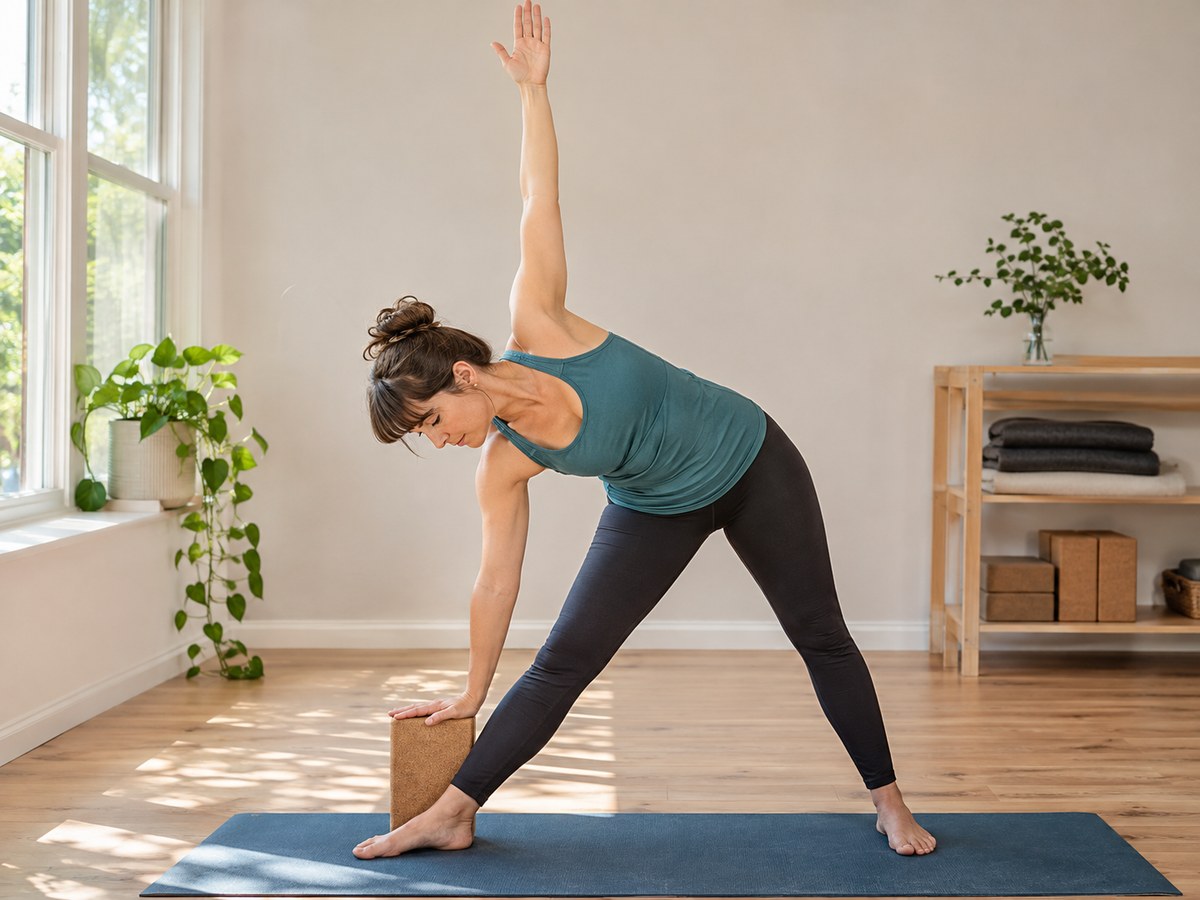
In Triangle Pose, the floor can seem like a target. Reaching down farther may instead pull your chest toward the mat and make balance harder. This short home practice treats the lower hand as support: it can rest on a block or your leg without forcing depth. The point is a stance you can enter, breathe in and leave with control.
This is a suggested practice for adults comfortable with standing movement. It is not a treatment for pain or a substitute for a qualified teacher. If balance is unreliable, you are pregnant, or an injury or health condition changes what feels safe, ask an instructor or health professional for a suitable variation. NCCIH advises suitable instruction and modification to reduce injury risk.
Make space before you take the shape
Set a mat on a dry, level floor. Clear enough room to step sideways and turn around without meeting furniture. Put a firm yoga block just inside the front foot, or use a stable chair positioned where it cannot slide. The block is a support, not a height you must reach. Skip a slippery pile of books. Bare feet may grip a mat better for some people; choose footwear or a surface that feels secure to you.
Begin standing with feet comfortable apart. Step one foot back to make a shorter stance than a dramatic photograph might show. Turn the front toes forward and the back foot somewhat outward, keeping both feet planted. Face your torso sideways, lift the arms only as high as comfortable and soften the knees rather than locking them. There is no fixed foot angle or stance width that fits everyone.
Reach sideways, then choose where the hand lands
On an easy exhale, reach your front hand forward over the front leg and tip at the hip. Let the hand rest lightly on the block or on the leg above the knee; avoid pressing directly into the knee joint. Keep enough weight in both feet to stand on your own. The upper arm can point upward or rest at the hip. Look forward or down if looking up disturbs balance. Breathe normally and stay only for a few comfortable breaths.
Yoga Journal's pose guide describes Triangle Pose and support options. Our shorter stance and brief holds are editorial choices for this home sequence, not a prescribed therapeutic dose. If your lower back, neck or knee protests, come out and use a smaller range or stop.
A ten-minute practice with time to change sides
- 0:00–2:00, warm up: Walk slowly in place, roll the shoulders gently and shift weight between the feet. Check that the mat and block stay put.
- 2:00–3:00, prepare: Take a modest side stance and rehearse reaching sideways without tipping down. Step in and reset if the feet feel too far apart.
- 3:00–4:15, first side: Reach and rest the hand on the block or leg. Hold for about two or three ordinary breaths, stand up slowly, and repeat only if comfortable.
- 4:15–5:15, transition: Step the feet together, pause and turn to set up the other side. Take extra time if needed rather than rushing a timer.
- 5:15–6:30, second side: Try the same small range. Different sides need not look identical. Return to standing after a few easy breaths.
- 6:30–8:00, optional comparison: If both sides felt steady, try one brief repeat per side with the same support. Otherwise walk gently or rest.
- 8:00–10:00, settle: Stand or sit comfortably, let the arms relax and notice whether you feel ready to continue your day. The practice can end early.
Choose the easier version before balance becomes a struggle
Move the block to its taller setting if it is stable, shorten the stance, keep the top hand at the hip, and look at a fixed point ahead or down. A hand on a sturdy chair may provide more support, but check that the chair cannot move. If standing sideways remains uncertain, skip Triangle Pose and use a simple supported standing stretch or a seated pause. Do not hold your breath to imitate a photograph.
Stop for pain, dizziness, numbness or feeling unwell. For more standing choices, see our no-kneeling practice. For a class or teacher, see how to choose instruction. The feature and Pin are illustrations of fictional AI-generated adults, not a required body shape or exact alignment target.