Exercise
Wall Push-Ups for Beginners: A First Practice Plan
By Sweat & Snack Editorial Team · 2026-10-09
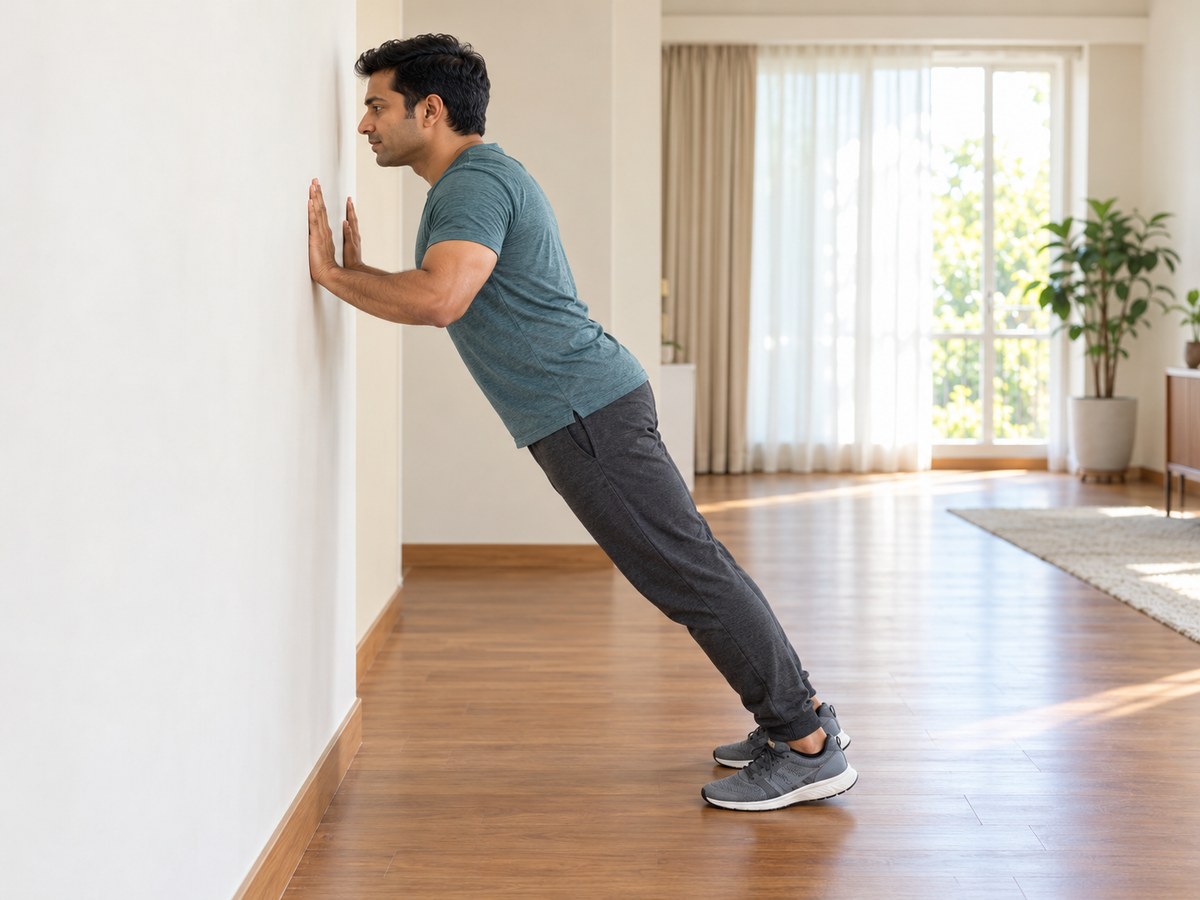
Wall push-ups give you a way to practise a pushing movement without starting on the floor. This guide helps you plan a first attempt: choose a clear wall, read the setup, and keep a short note about what you tried. Treat the practice plan below as a suggestion to adjust, rather than a test you have to pass.
This is a focused companion to our guide to strength training twice a week. It covers one movement and a way to organise practice. For a broader home session, see the backpack workout guide; for a workday movement break, explore our desk mobility routine.
Set up a simple practice space
As a practical starting suggestion, choose a plain, solid wall with enough space to stand and step back. Clear the floor around your feet, and move loose objects out of the way. Avoid placing your hands on a door, glass panel or anything that can move. Check that your footwear and floor do not feel slippery before beginning.
You might put your phone on a shelf where you can read the instructions before the attempt. Keep it away from your feet, and resist checking it during each repetition. If you want feedback, ask a qualified instructor to watch a short practice rather than trying to judge your technique from a photograph alone.
How to do a wall push-up
The NHS wall press-up instructions describe the following setup and movement:
- Face the wall from about an arm's length away. Put your palms on it at chest height, with fingers pointing upward.
- Keep your back straight. Bend your elbows slowly, keeping them close to your sides, and move toward the wall.
- Return slowly to the starting position.
The NHS suggests three sets of five to ten repetitions for this exercise and advises building up gradually. Read its full guide before using that target. If the movement feels unclear or uncomfortable, pause and ask an instructor for help rather than forcing a set.
Read the photograph as an illustration
Our original feature image shows an adult practising the bent-arm part of a wall push-up. Notice that both hands and feet are visible. The photograph illustrates the article topic; it does not tell you the right distance, range or number of repetitions for your own circumstances. Those details can be discussed with your instructor.
A first-practice plan you can adjust
The following is an original planning suggestion, not an NHS workout prescription. Set aside a few unhurried minutes to organise the space and read the movement steps. You do not need to fill a fixed workout duration or chase a repetition count on the first attempt.
Before the attempt
Write down one question you want to answer, such as “Can I follow the setup without rushing?” Then check the space and practise positioning your hands. If you are unsure whether this exercise suits you, ask a health professional or qualified exercise instructor before attempting it. This guide is general information and does not assess an injury or health condition.
During and after the attempt
Try the movement at a pace you can follow, with the instructions in mind. End the attempt when you want a break; a smaller session is still something you can record. Afterwards, note what you did and any question you want to ask before trying again. Avoid turning discomfort into a challenge or comparing your attempt with somebody else's video.
A useful note could be: “Read the steps, checked the wall, tried the movement, and want feedback on my hand position.” That note is more informative than a bare score. It gives you something concrete to discuss and helps you remember the setup next time.
Put one movement in a wider weekly plan
CDC adult guidance calls for muscle-strengthening activity on at least two days a week, involving all major muscle groups, alongside weekly aerobic activity. A wall push-up practice on its own does not establish that you have covered that whole recommendation.
Use our weekly planner to reserve a convenient practice time and a separate reminder to review your wider activities. You could add the movement to a plan made with an instructor, or keep it as a technique question to bring to your next session. For a broader starting point, browse exercise basics.
Keep the plan simple enough to repeat
As an organisation suggestion, use the same clear space when practical and keep one short practice note. Choose a time that fits an ordinary day, rather than designing a schedule around ideal conditions. If you miss a session, move the reminder instead of trying to repay it with extra repetitions.
Review the note before changing several things at once. You might decide to get feedback first, keep the same setup, or choose a different exercise with guidance. There is no promised timetable for reaching floor push-ups here. You can use a wall-based option without making a harder variation your goal.
Sources and image notes
Movement instructions and repetition guidance were checked against the NHS strength-exercise page; the weekly context was checked against CDC adult activity guidance on 9 October 2026. The space checklist, practice notes and scheduling ideas are original suggestions. Feature and Pinterest images are original AI-generated photographic illustrations of an adult performing a wall push-up.