Yoga
Yoga Props for Beginners: Blocks, Straps and Blankets
By Sweat & Snack Editorial Team · 2026-10-09
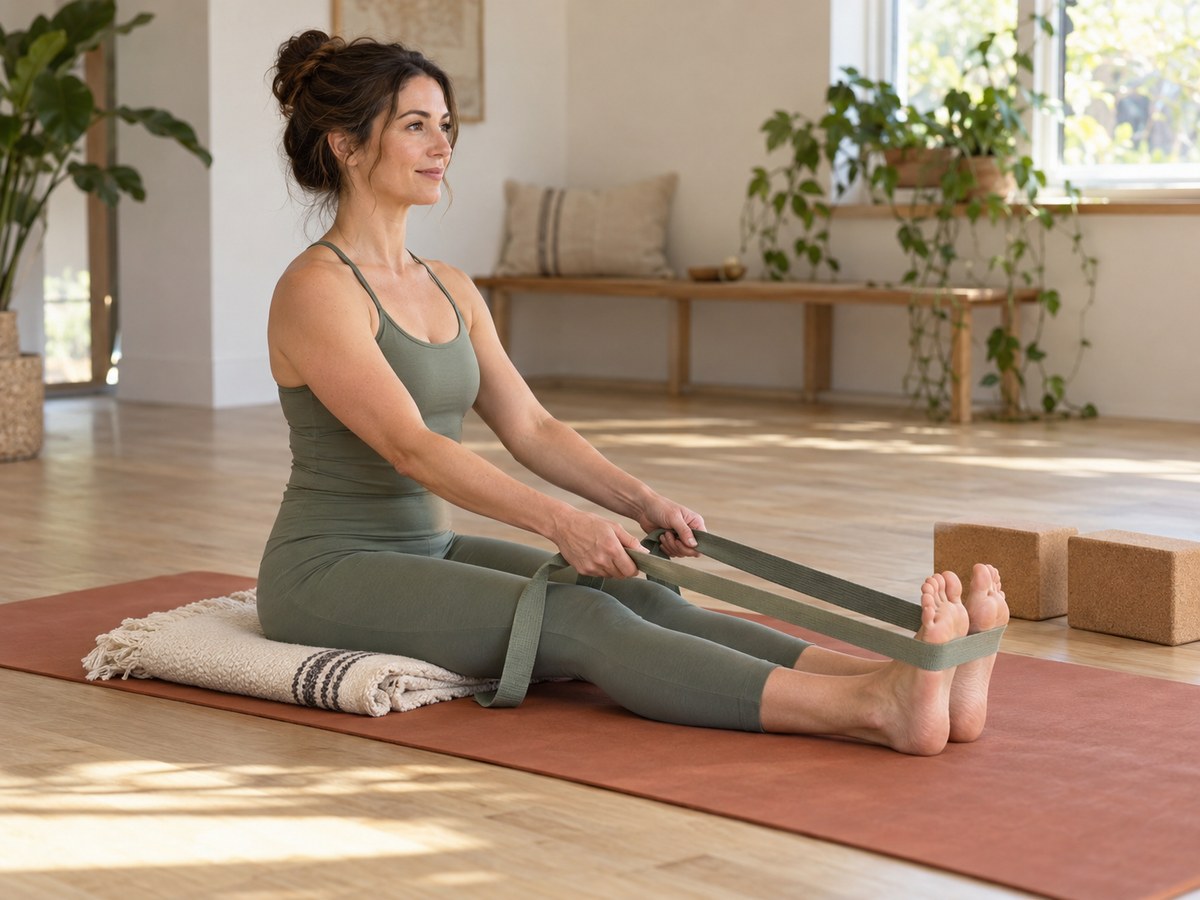
For a beginner yoga practice, start by asking which props your class uses. Blocks, a strap and a folded blanket are useful items to discuss with your instructor; you do not need to order a complete kit before your first lesson. This guide helps you compare the equipment and plan a small setup that fits your space.
If you already follow our morning yoga practice plan, this is a companion equipment guide. It focuses on choosing and organizing props rather than adding more poses. Prefer a seated session? Our chair-yoga guide explains a different setup.
What are yoga props for?
Cleveland Clinic's yoga specialist describes blocks as a way to bring a surface nearer to your hands, straps as an extension of reach, and folded blankets as cushioning or support. The equipment used depends on the practice and the person. A prop is an option for adapting a position, not a target you must progress beyond.
As a practical starting suggestion, ask your teacher: “Which equipment should I bring, and can I borrow it first?” Write down the actual items named in the answer. An online photograph may contain more equipment than your class needs. Our feature image shows a seated strap option, with a folded blanket under the seat and blocks nearby for other practice choices. Ask your instructor to demonstrate the setup rather than copying a photograph. The equipment shown is not a compulsory shopping list.
Compare three common beginner props
Blocks: compare the feel and shape
Blocks are commonly made from foam, cork or wood, according to Cleveland Clinic. A block can shorten the distance between your hand and the floor. Ask an instructor to demonstrate its placement for a position you are learning, including which face should rest on the mat.
For your own comparison, handle a borrowed block before buying. Notice the weight, surface texture and whether you can move it easily beside your mat. Check the product's intended use and care instructions. If a class uses a pair, compare matching blocks rather than choosing two unrelated shapes. These are shopping suggestions, not evidence that one material prevents injury better than another.
Straps: check the length and fastening
A yoga strap extends reach, as Cleveland Clinic explains. Its purpose is not to pull yourself into a deeper position. Have your teacher show you the amount of slack, where the strap belongs, and how to release it before trying it during practice.
When comparing products, check whether the fastening is a buckle, rings or a loop and read its instructions. Try threading it while sitting comfortably, away from a pose. Choose a length based on your teacher's suggested use and your own reach rather than a universal size chart. Inspect the stitching and avoid a strap that is frayed or whose fastening you cannot operate confidently.
Blankets: try a simple fold first
Cleveland Clinic describes folded blankets as an option for extra cushioning and support. For a practical trial, take a clean blanket your class permits and ask the instructor to show the fold they want you to use.
Check whether the folded fabric stays flat in that setup. Remove anything bulky from the practice area, including loose tassels beside your feet. If the fold feels awkward, change it with the teacher rather than adding more layers automatically. A familiar household blanket may be enough to test the idea before you decide whether you want a dedicated prop.
A small setup checklist for your first class
Use this original checklist as a planning suggestion. Adjust it to the class instructions; it is not a standardized equipment prescription.
- Ask whether the studio supplies a mat, blocks, straps and blankets.
- Confirm what the teacher wants you to bring and what you can borrow.
- Read the care and fastening instructions for anything you already own.
- Pack only those items, along with any usual class essentials.
- Tell the instructor when a setup feels unclear instead of copying another person's position.
For home practice, place the props within easy reach before beginning. You might use one low shelf or a basket next to the mat so that getting ready does not become a separate project. Keep the path to your practice space clear. Put straps away after use instead of leaving a loose loop across the floor.
Use props with qualified guidance
NCCIH recommends qualified yoga instruction and cautions beginners against extreme positions and forceful breathing. It also says pregnancy, injuries and some health conditions can require changes to a practice. Ask your health professional and instructor about your individual needs when relevant.
A block or strap does not establish that a pose is suitable for you. As a practical precaution, pause when a setup feels unstable or uncomfortable and ask for help. Do not force a stretch or use this equipment guide to manage pain or symptoms. Choose a smaller option or skip a position when your instructor advises it.
How to decide what to buy later
After a few classes, make a short note: which prop did you actually use, where did you store it, and what would you change? If you consistently borrow one item, that may be the first purchase to consider. If you do not use something, leave it off the shopping list for now.
There is no reason to buy a premium bundle just to match a studio photograph. Compare the items that meet your class requirements and your budget. In India or elsewhere, check dimensions, delivery costs and return terms in the listing you are actually considering; this guide does not quote prices or endorse brands.
Use the weekly planner to record a class time and a reminder to pack your props. When you want a wider view of movement planning, browse our exercise basics. Equipment can help organize a practice, but it does not promise a particular health or weight-loss result.
Sources and image notes
Prop functions were checked against Cleveland Clinic's guide; beginner precautions were checked against NCCIH on 9 October 2026. The comparison questions, class checklist and storage ideas are original practical suggestions. The feature and Pin use original AI-generated photographic images illustrating a seated practice with props; they are not individualized instruction.