Articles are currently available in English.
Recipe
Savoury Pea & Oat Pancakes with Lemon-Cumin Yogurt
By Sweat & Snack Editorial Team · 2026-10-11
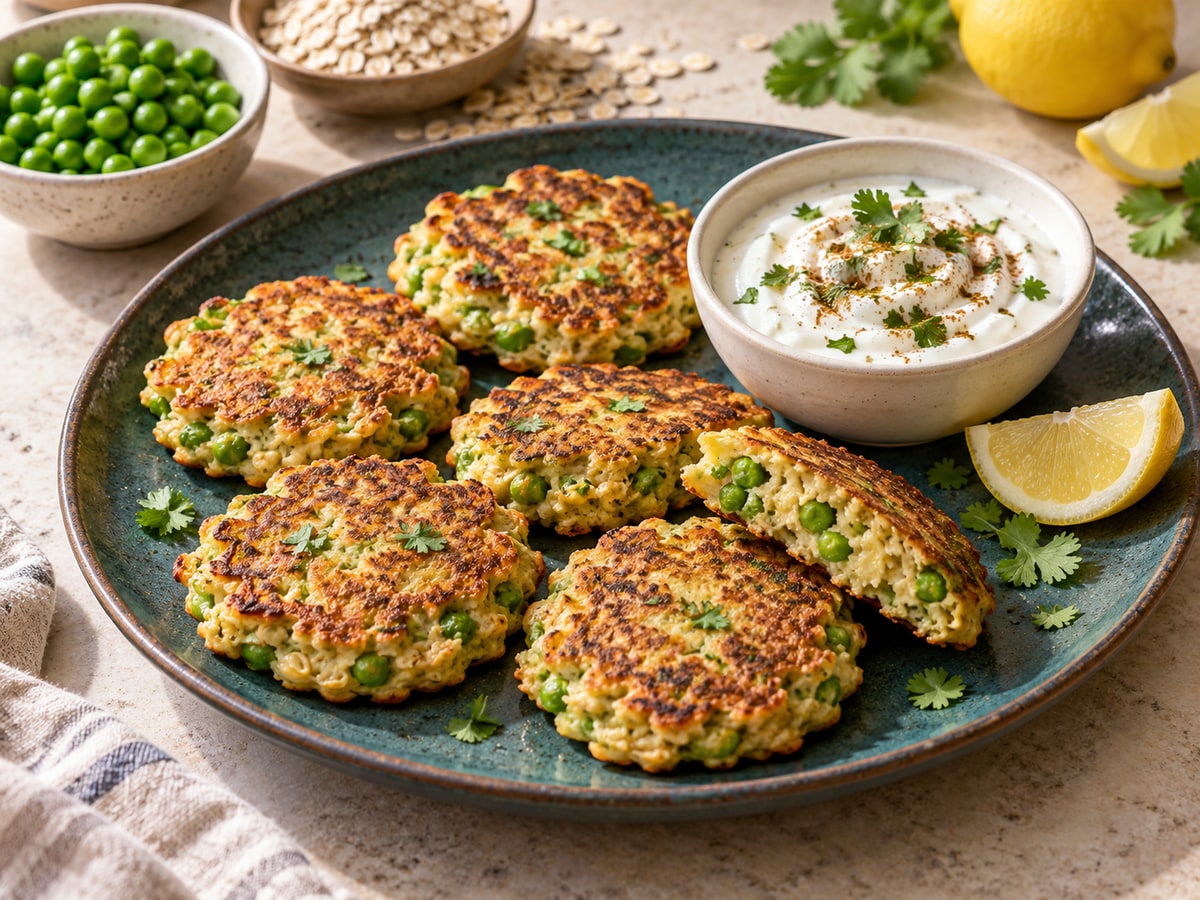
Want something savoury after an evening workout? Try small pea-and-oat pancakes with a lemon-cumin yogurt dip. This one-bowl recipe uses a fork to mash the peas and quick oats straight from the packet, so there is no blender to wash and no shake or powder to buy.
Think of these as a food idea you can fit around your evening, rather than a required recovery routine. If dinner is nearly ready, our snack-or-dinner guide can help you decide whether you want a separate snack at all. You can also make the pancakes for lunch or an ordinary afternoon break.
The recipe at a glance
Makes: about eight small pancakes. Planning estimate: allow roughly 30–35 minutes, including a short batter rest and cooking in batches. Pan size and heat change the timing. These are original recipe instructions, not a claim of kitchen testing; the cooking times are estimates and the temperature check below is the safety guide.
Equipment: a mixing bowl, fork, measuring jug, tablespoon, non-stick frying pan, spatula and a food thermometer suitable for thin foods. Keep a separate clean bowl and spoon for the ready-to-eat dip.
Ingredients
For the pancakes
- 120 g cooked green peas, drained well and cooled; cook frozen peas according to their packet first
- 60 g plain quick oats, not sweetened instant sachets or steel-cut oats
- 35 g wholewheat flour (atta)
- 1 medium egg
- 70 ml milk, plus a little extra only if needed
- 1 spring onion, finely sliced
- 1 tablespoon chopped fresh coriander, washed before chopping
- ½ teaspoon ground cumin
- ½ teaspoon baking powder
- A small pinch of salt, optional, and black pepper to taste
- 2 teaspoons neutral cooking oil, divided between batches
For the lemon-cumin dip
- 150 g plain yogurt or curd
- 1 teaspoon lemon juice, with more to taste
- ¼ teaspoon ground cumin
- 1 teaspoon chopped coriander, optional
- A little black pepper
This version contains egg, milk and wheat. Read all ingredient labels for your own allergy needs. Oats and flour products differ; do not assume this recipe is gluten-free.
How to make pea-and-oat pancakes
- Prepare the dip first. Mix its ingredients using clean utensils, cover and refrigerate while you cook. Rinse the fresh onion, herbs and lemon before preparing them. Wash your hands and keep the raw egg and batter away from the dip and serving plate.
- Mash the peas. Put the cooled, well-drained peas in the mixing bowl. Crush most with a fork, leaving some small pieces for texture. Large whole peas make the little pancakes harder to spread evenly.
- Mix the batter. Stir in the egg and 70 ml milk, then the oats, flour, spring onion, coriander, cumin, baking powder and seasoning. Rest for about eight minutes. Aim for a thick mixture that drops from a spoon and can be gently spread, rather than a pourable crêpe batter.
- Cook one small pancake first. Warm the pan over medium-low heat and brush in some oil. Add about two level tablespoons of batter and gently spread to roughly 7 cm across and no more than 1 cm thick. Leave space to turn it.
- Turn and check. As an estimated starting point, cook for 3–4 minutes on the first side and 2–3 on the second. Lower the heat if the surface browns before the centre cooks. Use the thermometer from the side into the centre: the FDA recommends 71°C (160°F) for egg dishes. Continue cooking as needed; colour alone does not establish safety. Check pancakes in each batch.
- Finish and serve. Adjust the remaining batter if needed, then cook in batches with the remaining oil. Put cooked pancakes on a clean plate and serve with the chilled dip. Wash batter utensils and surfaces before using them for ready-to-eat food.
The FDA flour-safety guide advises against tasting raw flour, dough or batter. Its safe food-handling guide supplies the egg-dish temperature above. Keep the thermometer probe clean between uses.
Adjust the first pancake before cooking the batch
- Too stiff to spread? Stir in milk one teaspoon at a time, then try again.
- Spreading into a thin puddle? Add a tablespoon of quick oats and rest a few more minutes before the next pancake.
- Breaking when turned? Make the next one smaller and let the first side set before sliding the spatula underneath.
- Dark outside, wet middle? Reduce the heat, spread more thinly and allow longer. Keep using the temperature check.
These are practical texture suggestions. Different oats and the amount of water left on the peas will change the batter, which is why starting with one pancake is useful.
Swaps and serving ideas
Try parsley instead of coriander, or a little finely chopped mild chilli if you enjoy it. Plain flour can replace the atta, although texture and liquid needs may change. An unsweetened plant drink and plant yogurt are possible dairy swaps; check their labels. The egg remains part of this recipe, so that change does not make it vegan. For an egg-free alternative with a different method, explore our tofu bowl recipe.
As a serving suggestion, put a few pancakes and some dip on a plate for a snack, leaving the rest for another eating occasion. For a larger meal, add vegetables and another food you enjoy; our vegetarian meal combinations offer starting points. The batch yield is not a prescribed portion. If you prefer a cold sweet option on another day, see overnight oats without powder.
Storage, reheating and taking them with you
Transfer leftovers to shallow containers and refrigerate promptly. The FDA storage guide recommends a refrigerator at 4°C or below and no more than two hours at room temperature for perishables, reduced to one hour above 32°C. Do not wait for food to sit out until completely cold.
The FDA recommends using refrigerated leftovers within three to four days. Label the pancake container with its cooking date. Store dip separately and follow the yogurt label, using whichever limit is sooner. Reheat the portion of pancakes you want to 74°C (165°F), the FDA temperature for leftovers; keep the dip chilled.
For a later snack away from home, use an insulated bag with ice packs to keep both foods at 4°C or below. Count any time without adequate chilling from the start of your outing, including the workout. These pancakes and yogurt are not a shelf-stable gym-bag snack. Pack the dip in its own leakproof container.
Nutrition context without made-up numbers
The NHS Eatwell Guide identifies eggs and yogurt as protein sources and explains that overall food balance can be achieved across a day or week. That does not establish a protein total for this recipe or make any number of pancakes a universal recovery serving.
Nutrient values vary by brand, serving size and preparation, including your milk, yogurt, flour and oil. Use your ingredient labels and the nutrition reference when planning, and put a realistic eating occasion in the meal planner. For individual medical dietary needs, follow your existing advice; our conditions guidance helps organise questions for your clinician or dietitian.
Sources and editorial notes
NHS and FDA guidance was checked on 10 October 2026. Ingredient quantities, flavour combinations, timing estimates and serving examples are editorial cooking suggestions. The photographs are original AI-generated food illustrations, not photographs of a kitchen-tested batch. No exact nutrient totals, guaranteed exercise benefits or weight outcomes are claimed.