Articles are currently available in English.
Nutrition
Frozen Peas in a Salad: Cook First or Just Thaw?
By Sweat & Snack Editorial Team · 2026-10-15
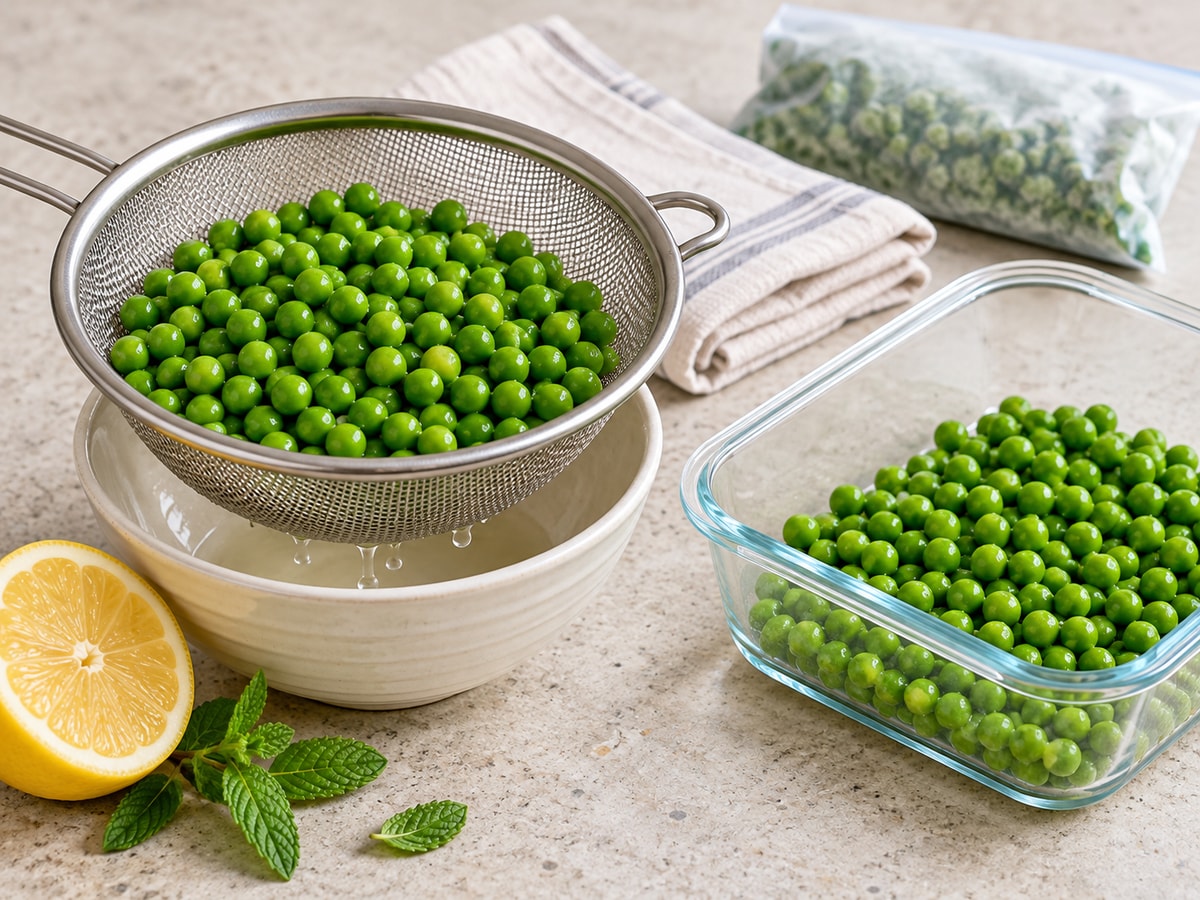
For a cold salad, cook frozen peas according to their packet instructions before cooling them. Simply thawing a bag is not a substitute for a required cooking step. The Food Standards Agency specifically advises checking frozen-vegetable packaging before using it in salads. Here is a practical way to work that step into lunch preparation without turning the salad into a last-minute project.
Start with the bag, not the salad recipe
Look for cooking directions, the amount they apply to, and whether the method starts from frozen. Follow the full instructions for your product and appliance, including any stirring or standing time. A recipe that says “add thawed peas” should not override the manufacturer's cooking directions.
The FDA explains that freezing does not kill most bacteria. Its Food Code also discusses frozen vegetables intended for cooking being used in ready-to-eat salads without that step. That is why the difference between frozen and ready to eat matters. This does not mean every bag is contaminated; it means appearance alone cannot establish that cooking is unnecessary.
If the instructions are missing
As a practical suggestion, keep the original bag until you finish the peas, or photograph its directions before transferring them to another container. If you cannot identify the product or its instructions, ask the manufacturer or choose a different ingredient rather than inventing a universal microwave time.
A cook, drain and cool routine
Set out a clean sieve, a shallow food container and a spoon before starting. Health Canada recommends clean hands, utensils and work surfaces when handling cooked leftovers. Try making only the amount you need for the planned salad; a small batch is easier to organise around a busy kitchen.
- Read and cook: measure the amount you intend to use and follow the packet's complete cooking method.
- Drain: use the clean sieve if the method leaves cooking water. This is a texture suggestion: keeping excess liquid out gives you more control over the dressing.
- Cool promptly: transfer to a shallow container. Health Canada advises prompt refrigeration, leaving the lid off or loosely covering until food reaches refrigerator temperature. Very hot food can first stop steaming briefly; do not leave it on the counter until completely cold.
- Assemble when chilled: for a cold salad, my practical suggestion is to chill the peas separately before combining them with the other prepared ingredients.
- Cover and date: once chilled, cover the container and note when you cooked the peas.
For hot food instead, our lemon and pea couscous for one gives the peas a different job. The cold-salad routine here adds a deliberate cooling stage rather than assuming a warm bowl and a packed lunch are interchangeable.
Keep the salad chilled after cooking
FDA guidance sets a refrigerator temperature of 4°C or below. Perishable foods should not remain at room temperature for more than two hours, reduced to one hour above 32°C. These are limits, not a suggested wait before refrigerating. Food can be unsafe without an unusual smell or appearance.
For this guide, use the FSA's shorter leftovers window: eat properly cooked, cooled and refrigerated peas within 48 hours, or freeze them if that is not possible. Follow any shorter product instruction. Adding a fresh dressing does not give yesterday's peas a new storage date.
Taking the salad to work
Plan the cold storage before choosing a pea salad for your lunchbox. If you cannot maintain refrigeration during the journey and before eating, choose a meal that fits the available storage. Our no-fridge packing guide explains the separate question of choosing unopened shelf-stable foods. Cooked peas do not become shelf-stable because they started in the freezer.
Build a salad you actually want to eat
These are serving suggestions, not a tested recipe or a nutrition prescription. Try chilled cooked peas with prepared cucumber, mint and a little lemon dressing. Alternatively, add them to a chilled grain bowl and keep the dressing separate until serving. Start with a small amount of dressing, toss, then decide whether you want more.
For a bean version, our canned-bean draining guide covers a different packet-to-bowl decision. You might choose that route when you want to skip cooking frozen peas, while still following the finished salad's refrigeration needs.
A useful note for next time
Write down the brand, amount cooked, method and what you would change about the finished texture. Keep the safety instructions fixed; adjust the serving choices, such as less dressing or a different bowl combination. That gives you a repeatable lunch routine without guessing a cooking shortcut.
Sources
Food Standards Agency: Cooking your food
FDA: 2022 Food Code, Annex 3, section 3-401.15
Health Canada: Food safety tips for leftovers
FDA: Are You Storing Food Safely?