Articles are currently available in English.
Recipe
Lemon & Pea Couscous for One: No Stock Needed
By Sweat & Snack Editorial Team · 2026-10-13
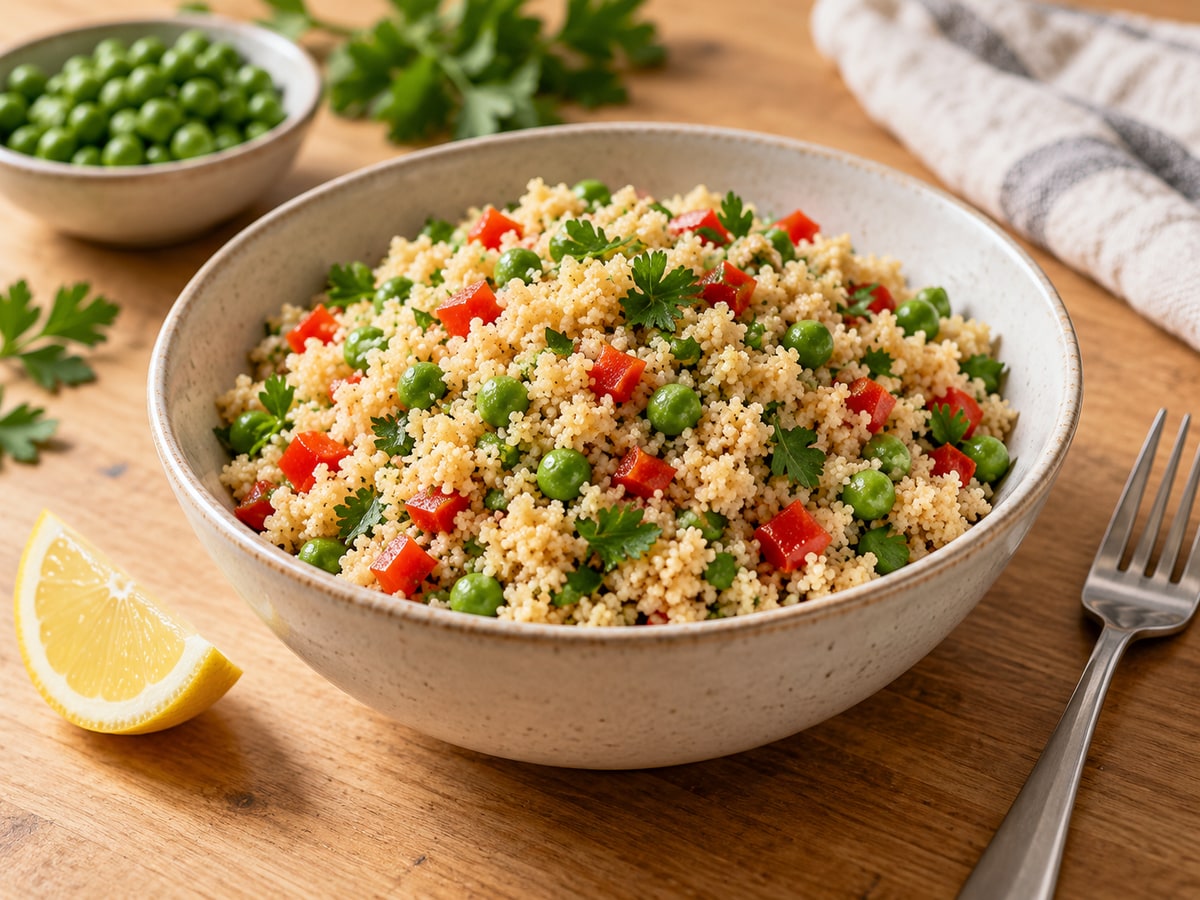
Cooking for one and no stock in the cupboard? Try a small bowl of lemon-and-pea couscous made with plain water, red pepper and parsley. The useful starting point is your packet: choose fine instant couscous, measure one portion and follow its water ratio rather than borrowing the method for a different product.
This is an original recipe suggestion for an everyday lunch or a side at dinner. The amounts below have not been kitchen-tested; use the packet instructions and adjust the seasoning to your taste. You do not need protein powder, a blender or a large batch to try it.
Ingredients for one small bowl
Makes: one small bowl, to serve according to appetite with other food if wanted. Equipment: kitchen scales or measuring cup, heatproof bowl with a cover, small saucepan, sieve, fork and knife. Allow about 15–20 minutes as a planning estimate; your peas and couscous instructions determine the actual time.
- 60g fine instant couscous, plain or whole-wheat
- Freshly boiled drinking water, in the amount specified on the couscous packet for 60g
- 80g frozen green peas, cooked separately according to their packet
- 40g red bell pepper, finely diced
- 1 tablespoon finely chopped flat-leaf parsley
- 1 teaspoon olive oil
- 2 teaspoons lemon juice to start, plus a lemon wedge if wanted
- A pinch of black pepper and optional salt after tasting
Use plain fine couscous whose label gives an add-boiling-water-and-cover method. If the packet only gives a larger quantity, scale both dry couscous and water by the same proportion. For example, 60g is three-fifths of a 100g instruction. Do not assume that 60g requires 60ml of water.
Make it in five steps
- Read both packets first. Note the couscous water amount and standing time, and the full cooking instructions for the frozen peas. Bring together the equipment before heating anything.
- Prepare the fresh ingredients. Wash your hands and use clean utensils. Rinse the pepper, parsley and lemon under running water before cutting, without soap. Dry, dice and chop. Set the measured lemon juice aside.
- Cook the peas separately. Use the saucepan and follow the frozen-pea packet’s cooking instructions in full, then drain. Do not rely on thawing the peas in the couscous bowl as their cooking step.
- Hydrate the couscous. Put the dry couscous in the heatproof bowl. Add the measured freshly boiled water, cover and leave for the packet’s stated time. Handle the hot bowl carefully. Uncover and fluff with a fork.
- Finish and taste. Fold in the cooked drained peas, diced pepper, parsley, olive oil, lemon juice and pepper. Taste before adding optional salt or more lemon. Serve promptly, or refrigerate any portion you are saving promptly.
Three details that make this easier
Choose fine instant couscous for this method
The method is written for the product described above. If your packet says pearl couscous, Israeli couscous, or gives a simmering method, follow that cooking method instead; it is not a direct substitution in this covered-bowl recipe. You can still add the same vegetables and dressing after cooking.
Keep the peas out of the measured water
Cooking and draining the peas separately lets you use the couscous packet’s water quantity without guessing how much moisture the frozen peas contribute. It also keeps their cooking instructions separate from the couscous standing time. A second small pan is a useful trade-off here.
Add the lemon gradually
Start with the suggested two teaspoons, mix and taste. If you want a sharper flavour, add a little more; if you prefer it milder, leave it there. The lemon is a flavour suggestion, not a way to make leftovers safe at room temperature.
If the texture is not what you wanted
Still firm or dry? Check that you used the correct product and packet ratio. If the label allows extra hydration, try a small splash of freshly boiled water, cover briefly and check again. Avoid repeatedly adding large amounts because it becomes difficult to judge the result.
Too wet? Check for excess water in the drained peas and whether the couscous water was measured accurately. Fluff gently and serve as it is if you enjoy the softer texture; next time, use the packet amount more carefully. Adding more lemon juice will add liquid rather than solve the texture.
Too plain? Try a little more parsley, black pepper or lemon after tasting. You could replace parsley with coriander leaves, or add a small pinch of roasted cumin as an optional flavour change. Pick one change at a time so you can repeat the version you like.
Serving ideas and cupboard swaps
For a larger eating occasion, you could serve the bowl beside fully cooked beans, tofu, eggs or another food you already planned to eat. Choose the combination and quantity that suit you. Our vegetarian lunch guide has more ways to plan a meal; the couscous bowl is not a prescribed complete meal.
If couscous is difficult to find, try the same lemon, peas and pepper with separately cooked dalia, rice or another base you enjoy. Follow that product’s own cooking directions rather than using this water ratio or standing time. For a different cooking project, try our crispy tofu rice bowls or sweet potato and chickpea traybake.
Saving a portion and taking it along
Refrigerate leftovers promptly in a covered container at or below 4°C (40°F). Do not leave food needing refrigeration at room temperature for more than two hours, or one hour above about 32°C (90°F). Include preparation and serving time. Follow ingredient-label storage directions, and do not use smell alone to decide safety. These limits also apply if you add another perishable food.
As a planning suggestion, make the small amount you expect to eat and label any saved portion with its preparation date. For transport, keep it chilled with a cold source and refrigerate at your destination. If that will not work, our no-fridge packing guide helps you consider a different option.
Nutrition context and ingredient checks
Check the ingredient list and nutrition panel on your couscous and any additions. Wheat-based couscous is not suitable for a gluten-free diet; wheat is a gluten-containing grain. If you need to avoid gluten or another allergen, choose a suitably labelled alternative and check all ingredients and preparation surfaces.
No calorie, protein or fibre total is claimed here. Values vary by brand, serving size, added foods and preparation. If you want to compare fibre between packets, use our food-label guide. Browse the recipe hub for more ideas. The feature and Pin images are AI-generated illustrations of this recipe suggestion.
Visit the nutrition hub for everyday food guides. If a health condition affects your food choices, use the conditions guidance to organise questions for your clinician.