Articles are currently available in English.
Nutrition
Lactose-Free or Dairy-Free? Check Your Post-Gym Drink
By Sweat & Snack · 2026-10-22
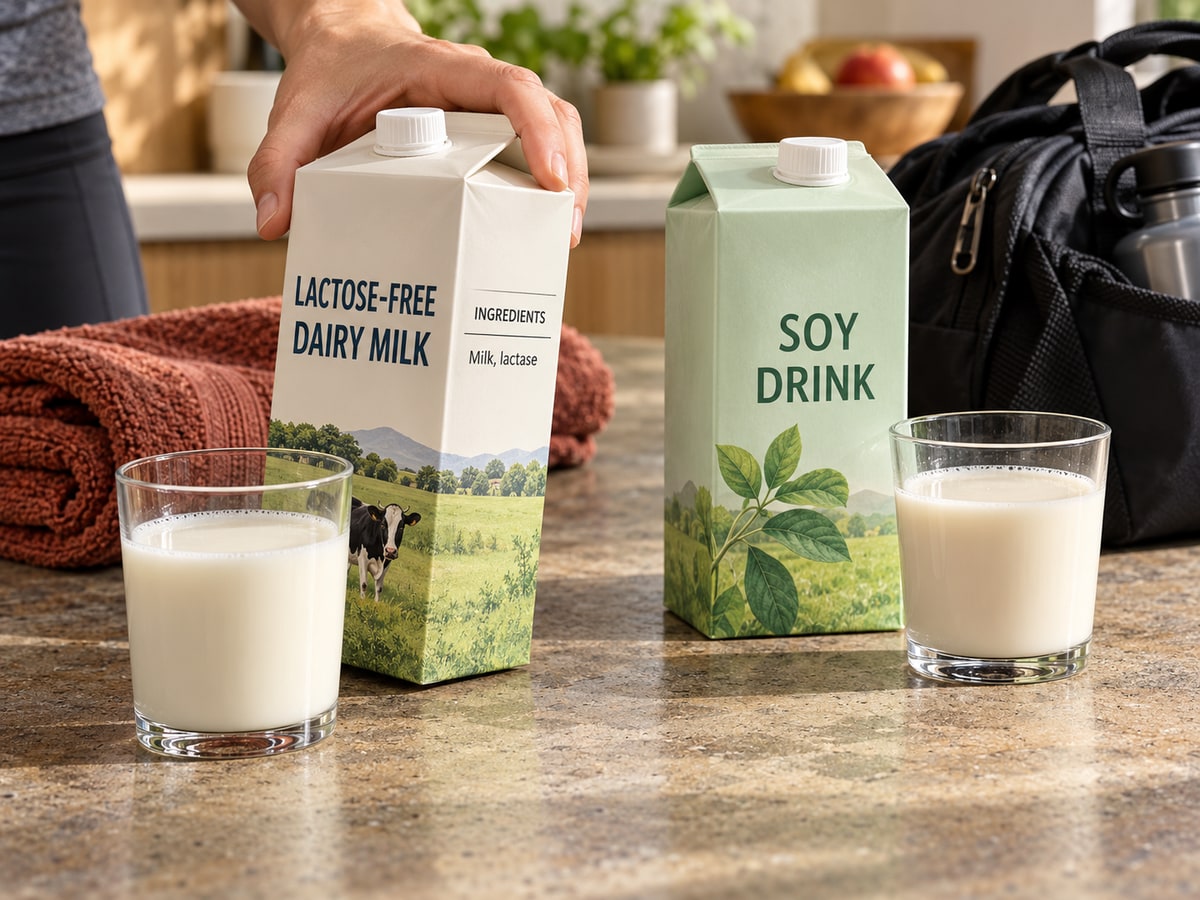
Lactose-free and dairy-free mean different things. Lactose-free cow's milk is still dairy, so it is not a substitute for avoiding milk proteins. When changing your after-gym drink, first identify what you need to avoid, then read the ingredients and allergy information before comparing nutrients.
This is a shopping and ordering guide for adults. The carton checklist and cafe examples are practical suggestions. They do not diagnose a reaction, establish your personal tolerance or prescribe a recovery drink.
Two labels, two different questions
Lactose-free: a question about milk sugar
NIDDK explains that lactose is a sugar naturally present in milk. Lactose intolerance concerns difficulty digesting that sugar and is different from milk allergy. A carton can therefore be lactose-free while still being made from cow's milk.
NIDDK includes lactose-free and lactose-reduced dairy among ways to reduce dietary lactose. That does not mean everyone needs them or that every drink will suit every person. Discuss dietary changes with a doctor or registered dietitian, especially if you are unsure what is causing symptoms.
Dairy-free: a question about milk ingredients
If your goal is to avoid milk ingredients, looking only for the word lactose-free answers the wrong shopping question. Start with the product identity and full ingredient information. A plant drink is a different product from lactose-free dairy milk; neither its colour nor a familiar carton shape tells you whether it meets your requirements.
For milk allergy, the distinction matters directly: ASCIA states that lactose-free cow's milk is unsuitable for cow's milk protein allergy. Follow your established allergy plan and professional advice. Do not try a small amount to test suitability.
Use this three-step carton check
- Name the requirement. Write either your existing lactose-related advice, your milk-avoidance requirement or your dietary preference. If you do not know why a previous drink caused symptoms, seek assessment rather than assigning yourself a label.
- Read what is inside. Check the product name, ingredients and allergy information on the exact current package. Treat any unresolved suitability question as a reason to pause and ask the manufacturer.
- Compare nutrition after suitability. Once a product meets your requirements, check the nutrients relevant to the snack you already planned. Keep taste and convenience as separate considerations.
As an organising suggestion, save those three headings in a phone note. Avoid starting with a protein number and then trying to make an unsuitable product fit. A shopping comparison is useful only after you have addressed what you can use.
Look beyond one front-of-pack phrase
The FDA advises reading all ingredient information. Whey and casein are milk proteins. On U.S. packaged foods, milk may be identified within the ingredients or in a separate allergen statement; not every product uses a separate Contains line.
FDA also explains that U.S. precautionary statements such as may contain are voluntary. Their absence is not a substitute for your allergy advice. Plant drinks can have their own relevant allergens, including soy. Labels and requirements differ internationally, so use the package sold where you live and ask the manufacturer when information is unclear.
Our conditions and allergy information explains the site's educational scope. It does not replace an individual allergy plan.
Keep nutrition as a separate comparison
The FDA notes that plant-drink nutrient profiles vary with the plant source, processing and added ingredients. Check protein, calcium and vitamin D, alongside sugars and other details relevant to your plan. Neither lactose-free nor dairy-free establishes a particular protein amount.
Nutrient values vary by brand, formulation, serving size and preparation. Use the actual package; leave unavailable information unknown. For the separate task of comparing equal volumes and your usual serving, follow our oat-or-soy actual-pour guide. Browse curated nutrition examples for wider context.
Turn the distinction into a clear cafe order
Imagine you normally buy a drink on the way home from training. Asking for whichever milk is lighter leaves your requirement unspecified. A clearer approach is to name the exact drink base you want and ask to see its carton before ordering. This is a communication suggestion, not a guarantee about any cafe.
If you have a milk allergy, tell staff explicitly that it is an allergy, then ask whether they can meet your established requirements, including preparation and cross-contact precautions. If staff cannot confirm suitability, choose another option consistent with your plan. A dairy-free drink base alone does not establish how the complete order was prepared.
Before leaving, you could save one note: exact product, reason for choosing it and any question still needing an answer. Recheck on the next purchase instead of assuming a remembered brand is enough.
Fit the drink into the decision you actually have
You do not need to choose a beverage simply because it is marketed for after exercise. If the real question is whether to eat before your next meal, see snack or dinner after a workout. This article supplies no universal nutrient target, drinking deadline or recovery promise.
For planned Sweat & Snack tools for personal food preferences and shopping reminders, join the app waitlist. The feature and Pinterest photographs are AI-generated illustrations; their generic cartons are not real product labels.