Articles are currently available in English.
Recipe
Prep Once: Chickpea & Grain Base for 3 Mediterranean-Inspired Lunches
By Sweat & Snack · 2026-10-24
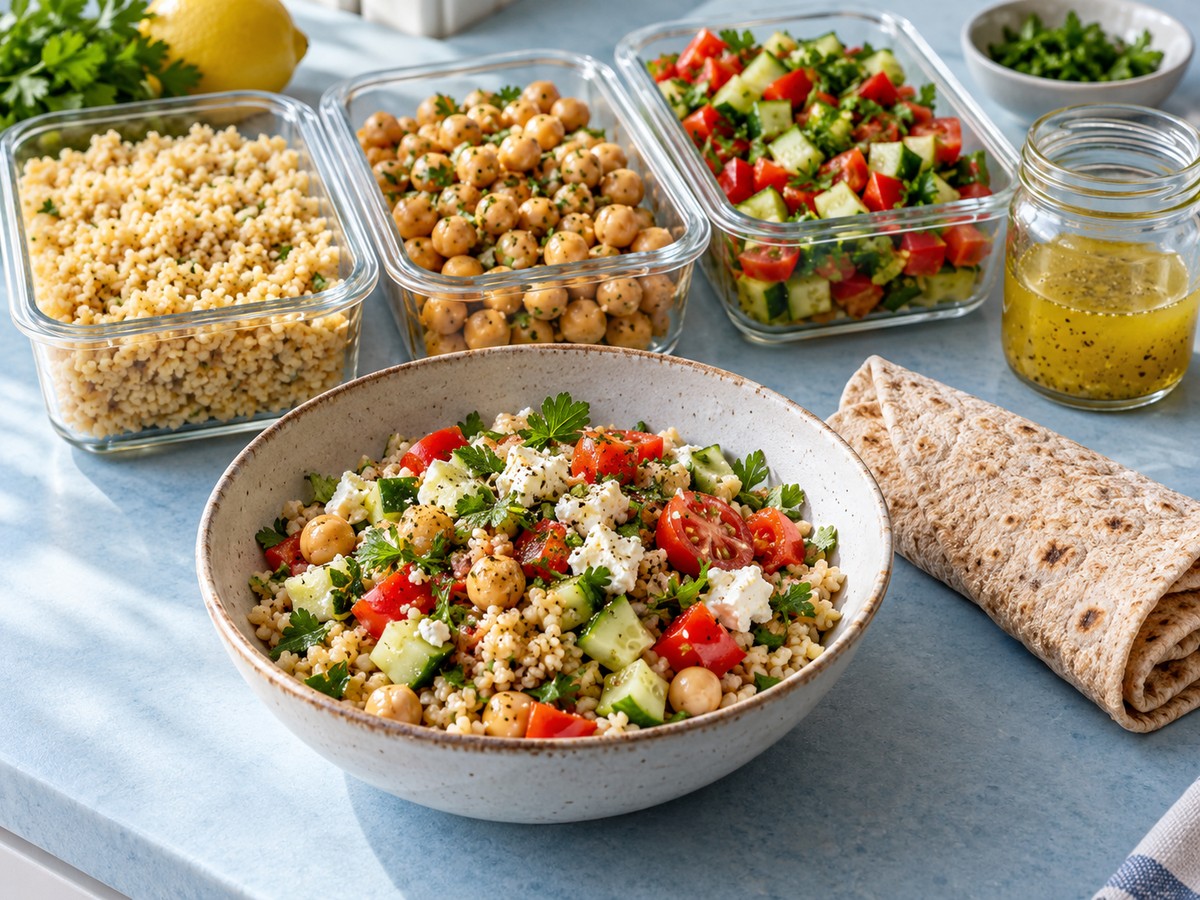
This is a component-prep lunch system, not three separate recipes. Cook one batch of grain, prepare chickpeas and vegetables once, then change the final assembly so lunch does not feel identical on three consecutive days.
The flavour direction is Mediterranean-inspired rather than a claim of one traditional regional dish. The goal is practical: one base, three different finishes, and clear storage boundaries.
Prepare the base once
This batch makes roughly three lunch portions. Exact portions depend on appetite, ingredient brands and what else you serve with the meal.
- 3 cups cooked bulgur, quinoa or another cooked grain you already use
- 2 cups cooked chickpeas, drained
- 2 cucumbers, diced
- 2 medium tomatoes, diced
- 1 bell pepper, diced
- 1 small bunch parsley, chopped
- 1 lemon
- 2 tablespoons olive oil
- plain yogurt or a plant-based alternative, optional
- feta, olives or toasted seeds, optional according to preference and dietary needs
Use cooked chickpeas that are ready to eat, whether home-cooked or canned and rinsed. If cooking dried chickpeas, follow a tested cooking method and cook them fully before using them in cold meals.
Step 1: keep the components separate
Divide the cooked grain and chickpeas into small, shallow containers and refrigerate promptly; do not leave a deep pot on the counter waiting to cool. Put the chopped vegetables and parsley in another. Keep lemon, oil and any yogurt-based dressing separate until assembly. Separating wet and dry components helps texture and gives you more freedom to change the final meal.
Refrigerate prepared components promptly. FoodSafety.gov recommends keeping refrigerators at 40°F (4°C) or below and refrigerating perishable food within two hours, or within one hour when the surrounding temperature is above 90°F (32°C). Cut produce should also be refrigerated in covered containers.
Lunch 1: lemon-herb chickpea grain bowl
Combine one-third of the grain and chickpea base with one-third of the vegetables. Add parsley, one to two teaspoons of olive oil and lemon juice to taste. Add feta or olives if they fit your preferences.
This first version is intentionally simple. It establishes the base flavour before the next meals change texture and format.
Lunch 2: crunchy wrap or pita filling
Take another portion of the grain, chickpeas and vegetables. Chop the chickpeas lightly with a fork, then mix with a spoonful of yogurt or another tolerated creamy dressing, lemon and herbs. Spoon into a whole-grain wrap or pita immediately before eating.
Do not assemble a wet wrap far in advance if you want it to stay firm. Keep the filling chilled and the bread separate until mealtime.
Lunch 3: chopped salad with warm grain
For the third meal, make the vegetables the larger part of the bowl. Warm the grain and chickpeas separately if you prefer a temperature contrast, then add them over the chilled vegetables. Finish with lemon, olive oil and optional toasted seeds.
If reheating, heat the portion you plan to eat to 165°F (74°C), checking with a food thermometer. Keep cold components separate while heating the grain base.
How to keep the three meals from tasting repetitive
Change one finishing element rather than rebuilding the entire meal:
- Herb direction: parsley one day, mint another, or a combination you already enjoy.
- Texture: whole chickpeas in the bowl, lightly mashed chickpeas in the wrap, toasted seeds on the salad.
- Acidity: lemon in the first meal, a yogurt-lemon dressing in the second, and lemon with herbs in the third.
- Temperature: fully chilled bowl, cold filling in a room-temperature wrap, or warm grain over cold vegetables.
These changes are for variety and convenience; they do not make one version automatically healthier than another.
Storage boundaries matter more than meal-prep ambition
Prepare only as much as you can refrigerate safely. Use clean containers, refrigerate promptly, and discard food that has been left out beyond safe time limits. USDA guidance says refrigerated leftovers should be used within three to four days. Count from preparation, label the containers, and use a shorter limit when an ingredient label requires it. Freeze a portion promptly if you cannot use it within that period. This assumes prompt chilling and a refrigerator at 40°F (4°C) or below; it is not a guarantee after unsafe handling.
If any component develops an unusual smell, appearance or texture, or if you are unsure how long it has been out of refrigeration, do not use taste as a safety test. Food can also be unsafe without an obvious change in smell or appearance.
Substitutions for a global kitchen
Bulgur works well with this flavour profile, but quinoa, barley or another cooked grain can work depending on availability. Chickpeas can be replaced with another fully cooked legume you tolerate, though texture and nutrition will change. Feta can be omitted; yogurt can be replaced with a suitable alternative.
If you have food allergies or other dietary constraints, check labels and cross-contact information for packaged ingredients. See dietary considerations for broader planning context.
For related methods, see how to drain and rinse canned beans and another two-lunch bulgur base.
Nutrition context
This meal combines legumes, grains and vegetables, but there is no single guaranteed nutrition total for every version. Nutrient values vary by ingredient variety, brand, serving size, preparation method and substitutions. Use the nutrition reference page for broader context rather than treating this recipe as a fixed macro prescription.
Why this is a Sweat & Snack-style recipe
The point is not to spend Sunday cooking three complete lunches. It is to prepare useful components once and make small decisions later. That reduces repetitive cooking while still allowing each meal to feel different.
Inside the future Sweat & Snack app, this idea can become personalized: prepare a component today, get tomorrow's assembly options, substitutions based on your region and preferences, and reminders before ingredients are forgotten. Join the app waitlist if you want that deeper planning layer.
Sources and scope
FoodSafety.gov: four steps to food safety and FDA: storing food safely support preparation and chilling guidance. USDA: leftovers and food safety supports shallow-container chilling, the three-to-four-day refrigerated limit and 165°F reheating. Meal variations are editorial suggestions, not evidence of measured nutrition or documented kitchen testing. Sources checked 26 October 2026.