Articles are currently available in English.
Yoga
Stretching: Where It Fits in an Everyday Yoga Routine
By Sweat & Snack Editorial Team · 2026-10-12
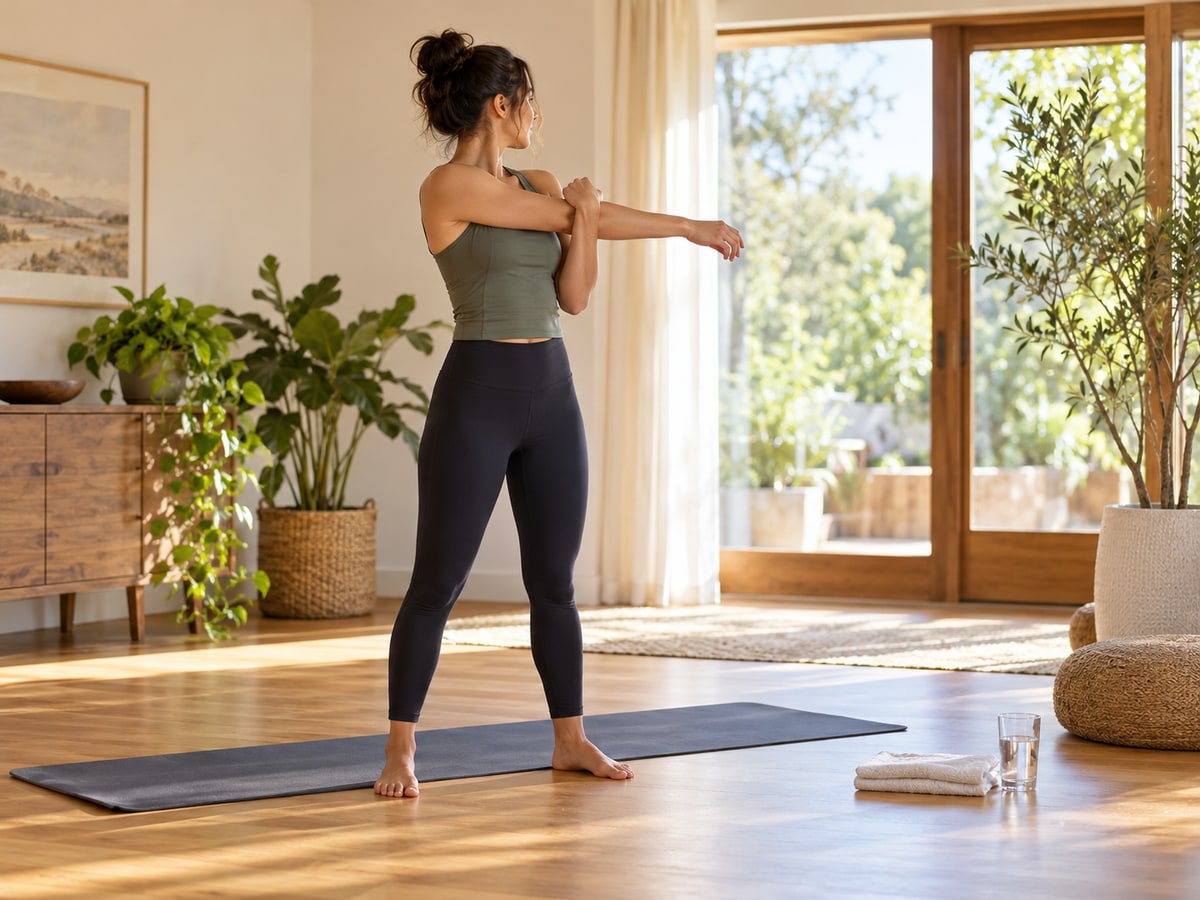
Stretching can be one comfortable part of an everyday yoga or movement routine, but it does not have to be the whole routine. A useful question is: what are you about to do? Choose a gentle warm-up before more active movement, a comfortable stretch when you have time to settle, or a slower finish when you are done. None of those choices requires you to force a shape.
This article answers the practical planning question of where stretching fits. It does not replace our morning yoga plan, which helps you plan a broader beginner practice, or the yoga props guide, which helps you discuss equipment with an instructor. It also does not promise that stretching prevents every injury, fixes pain or guarantees performance.
Start by naming the moment
Rather than using the same stretch every time, name what is happening next. Are you about to walk, follow a yoga class, finish a session, or take a short break from sitting? This simple check can keep a familiar stretch from becoming a rule you feel obliged to complete.
For a class or home sequence you already know, use the warm-up and options your qualified instructor has taught you. The NCCIH yoga safety guide recommends qualified instruction and notes that individual circumstances can call for changes. A blog cannot decide which movement or range suits your body on a particular day.
Before a yoga or movement session: make the start easier
A warm-up can be a few minutes of comfortable, low-intensity movement that resembles the activity you are about to do. For example, you might walk slowly around the room, roll your shoulders gently, or use a familiar easy sequence from your teacher. The aim is preparation, not proving flexibility before you begin.
As a practical suggestion, choose two movements you already understand and keep them small at first. Check the floor, your mat and nearby furniture. If you feel rushed, choose one comfortable movement or begin the class more slowly instead of trying to make up a full routine. Our chair-yoga guide offers a different setup when floor transitions are not suitable for you.
A simple decision prompt
- About to move more? Start gently and build up rather than holding a demanding position.
- Taking a short pause? Pick one familiar, comfortable position and release it when it stops feeling useful.
- Finishing activity? Slow down first, then choose a calmer stretch only if it feels appropriate.
These are planning suggestions, not a medically tested protocol. There is no required number of stretches, hold length or depth that suits everyone.
After exercise: choose a calmer finish
The NHS post-exercise stretching guide presents gentle stretches as part of a cool-down. You can use the idea of a calmer finish without copying every example: reduce your pace, breathe normally and choose only movements that remain comfortable.
For an everyday home practice, you might finish with a relaxed shoulder movement, a gentle calf or hamstring position you have been shown, or simply quiet sitting. Avoid bouncing or pushing further just because you think a cool-down must feel intense. A pleasant stretch is not a score, and discomfort is not a requirement.
Keep the goal modest
Stretching can help you make time for flexibility work. It cannot reliably promise to prevent every injury, erase soreness, correct posture, treat pain or transform a short practice into a complete exercise plan. If pain, dizziness or feeling unwell appears, stop and seek individual advice rather than trying to stretch through it.
Build a repeatable routine without forcing it
The NHS flexibility guidance suggests building up slowly. In real life, that can mean choosing a small routine you can recognise and repeat instead of searching for a harder stretch each week.
Try this original planning template: choose a time cue, one familiar movement, a comfortable stopping point and a note about how the space felt. Put the time cue in the weekly planner, such as after work or before a regular class. Next time, use the note to decide whether to repeat, shorten or skip the movement. The plan works even if the session lasts only a few minutes.
Props can be useful when a qualified teacher has shown you how they change a position. A strap or block is not a reason to pull farther. If you want to explore that option, return to our beginner props guide and ask your instructor about the particular movement you have in mind.
When to pause and ask for help
Change or skip a stretch when the space is unsafe, balance feels uncertain, the movement causes pain, or you do not understand how to set it up. The NHS notes that injuries, medical conditions and pregnancy can require changes to post-exercise stretches. Ask a physiotherapist, other appropriate health professional or qualified instructor for individual guidance when that applies to you.
Do not use an online routine to diagnose symptoms or manage an injury. A qualified person can help you decide what to modify and whether movement is appropriate. That advice is more useful than attempting a deeper version of a stretch from a photograph.
Sources and editorial notes
NHS post-exercise and flexibility guidance and NCCIH yoga safety information were checked on 12 October 2026. The decision prompt, home-planning template and examples are Sweat & Snack practical suggestions. The feature and Pin images are original AI-generated illustrations of a fictional home practice; they are not personalised posture instruction. This guide makes no guarantee about injury prevention, pain, recovery, weight or performance outcomes.
General educational information; individual exercise needs vary.