Articles are currently available in English.
Yoga
Surya Namaskar for Beginners: A Gentle Home Video Guide
By Sweat & Snack Editorial Team · 2026-10-10
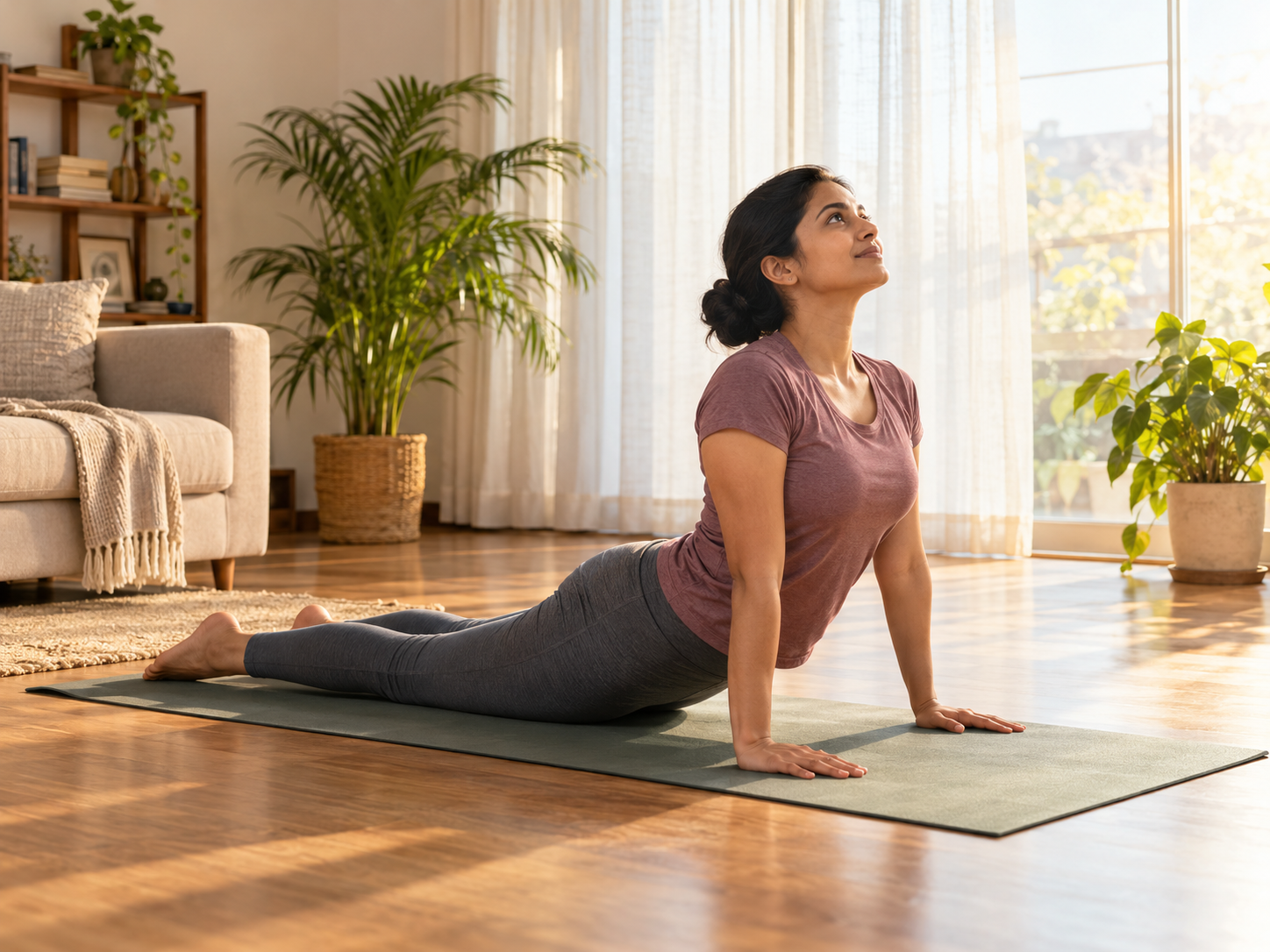
This short video is a calm visual introduction to Surya Namaskar, often called Sun Salutation. It shows an adult moving through a home practice setting. Use it to recognise the overall pace and setting, not as a substitute for learning positions and transitions from a qualified instructor.
Surya Namaskar is not one fixed performance test. Different teachers and traditions may use different variations, pacing and names for transitions. The useful beginner question is not whether your shape matches a video frame. It is whether you understand the version your instructor has shown you and can practise it with control and attention.
If you are building a broader routine, read our morning yoga for beginners plan for a flexible practice schedule. Our yoga props guide can help you ask practical questions about a mat, blanket, blocks or a strap before a class.
How to use this video well
Watch once before getting on the mat. Notice the unhurried setting, then put the screen where you can see or hear it without twisting your neck. Because the clip is only ten seconds long and does not include teaching cues, it is best used as a reminder after you have learned a suitable sequence in person or from a qualified instructor.
As a practical suggestion, make a short note after a class: the starting position, the transition you want to revisit, and the option your teacher recommended. Use that note alongside the video. This can keep a visual reference from turning into a pressure to rush or copy a depth of movement that is not right for you.
A gentle way to plan a home session
Choose a clear patch of floor and remove loose items from the edges of your mat. Give yourself more room than the video frame suggests; the camera only shows one angle. You might begin with a minute of comfortable standing, practise the familiar portions of a sequence at the pace you were taught, and leave time at the end to settle before moving on with your day.
This is a planning suggestion, not a prescribed yoga workout. A home practice can be shorter, slower, or limited to the positions you already know. There is no need to make up a missed session with extra repetitions. Our weekly planner can hold a realistic practice time and a reminder to prepare your space.
Start with instruction, not imitation
NCCIH's yoga guidance recommends learning with a qualified instructor and cautions beginners against extreme positions and forceful breathing. It also notes that pregnancy, injuries, older age and health conditions can affect what is appropriate. Ask a health professional and instructor about individual needs when that applies to you.
For a beginner, it is reasonable to pause between positions, use an option an instructor has demonstrated, or leave out a transition. Stop when a movement causes pain, dizziness or other concerning symptoms, and seek individual advice instead of trying to correct it from this video. The clip cannot assess alignment, balance or a personal limitation.
What this visual does and does not show
The video uses a fictional AI-generated adult in a sunlit home. It offers no promise about flexibility, fitness, pain relief, weight change or any other health outcome. It also does not show every possible option for Sun Salutation. Its purpose is simply to give a peaceful, realistic-feeling visual companion to the written planning guidance.
If a floor sequence is not comfortable for you, choose a practice that your instructor has adapted for your needs. For an alternative setup, our chair yoga guide explains how to plan a session that stays off the floor. The right version is the one you can understand and practise safely with qualified guidance.
Sources and editorial notes
Safety and instruction notes were checked against NCCIH: Yoga—Effectiveness and Safety on 10 October 2026. The home-practice planning ideas are original Sweat & Snack suggestions. The video and both images are original AI-generated visual assets; they show a fictional adult and are not personalised posture instruction.
General educational information; it does not replace individual instruction or medical advice.