Articles are currently available in English.
Exercise
Walking Break at Work: A Plan for Everyday Clothes
By Sweat & Snack Editorial Team · 2026-10-14
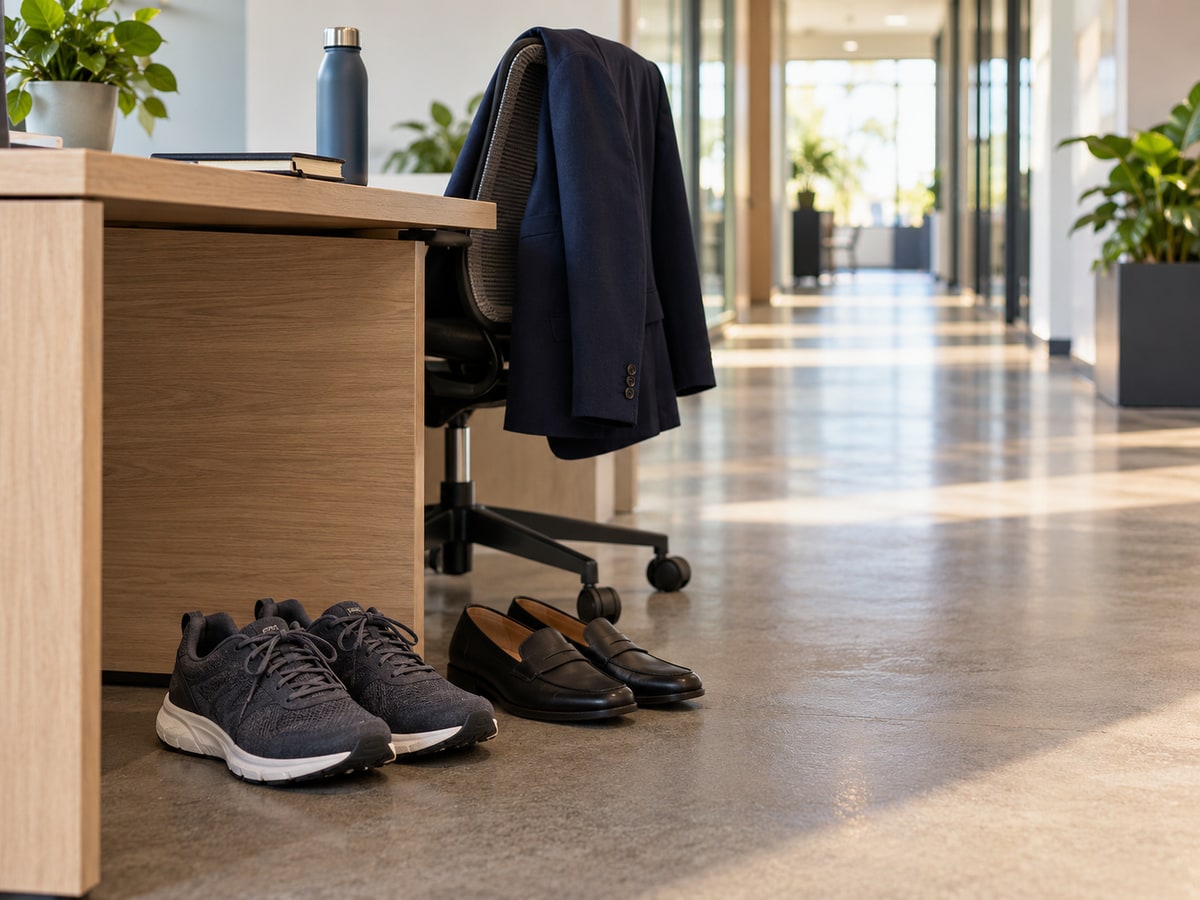
If changing into gym clothes is what stops you taking a walking break at work, try planning a smaller outing around the clothes, shoes and time you already have. Choose a familiar permitted route, wear comfortable supportive shoes and leave time to return before your next task. A break can be a simple walk rather than a miniature gym session.
The ideas below are optional planning suggestions for people who can walk comfortably. They do not promise a sweat-free outing or prescribe a pace for everyone. Your outfit, workplace, weather and ability determine which option is workable.
Start with the shoes, not a shopping list
Comfortable shoes or trainers with adequate support that do not cause blisters are a suitable starting point for walking. You do not automatically need specialist walking shoes for an ordinary short route. If your usual work shoes are uncomfortable for walking, you could keep a suitable pair at work and change only your shoes.
Before heading out, check whether your clothes allow you to walk comfortably. As a practical test, take a few ordinary steps in the space available to you. If a tight outfit, loose hem or uncomfortable shoe makes the route awkward, choose another time or setup rather than forcing the plan.
A small desk-side kit you could use
- Comfortable walking shoes, if different from your work pair.
- Your access card or keys, if you need them to return.
- A place to leave bags and loose items according to workplace arrangements.
- A note of when you need to be back.
This is an organisation suggestion, not a required equipment list. You could leave out anything you do not need. Avoid buying a whole exercise wardrobe before trying a route that already fits your day.
Choose a route with an easy return
Look for a familiar level route where walking is permitted: a courtyard, nearby pavement or a quiet office corridor that is intended for normal access. Check entrances, crossings, building access and any restrictions relevant to that location. Keep work areas, emergency routes and other people in mind.
As a first-try suggestion, an out-and-back route may be easier to time than an unfamiliar loop. Choose a clear point at which you will turn around. If outdoor conditions or the available route do not suit you, consider an appropriate indoor option rather than trying to complete a planned distance at all costs.
If you only have an indoor option
Ask which spaces are suitable for walking and choose a quiet time if necessary. Keep the route clear and walk without reading messages on your phone. If you work from home and have little space, our small-room indoor walking guide covers that setting in more detail.
Fit the walk inside the gap you actually have
Try counting preparation and return time as part of the break. A calendar gap of ten minutes is not necessarily ten minutes available for walking if you need to change shoes, leave the building and get ready for a call.
One possible example: you have a six-minute gap before the next task. You might allow a minute to put on shoes and collect your access card, walk a short familiar out-and-back route for about three minutes, then leave two minutes to return and settle. These are illustrative planning amounts, not an exercise dose or a promise that the route will take exactly that long.
If that example is too rushed, choose a shorter route or a different gap. You can also start with a brief walk and increase gradually if you are not very active. There is no need to add stairs or carry a heavy bag to make a small break seem worthwhile.
Separate an easy break from brisk exercise
Choose an effort that fits your abilities and circumstances rather than chasing another person's step count. A gentle walk is not automatically moderate-intensity aerobic activity. As a general talk-test guide, moderate activity usually lets you hold a conversation but makes singing difficult.
The adult activity guideline includes at least 150 minutes of moderate-intensity aerobic activity a week and muscle-strengthening activity on two days. Some physical activity is better than none, but a short easy office break does not replace that whole weekly pattern. For the broader context, see the weekly activity guide.
This article is not asking you to turn every work break into a brisk walk. You could keep one break easy and plan other activity separately. If you have movement limits or advice from a health professional, work within that guidance when choosing your route and activity.
Make the return part of the plan
Before leaving, decide where your walking shoes will go afterwards and what you need for the next task. Allow time for any handwashing, clothing adjustment or water you personally want. There is no reliable promise that a particular pace or duration will prevent sweating; change the plan if it does not fit your working day.
If the route worked, record the gap, shoes and turnaround point so you can repeat it. If it did not, note the practical obstacle: the door required another access card, the shoes rubbed, or the next meeting left too little time. Adjust that one detail before trying again.
Keep a fallback for a busy day
You might choose a different permitted route, take the walk at another break, or leave it for another day. Our desk-mobility guide offers a different movement format, while the missed-workout planning guide helps you think through a changed week.
Use the weekly planner if writing down a repeatable break would help. The route, kit and timing examples here are original suggestions. The images are AI-generated depictions of a fictional office.