Articles are currently available in English.
Exercise
Walking Uphill? Let Your Pace Change With the Slope
By Sweat & Snack · 2026-10-22
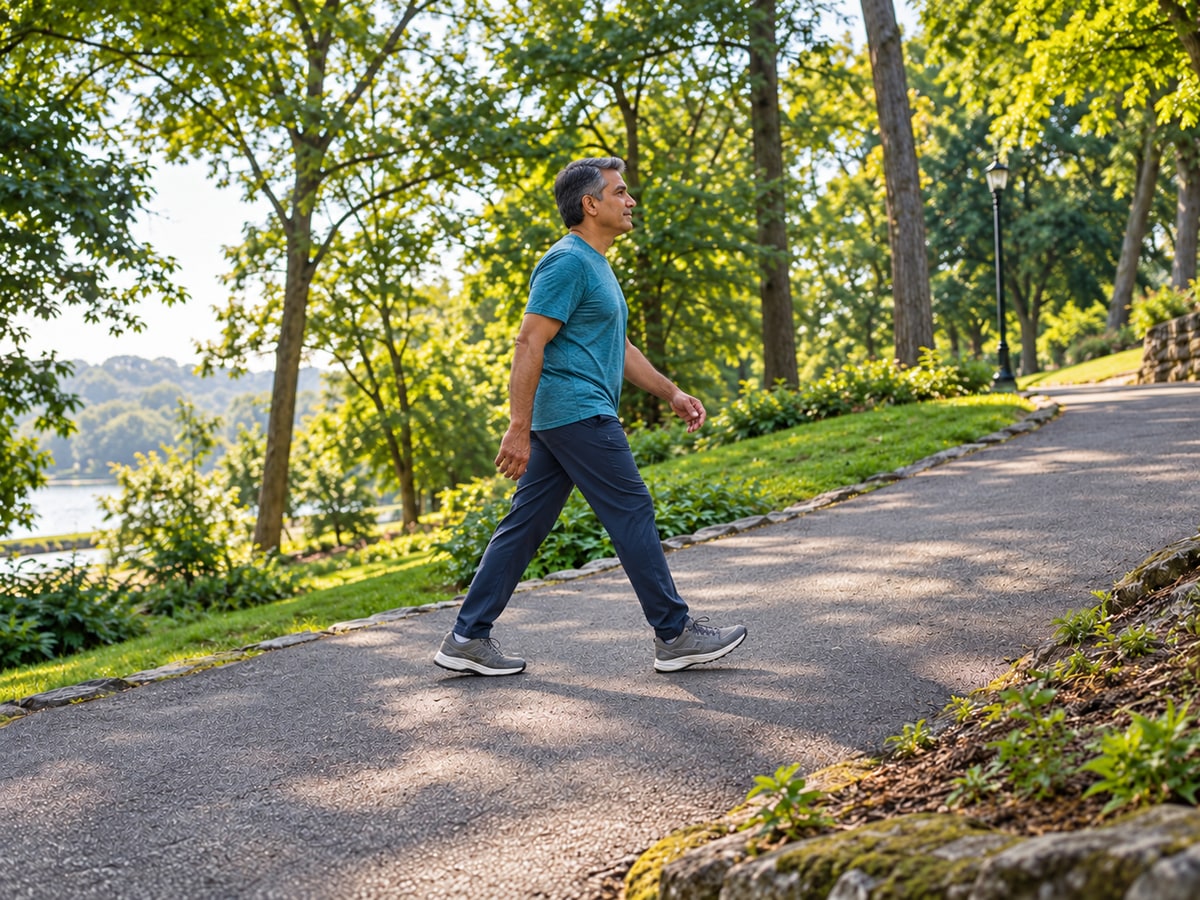
If a hill makes your usual walking pace feel too demanding, let the pace change. Choose the effort that fits your planned outing, slow down as needed, and use a flatter route or finish early if the climb does not suit you. Your flat-route pace is a reference, not a requirement to carry uphill.
This guide is for regular walkers planning an ordinary outdoor route with a slope. The route choices, examples and recording ideas are practical suggestions to adapt. They are not a hill-training programme, a fitness test or a personalised exercise prescription.
Why the same pace can feel different
Walking speed and slope are separate parts of the task. A 2026 treadmill study of twenty healthy adults compared fixed-speed and self-selected walking across gradients. Energy expenditure increased with grade, and responses differed between people. The study included very steep treadmill settings; it does not prescribe a gradient, calorie target or outdoor pace for you.
The useful distinction is that a speed number alone does not describe the whole walk. As a planning suggestion, keep the route and your experience of it alongside any watch number. A slower uphill section need not be treated as a failed attempt to repeat a flat walk.
Choose the outing before choosing a target
A comfortable everyday walk
If you want an undemanding outing, consider a familiar route with a short, optional slope and a known flatter alternative. Leave yourself permission to turn back. You do not need to include the hill simply because it appears on a saved route.
A planned moderate-effort walk
CDC describes relative intensity as effort in relation to the individual. Its talk-test rule of thumb is that moderate activity allows talking but makes singing difficult; vigorous activity leaves room for only a few words before a breath. That helps describe effort, but it is not medical clearance or a reason to ignore symptoms.
For a walk you intend to keep moderate, you could use that rough check when the terrain changes rather than defending one pace throughout. If talking becomes much more difficult, ease off or pause in a suitable place. There is no need to finish the hill at the original speed.
A coached hill session
If your coach has deliberately planned harder intervals, use that individual plan and discuss how to handle the route. This article does not supply repetitions, steepness or work-to-rest targets. A casual route adjustment and a structured hill workout are different planning tasks.
Make three route decisions in advance
- Where does the climb begin? Pick a visible landmark, such as the start of a gently rising path, so you can notice the change without repeatedly looking at a screen.
- What is the alternative? Identify a permitted flatter path or a suitable turnaround before leaving. Check access rather than assuming a path on a map is open.
- How will you return? Include the descent and any crossings in your plan. Do not plan to race downhill to recover time lost on the climb.
As practical precautions, choose a clear, dry route where you can see your footing, and stop somewhere appropriate before looking closely at your phone. If the path, weather or visibility is unsuitable, change the outing. A route that worked on another day is not an obligation today.
A worked example: the park loop
Suppose your familiar park loop includes a level entrance path, a short rise beside a garden and a flatter return. Your aim today is a moderate walk, not a fastest loop. Before starting, you choose the garden entrance as your check point and identify a level out-and-back option if you decide against the slope.
At the rise, you let your pace fall and notice whether you can still talk comfortably enough for the intended effort. If it feels too demanding, you could slow further, pause or take the alternative. On the return, choose a pace that suits the path rather than trying to repair the average shown on your watch.
This example has no prescribed speed, distance or duration. It demonstrates a decision you can make on a route you already know. If your actual goal is a short office break, the walking-in-work-clothes guide answers the separate questions about access, shoes and return time.
Record a section, not just an average
Afterwards, you could write: “Garden rise: slowed down, talking remained manageable; used the level return.” If you turned back, record that instead. One useful route note is enough; you do not need to turn every walk into a detailed spreadsheet.
For a later comparison, consider using the same route and noting any important changes in conditions. Keep observations separate from conclusions: completing the loop faster once does not by itself show why your performance changed. Our workout-log guide covers the wider habit of recording what you actually did.
Adjust gradually and keep the boundaries clear
NIDDK advises starting slowly and adding activity gradually, with individual professional guidance when health problems or disability affect activity. As a conservative suggestion, keep an unfamiliar route modest and avoid changing the hill, speed and outing length together. Stop if you feel pain or unwell; seek appropriate guidance rather than using a talk check to dismiss a concern.
If you want the broader weekly context, see our adult activity planning guide. For planned Sweat & Snack tools to organise repeatable routes and exercise notes, join the app waitlist. The feature and Pinterest images are AI-generated photographic illustrations of a fictional walker.