Articles are currently available in English.
Yoga
Warrior II: Find a Stance You Can Actually Hold
By Sweat & Snack · 2026-10-26
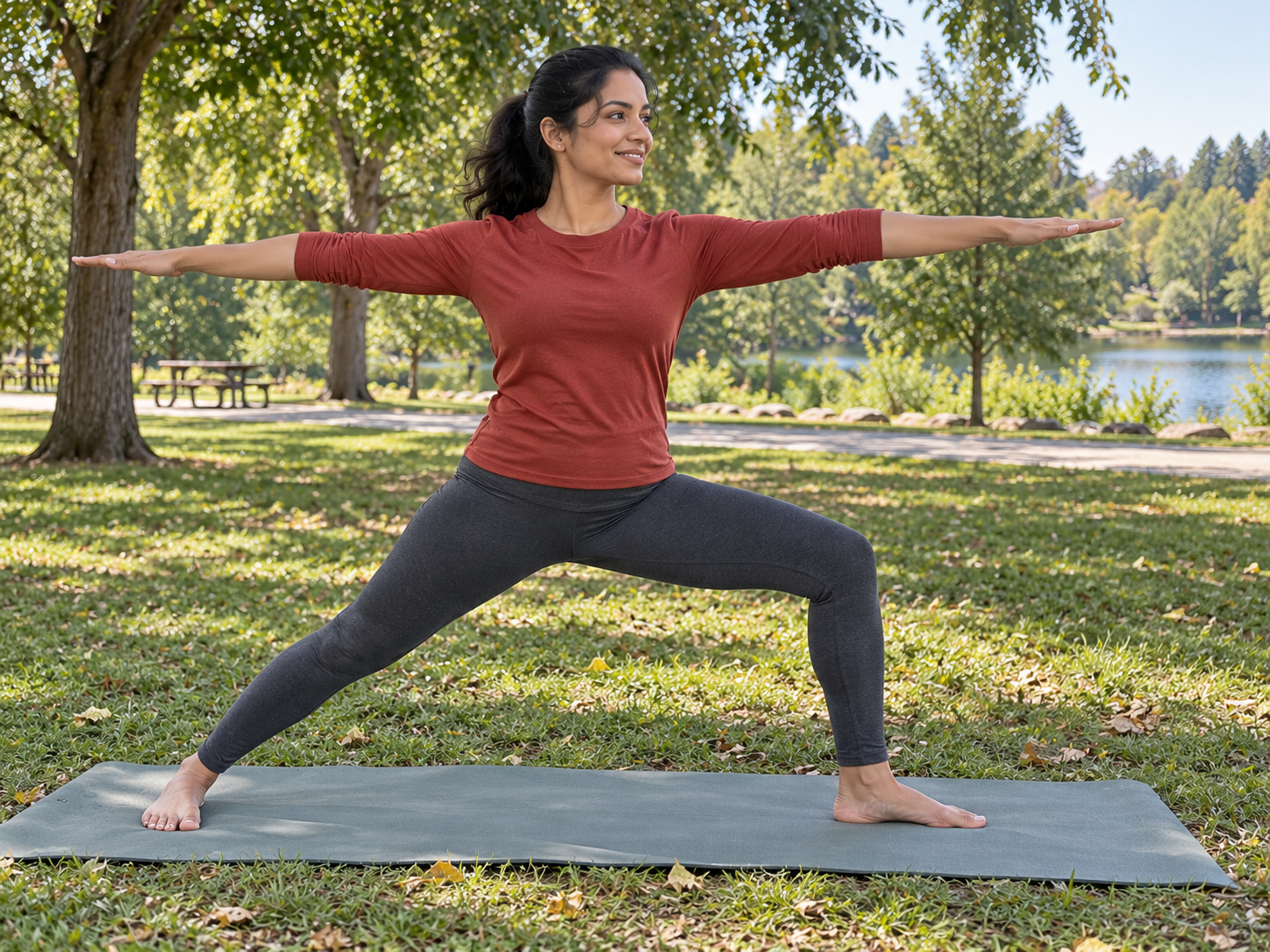
Build Warrior II from a stance you can leave easily. A wide, deep lunge may look striking in a photograph, but you can begin with a smaller bend and a stance that lets both feet stay planted. This is a suggested way to explore the pose, not an instruction to chase a particular knee angle or hold time.
Warrior II is often shown as a side-facing standing pose with one knee bent, the back leg straighter and both arms reaching out. That description helps you identify it. Your practical task is simpler: arrange your feet, test a comfortable bend, then decide whether the arms make the shape feel clearer or more strained.
Set the feet before the arms
Start on a flat, non-slip surface with room to step to the side. Turn one foot toward the direction you will face, and place the other foot behind you at an angle that feels stable. Do not force the feet into a single straight line if that makes standing feel precarious. Let your front knee bend only enough that you can still return to standing with control.
The Warrior II pose guide describes the familiar wide stance and notes that a wall or chair can add stability. The exact width and depth are teaching options, not universal requirements. If you are learning in a class, ask the instructor to check your feet from your own position rather than copying another person's body proportions.
A short suggested practice
Stance, shape, exit
- Place both feet and pause. Look down once to make sure the front knee is moving in the same broad direction as the front foot.
- Rest hands on your hips at first. Bend the front knee a little, keeping the back foot planted and your torso comfortably upright.
- If that feels steady, extend the arms in opposite directions. You can lower them again at any moment.
- Take a few unforced breaths. Straighten the front leg gently, bring the feet closer and pause before changing sides.
The exit is part of the practice. If stepping the back foot in feels awkward, keep the stance shorter next time. If the shoulders tire before the legs, use hands on hips. A modest Warrior II that you can enter and leave calmly is a more useful starting point than a shape you can hold only while straining.
How this fits with other yoga work
Readers who already know the pose but rush between shapes can use the intermediate transition guide to think about deliberate foot placement. If you are still deciding what to bring to class, the props guide covers blocks, straps and blankets. You need neither extra props nor a complex sequence to try this one stance.
Stop if the pose causes pain, dizziness or instability. The NCCIH yoga safety guidance notes that injuries and health conditions may require pose modifications and recommends learning with a qualified instructor. Those limits matter more than how closely your pose resembles the illustrative image.
Image note: the illustrative photograph and Pin graphic were generated with AI from a user-supplied visual reference.