Articles are currently available in English.
Food & Nutrition
Whole Fruit Before a Workout: What Fits Your Session?
By Sweat & Snack · 2026-10-28
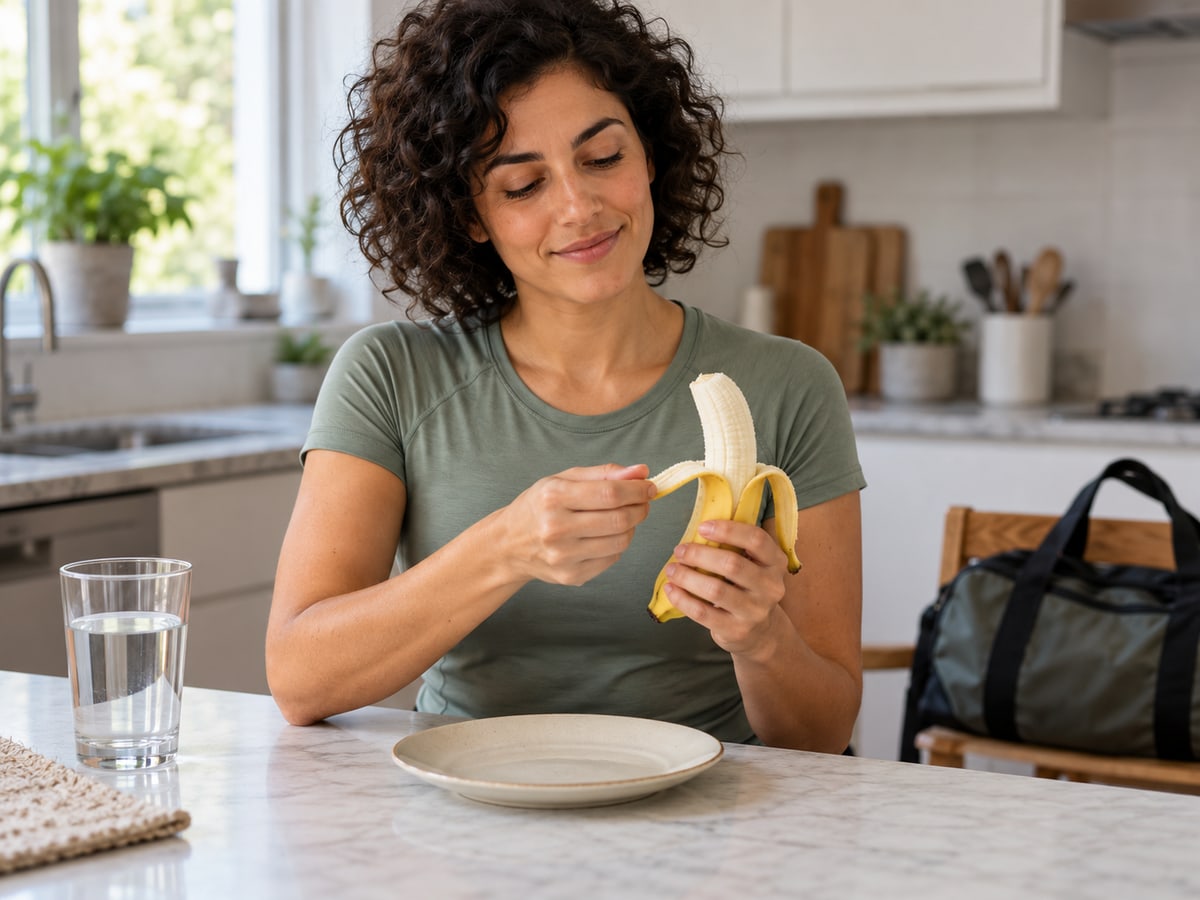
A banana before training can be a practical choice if you want a small, familiar snack. It is not compulsory before every workout, and it is not a complete fueling plan for a long, demanding session. Start with what you have already eaten, what you plan to do and how food usually feels in your stomach.
This guide answers the before-exercise question using whole fruit as the subject. For the different decision after a session, see snack or dinner after your workout. The examples below are editorial planning suggestions, not a tested meal programme or instructions to exercise through hunger or discomfort.
Check the session before choosing a snack
A short, comfortable home movement break and a long endurance workout present different demands. The USU HPRC nutrient-timing guide tailors fueling to activity duration, intensity, environment and personal experience. Its detailed targets are written for Service Members and performance tasks; they are not universal requirements for an ordinary ten-minute routine.
Use three questions as a practical starting point: When was my last meal? How demanding will this session be? Do I actually want food now? If you ate a comfortable meal recently and are planning light movement, pause before automatically adding a snack. If you are hungry after a long gap, leave room in the plan to eat rather than treating an empty stomach as an achievement.
Choose familiar fruit and a manageable amount
For an uncomplicated trial, choose fruit you already enjoy and tolerate: for example, one small banana, part of a larger banana, or a modest serving of another familiar fruit. These are possible starting amounts, not equivalent carbohydrate doses or prescribed portions. You can save the remainder for another meal. There is no need to buy an exotic ingredient for this decision.
Put the fruit on a plate, sit down and eat it normally. Avoid turning a last-minute snack into a large bowl containing several fruits, seeds, nut butter and a new supplement. That makes it harder to learn which part of the combination suited you. If a fruit repeatedly feels uncomfortable before training, choose another familiar food and seek individual advice when symptoms persist.
Does the clock change the choice?
The HPRC guide discusses lower-fat, lower-fibre choices before demanding exercise to reduce stomach upset, and advises trying unfamiliar foods during training rather than on event day. That does not make fibre unhealthy or establish one safe waiting time for everyone.
As an editorial approach, use the time available to decide how much experimentation makes sense. With little time left, stay with a familiar small choice rather than a new fruit bowl. With a longer gap, plan an ordinary meal or snack that fits your day. If you have just eaten a large meal and feel uncomfortably full, adjust the session timing instead of expecting a different fruit to solve the problem.
Write a simple note after a normal training day: fruit and approximate amount, time eaten, session type, and comfort. Keep the rest of the meal pattern reasonably similar when comparing experiences. The aim is a useful personal record, not a claim that one snack caused better performance.
Fruit alone or part of a meal?
Fruit can be one component of your usual meal. If there is plenty of time before exercise, a familiar breakfast might include fruit alongside porridge or toast. Do not treat one banana as sufficient preparation for every long or repeated session. A registered sports dietitian can help match a demanding training schedule to your overall food intake.
If the real question is how to organise meals around busy days, our flexible meal-prep guide helps with planning. If it is fluid choice, use the separate short-workout drink guide. Keep food, hydration and heat-management decisions connected without assuming fruit replaces drinking water.
Choose for your local market and climate
Use what is available where you live. A pear may be an appealing cool-weather choice in one market; berries, mango or stone fruit may be practical warm-weather alternatives elsewhere. These are examples to check locally, not a claim that any fruit is in season across an entire hemisphere. Tropical growing seasons also vary.
For this before-exercise experiment, familiarity matters more than matching a photograph. If changing from banana to another fruit, reconsider the amount and your comfort rather than assuming an equal-sized serving behaves identically. Frozen or canned fruit may fit other meals; read its preparation and storage label before using it.
Handle the fruit safely
The FDA's produce guidance recommends washing fresh produce under running water before preparing it, even when the skin will be peeled. Use clean hands and utensils; avoid soap or detergent on the fruit. Keep ready-to-eat produce separate from raw meat, poultry and seafood. Buy pre-cut fruit chilled and refrigerate it; perishable produce should be kept at 4°C/40°F or below.
For a journey, choose between carrying intact fruit and arranging appropriate cold storage for cut fruit. A gym bag is not a refrigerator. Follow local food-safety guidance and package instructions, particularly in hot weather.
If you manage diabetes, gastrointestinal conditions or another condition with a prescribed eating or exercise plan, follow your clinical advice. This general guide does not set medication, blood-glucose or symptom-management instructions. Sources checked 28 October 2026. Photographs depict a fictional adult and were generated with AI.