Articles are currently available in English.
Nutrition
Short Workout: Water or a Sports Drink Afterwards?
By Sweat & Snack · 2026-10-24
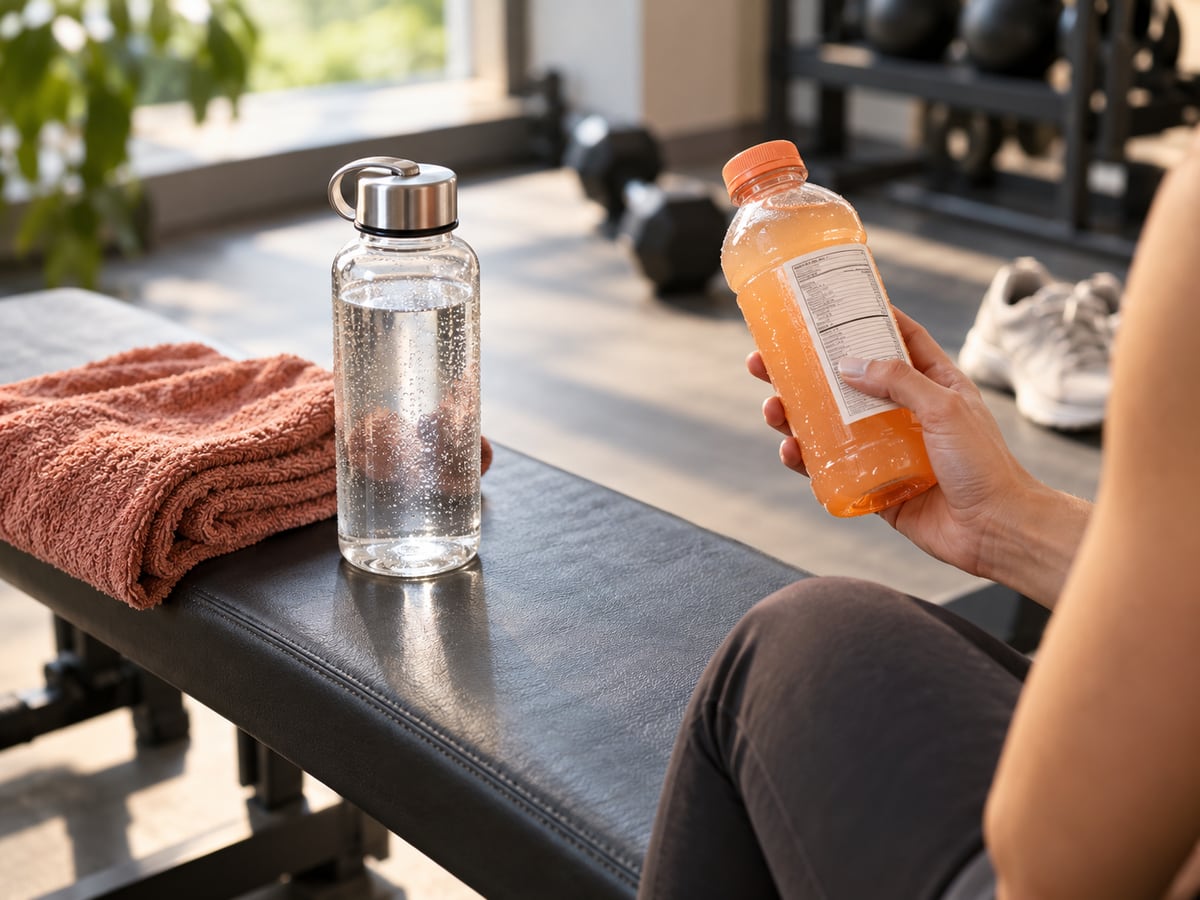
For an ordinary short workout, start with water. A sports drink is an option designed to supply fluid plus ingredients such as carbohydrate and sodium, but a workout label alone does not tell you that you need one. Look at the session you actually did, the heat and your next activity before buying a bottle.
This is a shopping decision guide for generally healthy adults, not a personalised hydration prescription. If you have a medical condition, take medicines affecting fluid balance or have been given a fluid or salt plan, use your clinician's advice rather than this checklist. Our conditions page explains the site's educational scope.
First, describe the session without the marketing language
Was it an everyday walk, a short indoor class or an easy gym session? Or was it prolonged training, repeated sessions or activity in substantial heat? The answer matters more than whether you sweated at all. The CDC's current water guidance says water needs vary with activity and hot climates, and explicitly recommends carrying water as a useful everyday habit.
Our practical suggestion for a routine short session is to take a reusable water bottle, drink when you want to and resume ordinary meals and fluids afterwards. That is a default choice, not a promise that one drink works for every person or every climate. If you are planning a longer or hotter session, make a more specific plan with qualified guidance.
What the sports drink is adding
A commercial sports drink may supply carbohydrate and sodium alongside water. Products differ, so their front labels are not enough to compare them. The American College of Sports Medicine's hydration discussion separates ordinary exercise from hotter or prolonged training and notes that real foods can provide sodium after exercise. That does not establish an automatic need for a commercial drink after every class.
The CDC describes sports drinks among sweetened beverages and recommends choosing water more often. This is a general public-health view, not a claim that every sports drink is identical or that an athlete should never use one.
Read the bottle you are about to drink
Start with serving size
Check the volume and number of servings in the whole bottle. The FDA explains that U.S. Nutrition Facts values often refer to one serving, and a package may hold more than one. Serving size describes common use; it is not a recommendation to consume that amount. Other countries use different formats, so compare the actual package in your hand.
Then check added sugars and sodium
Read carbohydrate, added sugar and sodium per stated serving, then translate them to the portion you would actually drink. The FDA's added-sugars guide explains how added sugars appear on U.S. labels. No single number from a generic bottle should be assumed for the brand you buy.
If you just want a cold drink after a short session, taste preference is a valid consideration, but it is separate from a demonstrated training need. Do not mistake an “electrolyte” or “recovery” headline for an individual assessment.
Use a three-question decision at the shop
- What did I do? Write down the actual duration, setting and whether another demanding session is soon.
- What do I need right now? For a routine session, you may simply want water and your next ordinary meal. For longer, hotter or repeated training, seek a plan suited to that activity.
- What is in this bottle? Check serving size, carbohydrate or added sugar, sodium and any ingredients relevant to you. Compare the whole amount you expect to drink.
These are organising questions, not clinical thresholds. Sweat on your shirt does not by itself measure your fluid or sodium losses. Avoid forcing large amounts of any drink because an advertisement implies a fixed deadline.
Keep food and drink decisions separate
A drink does not replace the separate question of whether you are hungry or when dinner is planned. For an ordinary workout followed by a near meal, read our snack-or-dinner decision guide. If the journey home has no fridge, the no-fridge packing guide covers food storage, not hydration targets.
If you are choosing between milk and a plant drink, start with ingredient suitability before nutrition comparisons. Sports drinks, milk drinks and plain water answer different practical questions; none is a universal recovery formula.
When to get individual advice
For endurance events, repeated training, unusual heat, illness or a personal medical fluid restriction, seek advice from an appropriately qualified professional familiar with your circumstances. Stop exercise and get help if you feel unwell. This page does not diagnose dehydration or prescribe amounts.
For broader food choices, see our nutrition guide. For most readers leaving a short everyday session, the useful next action is simple: fill a water bottle, read a drink label if you are curious, and make the choice that fits the actual session rather than a slogan.