Articles are currently available in English.
Yoga
Yin vs Restorative Yoga: Which Slow Class Fits Your Day?
By Sweat & Snack · 2026-10-25
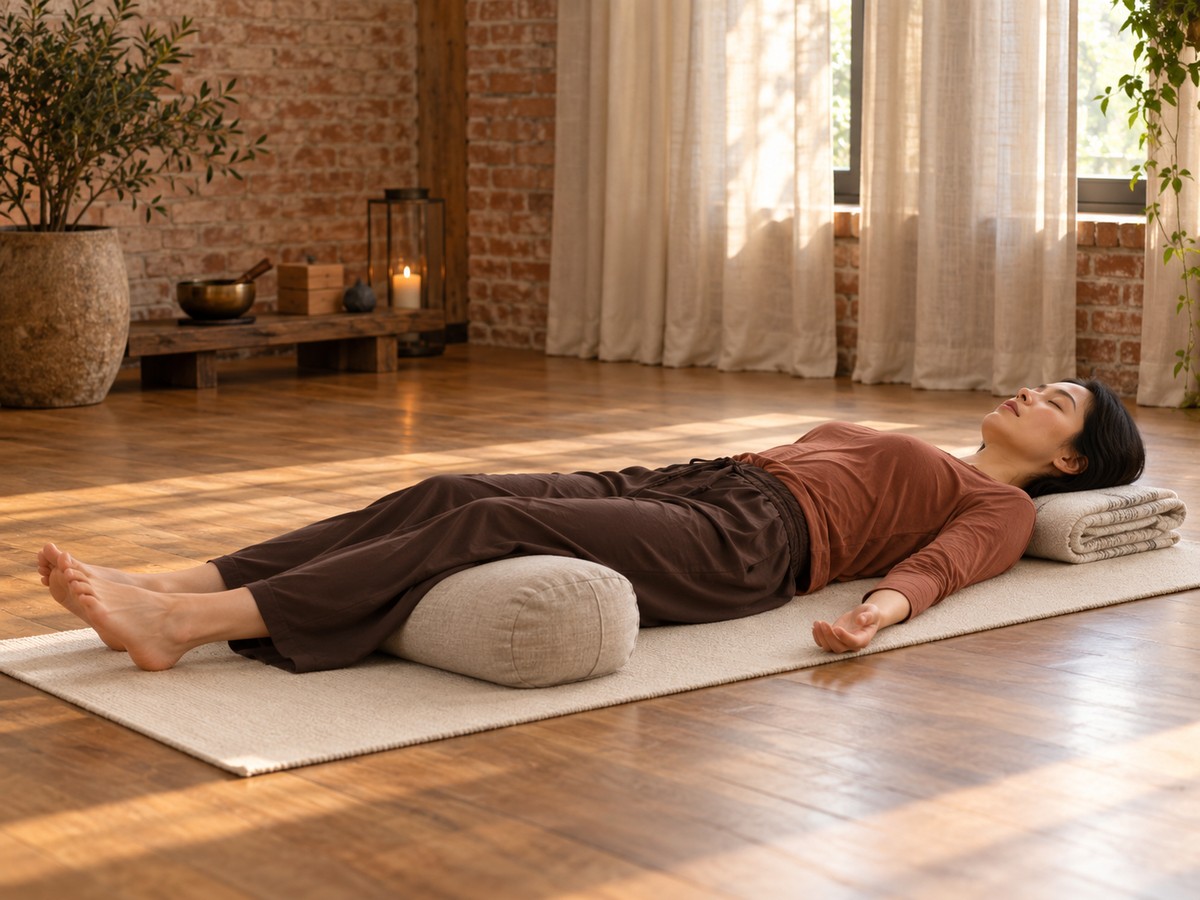
Yin and restorative yoga may look similar from the studio doorway, but they ask different things of your body. Both are usually slower and more floor-based than a flowing class. Yin commonly includes longer-held stretches with noticeable but manageable sensation; restorative yoga uses extensive support so the main task is resting comfortably. Neither style needs to be treated as the “better” one.
If you already practise yoga, this comparison can help you choose a class for a particular day. If you are new, use it to ask an instructor informed questions before joining. The distinctions describe common teaching approaches, not a guarantee about what every studio will offer.
The useful difference: stretch or support?
Yin yoga usually asks you to settle into seated or reclining stretches for several minutes. Props may make a shape more accessible, but some stretch sensation remains part of the practice. The pace is slow, yet the experience is not necessarily effortless. Cleveland Clinic describes yin as a long-held, floor-based stretching approach.
Restorative yoga usually arranges bolsters, blankets and other props to support your weight. Rather than trying to reach farther into a stretch, you find a position in which unnecessary effort can soften. Cleveland Clinic describes the intent as mental and physical relaxation, with relatively few, well-supported positions held for several minutes.
Those are teaching intentions, not measured outcomes for a particular person. A restorative class cannot promise better sleep, and a yin class cannot guarantee increased mobility. Your experience will depend on the teacher, the positions selected, and your own needs.
Compare the class before booking
- Main aim: yin commonly explores sustained stretch sensation; restorative prioritizes comfortable support and rest.
- Props: both may use them, but restorative classes tend to rely on more cushions, bolsters or blankets to remove strain.
- Time in a position: both may hold positions for several minutes. The instructor's setup and exit guidance matter more than a fixed number.
- Effort: neither class should ask you to push through sharp pain. Restorative usually aims for minimal muscular effort; yin may involve a clear, gentle stretch.
- What to bring: ask whether the studio supplies props and whether you need a mat, extra layer or blanket.
Which one fits your day?
Choose restorative when you mainly want an unhurried pause
If your day already contains a demanding workout, travel or a long work shift, you may prefer a class built around settling and support. That is a preference-based scheduling choice, not a claim that restorative yoga treats fatigue or replaces recovery, sleep or medical care. Check the class description for words such as supported, gentle, bolsters and relaxation.
Consider yin when you want to explore slow stretching
If you are comfortable with basic floor positions and want time to notice how a stretch feels, a yin class may suit that interest. The aim is not to tolerate increasingly intense sensations. Ask the teacher how to reduce a stretch, use props and leave a position early. More time in a pose is not automatically more useful.
Choose the instructor, not just the style name
Studios sometimes blend approaches. A class called “yin and restore” might offer both longer-held stretches and supported resting shapes. Read the actual description and ask what the session includes rather than assuming the name specifies every position.
Five questions worth asking before you arrive
- Will the class focus on sustained stretches, supported rest, or a mixture?
- How are alternatives offered for knees, hips, shoulders and lower back?
- Can I change position before the suggested hold ends?
- Which props are available, and is there help setting them up?
- Does the instructor explain how to enter and exit positions without rushing?
These questions are especially useful when you are moving from a familiar flowing practice to a slower style. If you need help choosing blocks or a strap, see our guide to yoga props. If your challenge is moving between poses rather than staying in one, our intermediate transitions guide covers a different skill.
A simple way to test the choice over two weeks
Rather than buying a package immediately, try one appropriately taught class in each style on separate days. After each session, note three things: Did you understand the setup? Could you adjust or stop when needed? Did the class match the experience you wanted? Those notes are more useful for your next booking than assuming that a slower class must be right for everyone.
If you already have an exercise schedule, consider placing the classes where they are realistic to attend. A supported session on a busy evening may be more practical than an ambitious class you regularly miss. This is an organizational suggestion, not a prescribed training program.
Safety matters even when the class is slow
Slow movement is not risk-free. The US National Center for Complementary and Integrative Health notes that yoga can cause injuries, including sprains and strains, and recommends qualified instruction. Older adults, pregnant people and people with injuries or health conditions may need to adapt or avoid particular practices. Speak with an appropriate healthcare professional and instructor when relevant.
Stop if you develop sharp pain, dizziness, numbness or symptoms that concern you. Avoid forcing a deep stretch or holding your breath to stay in a shape. A good class should allow you to change position or opt out without pressure. Yoga is not a substitute for evaluation or treatment of a medical condition.
Make the next class easier to plan
Choose a class based on the experience you want, the teacher's guidance and the adjustments available—not a promise of instant recovery or dramatic flexibility. Record the class, the equipment you actually used and any questions for next time.
Sweat & Snack's app is being developed to connect movement choices with personal routines, reminders and progression. To hear when the personalized planning experience is available, join the app waitlist.
Sources and scope
Cleveland Clinic’s guide to yoga styles and restorative yoga explanation provide the attributed teaching descriptions. NCCIH: yoga effectiveness and safety supports general safety and adaptation guidance. Class-selection questions and the two-week comparison are suggestions, not a clinically tested program. Sources checked 26 October 2026.