Articles are currently available in English.
Yoga
Yoga Socks or Bare Feet? Check the Studio and Surface
By Sweat & Snack · 2026-10-22
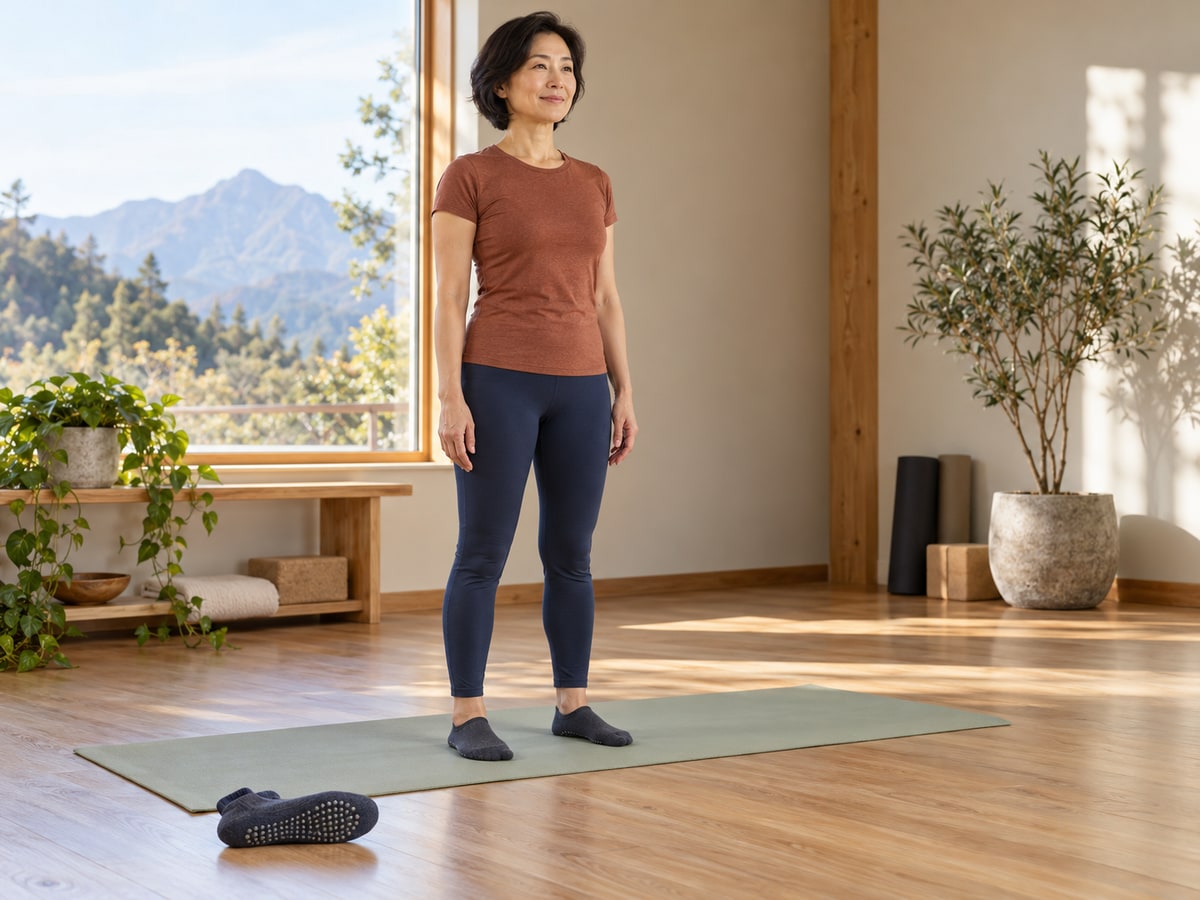
Before deciding whether to wear socks for yoga, check what your specific class allows. If socks are permitted, consider the actual pair and surface you will use. A label saying “grip” is not a guarantee that your whole setup will stay still, and taking socks off does not automatically solve every movement problem.
This is a practical comparison for someone packing for class or setting up at home. The checks below are conservative suggestions, not a slip-resistance test or a recommendation for a foot condition. You do not need to buy a new accessory before asking your teacher what is appropriate.
Start with the studio’s rule
Studios do not all give the same answer. The Yoga Common’s FAQ asks participants to practise barefoot and avoid socks. Wilmington Yoga’s FAQ permits yogi-toe socks or dedicated indoor shoes when needed, while otherwise suggesting bare feet. These are examples of venue policies, not rules for every style of yoga.
Try asking: “I prefer to keep my feet covered. Are grip socks allowed in this particular class, and can we check my setup before we begin?” Name the class rather than asking only about the building; a venue may host different activities. If you use prescribed footwear or have an individual requirement, explain that privately before booking.
Our first-yoga-class questions cover the separate decisions about lesson level, equipment and arrival. For this choice, get a clear answer about what can be worn on your feet.
Compare the three options you actually have
Ordinary socks
As a setup suggestion, do not assume a pair worn inside shoes is suitable for yoga on a mat or floor. Look at the sole and fit instead of relying on the word “sports” on the packet. If the teacher does not accept that pair, leave it off the practice area and discuss the available option before joining in.
Socks designed for studio use
Read the description of the exact model. For example, Gaiam lists silicone grips and an open-toe design on one yoga-sock model. Other products may have a different shape, sizing or care label. A manufacturer’s product description tells you what it sells; it does not establish that a sock prevents injuries.
If you already own a permitted pair, you could check that the heel sits where intended, the fabric is not twisted and the sole faces down. Ask for help if the sock bunches or rotates. An expensive pair or a particular dot pattern is not a substitute for checking your own setup.
Bare feet
If barefoot practice suits your circumstances and the venue’s guidance, you could place your removed socks with your other belongings, away from the mat edge and walking route. Still check the mat and surrounding floor. Bare feet do not answer the separate question of whether the mat itself moves.
Notice which part of the setup shifts
Before class starts, ask the instructor to help you check the arrangement during a familiar, undemanding position. Do not create a deliberate sliding challenge, try a one-leg balance to prove grip, or push farther into a pose to see what happens. A brief check is only an observation of that moment.
If something shifts, pause and describe what you noticed: “My foot moved inside the sock,” “The sock moved against the mat,” or “The whole mat moved on the floor.” Those observations describe different parts of the arrangement. Avoid changing several things while continuing the flow; stop first, then ask what to change or whether to sit out.
If the mat-to-floor connection is the issue, our yoga-mat-on-carpet guide covers that separate setup question. Cleaning and drying are also separate from choosing footwear; see planning a mat’s cleaning and drying space and follow its manufacturer’s instructions.
Make a small packing plan
For a first visit, you could pack the pair the studio has agreed to, keep it easy to reach, and arrive with time to ask your question. If you prefer socks only while waiting, ask where to remove and store them. Do not assume permission to wear socks in reception means the same pair is accepted during standing practice.
For example, suppose you usually attend a barefoot class but are visiting a venue that accepts grip socks. Check that venue’s policy before travelling, bring your own permitted pair and ask about fit before the session begins. Your previous class’s answer does not settle the new venue’s choice.
Keep equipment choices within their limits
NCCIH notes that yoga injuries can occur and recommends qualified instruction. It also advises people with relevant health circumstances to discuss their individual needs with their health care professional and instructor. This comparison cannot decide whether barefoot practice, socks or a particular pose suits an injury or condition.
As a conservative suggestion, stop if you feel pain, unsteadiness or unexpected movement, and ask for qualified guidance. You can decline the next movement while sorting out the setup. Keep one useful note after class: the venue’s policy, the pair you used and any question to ask next time.
For planned Sweat & Snack tools to organise movement routines and preparation reminders, join the app waitlist. Use the studio and setup details you have checked when planning your next visit.