Articles are currently available in English.
Yoga
First Yoga Class: What to Ask Before You Book
By Sweat & Snack Editorial Team · 2026-10-13
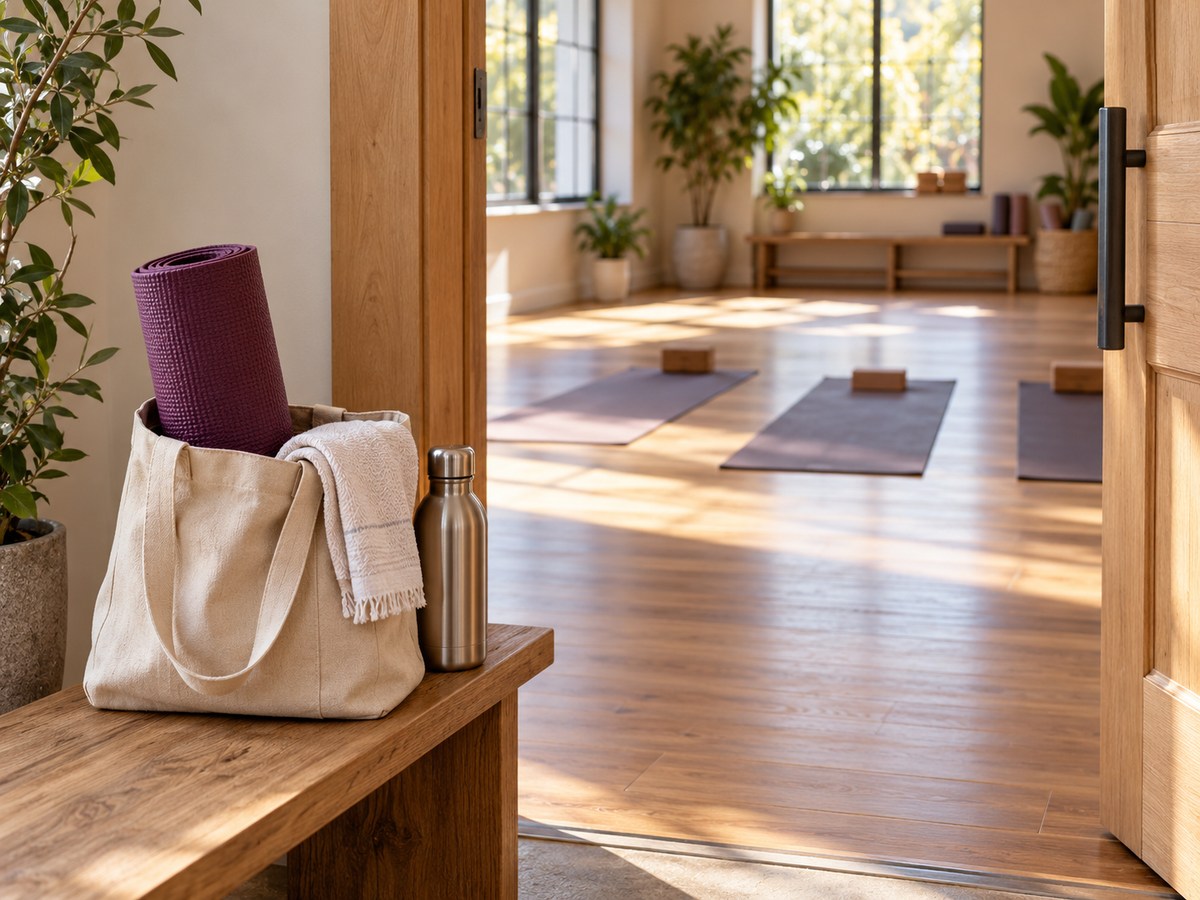
Before booking your first yoga class, ask whether it is designed for complete beginners, how the teacher explains unfamiliar movements, and what options are available if you need to sit or skip a pose. Then check the practical details: equipment, room temperature, arrival time and the total price. You can make a useful first choice without buying a new kit or learning a sequence beforehand.
This guide focuses on choosing a class and making the first visit easier. The questions, message template and packing suggestions below are practical ideas you can adapt. For a separate home-practice planning guide, see our morning yoga for beginners article.
Ask what “beginner” means in this particular class
Yoga styles range from gentle to physically demanding. A class name alone will not tell you how much explanation you will receive. As a starting suggestion, look for a session that explicitly welcomes people who have never attended before, then ask what happens when someone does not know a pose.
Three useful questions before you book
- “Is this suitable for someone with no previous yoga experience?”
- “Do you demonstrate movements and allow time for questions?”
- “Can I pause, sit out a movement or use a simpler option?”
Compare the actual answers, rather than trying to choose the most impressive style name. If the reply is too vague, ask for a description of a typical lesson or try a different class. You are choosing a learning environment, not committing to a permanent routine.
Check the teacher’s experience and the options you need
Ask about the instructor’s training and experience teaching complete beginners. Qualified instruction matters, and particular health conditions, pregnancy, older age or previous injuries may call for individual advice and changes to practice. Discuss relevant needs with your health care professional and instructor before joining.
Keep the practical question specific. For example: “I need a class where floor transitions are optional. Is that available here?” Our chair-yoga guide can help you think about a different setup, but it cannot determine which class is appropriate for you.
Clarify how assistance works
If you prefer verbal explanations rather than physical adjustments, say so before the session. You could ask, “Please explain or demonstrate instead of touching me.” Make that preference clear again if a different teacher takes the class. Asking how the studio handles these preferences is a useful part of deciding whether you feel comfortable attending.
Separate the class price from the equipment list
As a budget suggestion, find out what is supplied before buying anything. Ask whether mats and props are available, whether there is a rental charge, and what the first visit costs in total. Check booking and cancellation terms too, especially if an introductory offer requires several sessions.
You might borrow or use an existing mat if the studio permits it. A full set of blocks and straps can wait until you know what the class uses. Our beginner yoga props guide explains the equipment question in more detail.
A modest first-visit packing suggestion
- Clothes you can move in comfortably, chosen for the studio’s setting.
- Your mat only if one is required or you prefer your own.
- A water bottle and, if useful, a small towel.
- The booking details and anything the studio specifically requests.
Check changing facilities, shoe storage and where belongings go. Those small details can matter if you are coming directly from work or travelling by bus or train.
Ask about heat, access and arrival
Check whether the room is heated. Hot yoga has additional overheating and dehydration risks; it is a different setting to consider rather than a default first-class choice. Beginners should avoid extreme practices such as headstands, shoulder stands, lotus position and forceful breathing.
For the visit itself, ask when to arrive and how to enter if the door is locked. If you need step-free access, a nearby toilet or room for a chair, confirm those details directly. “Accessible” can be too broad a word to answer your particular question.
As an organisation suggestion, put the address, travel time and booking confirmation together before leaving. Give yourself enough time for whatever introduction the studio requests. There is no universal arrival-time rule that every class follows.
A short message you can adapt
Hello, I’m considering my first yoga class and have no previous experience. Does this session explain the basics and offer simpler options? What should I bring, is the room heated, and when should I arrive? Please also let me know the total first-visit cost. I prefer verbal guidance rather than hands-on adjustments. Thank you.
Remove questions the booking page already answers, and add any access or movement needs you want to discuss privately. This is a draft for you to adapt, not a requirement to share personal medical details in a public comment.
After the first class, decide what to repeat
Try noting three things: whether you could follow the explanations, whether your questions were welcomed, and whether the journey and timetable were workable. Those are practical reasons to repeat a class or look for another option. You do not have to judge the experience by how many poses you completed.
If you return, keep the next booking manageable. You can record the time and the questions you still have in the weekly planner. For a different question about where flexibility work belongs around movement, read stretching in an everyday yoga routine.
Sources
NCCIH: Yoga—Effectiveness and Safety. Checked 13 October 2026 for variation between practices, qualified instruction, individual modifications and beginner precautions.
The booking questions, packing list and message template are original practical suggestions from Sweat & Snack. The photographs are AI-generated depictions of a fictional studio, not a venue recommendation or posture demonstration.