Articles are currently available in English.
Yoga
10-Minute Home Yoga: Seated and Lying, No Planks
By Sweat & Snack · 2026-10-28
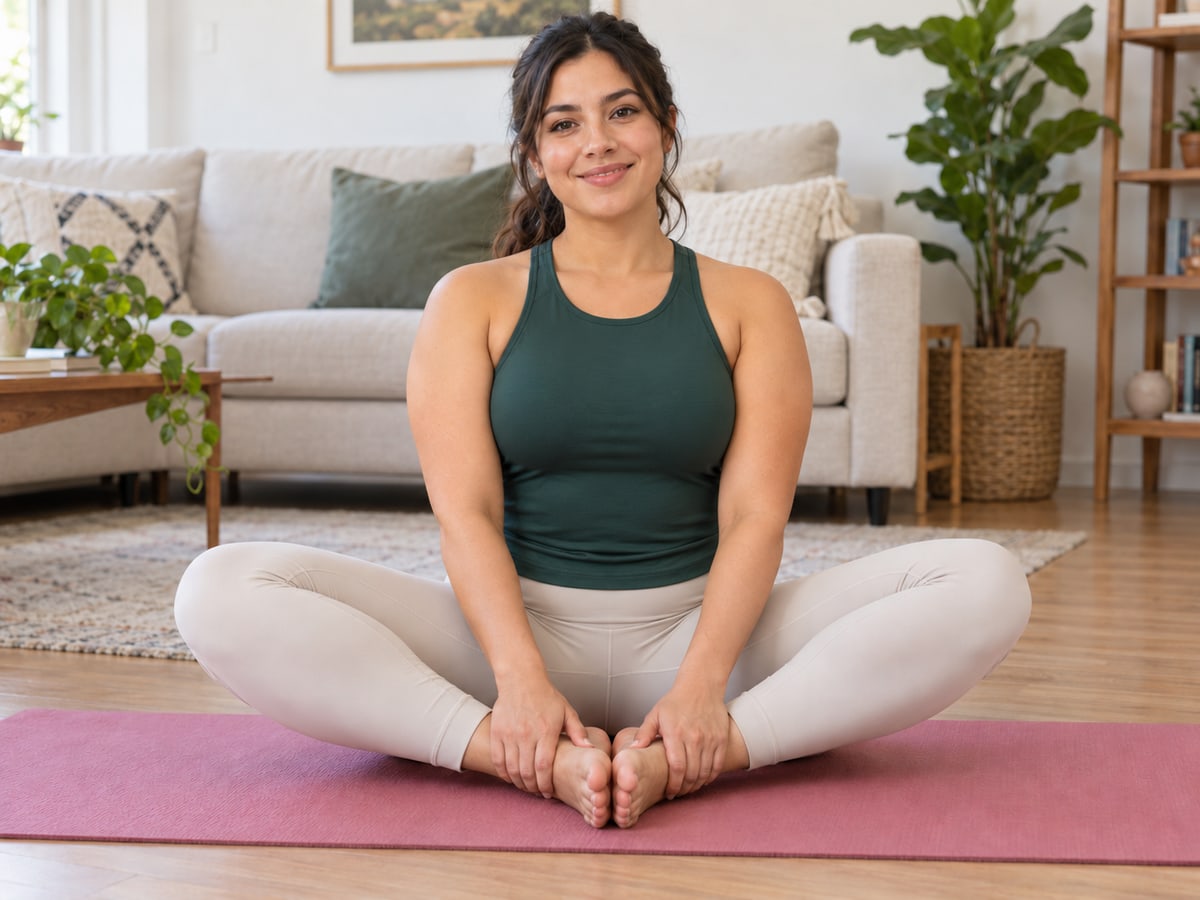
Want ten minutes of home yoga without a plank, Downward Dog or a standing balance? This suggested session stays seated for the first half and then moves to a comfortable reclined position. It gives you a specific sequence rather than another list of poses to choose from. You need a clear, dry patch of floor and a mat that lies flat. A folded blanket can make sitting more comfortable; it is optional.
This is a general practice suggestion for adults who already know how to get down to and up from the floor comfortably. It is not designed to treat wrist pain or any other symptom. If you have an injury, are pregnant, or have a condition that affects movement, ask a qualified instructor or health professional how to adapt a practice for you. The US National Center for Complementary and Integrative Health advises qualified instruction and appropriate modifications for individual needs.
Set up before the clock starts
Place your mat on a dry, even floor and leave enough space on both sides for your arms and legs. Use the side of the mat that will not slide. Set a quiet timer where you can hear it without repeatedly turning your head. Avoid putting the mat where furniture blocks your roll to either side. A sofa in the photograph is part of the room, not a support for this routine.
Choose a comfortable seated position. For the butterfly pose pictured, bring the soles of your feet together and let your knees fall only as far as comfortable. Hold your ankles lightly, sit tall and look forward or down without forcing a forward fold. If this shape does not suit your hips or knees, sit with both legs comfortably bent or extended. The photograph illustrates one moment, not a target depth for everybody.
A suggested ten-minute sequence
The clock below includes the warm-up, pauses and floor transitions. Use ordinary breathing and smaller movement than a photograph suggests. You can stop sooner; the goal is not to complete every minute regardless of how you feel.
0:00–1:00 — settle and warm up
Sit comfortably. Rest your hands on your thighs and notice where your seat and legs meet the mat. Roll your shoulders gently a few times. Keep your neck easy and breathe without holding or forcing it. This first minute is the warm-up.
1:00–3:00 — seated side bends
For the first 45 seconds, put one hand beside your hip without loading the wrist and reach the other arm gently overhead as you lean a little to the side. Use 15 seconds to return to the middle and pause. Repeat on the other side for 45 seconds, then take another 15 seconds to reset. If lifting an arm is uncomfortable, keep both hands on your thighs and make a smaller side lean.
3:00–4:30 — easy butterfly pose
Bring your feet together if comfortable, hands lightly around the ankles. Spend 30 seconds sitting tall, then 30 seconds gently inclining from the hips only if you want to, then return upright. Use the last 30 seconds to let your legs relax. Do not push the knees down or pull yourself forward. A relaxed cross-legged or long-leg seat works as an alternative.
4:30–5:30 — transition onto your back
Use a full minute to uncross your legs, turn onto one side and lower yourself carefully onto your back with your knees bent and feet resting on the mat. Use your hands to help with the transition as needed; this is not a hands-free challenge. If getting to the floor is difficult, choose our chair-yoga guide instead.
5:30–7:30 — gentle reclined leg movements
Keep one foot grounded while you slowly draw the other bent knee a little toward your torso, then return the foot to the mat. Use 45 seconds on one side, 15 seconds to rest, 45 seconds on the other and 15 seconds to rest. Keep the range small and comfortable. If even a small movement does not feel right, leave both feet down and rest.
7:30–9:00 — rest on the mat
Choose either bent knees with feet down or legs resting as you prefer. Let your arms rest somewhere easy rather than reaching overhead for a shape. Spend 90 seconds noticing ordinary breathing. There is no need to produce a particular calm feeling.
9:00–10:00 — roll to the side and finish
Roll onto one side, pause, then use your hands to come up slowly into sitting. Take the remaining time to settle before standing. If you need more than one minute, take it: the schedule is a suggestion, not a reason to rush a difficult transition.
How this differs from our other short Yoga guides
Yesterday's no-kneeling home session stays standing and uses a wall. This one stays on the floor and avoids planks and Downward Dog; the core question is how to use ten minutes when you want seated and reclined options. Our morning yoga plan gives a flexible structure rather than this timed sequence. A chair-based alternative is linked above when floor access is the main constraint.
Stop and adapt
Stop if you feel pain, dizziness or unwell. Do not use this article to exercise through a symptom or replace individual advice. NCCIH safety guidance notes that yoga styles and individual needs vary, and that qualified instruction can help beginners choose suitable practices. The exact timings and sequence here are editorial suggestions, not a studied treatment protocol or a promise of weight loss. The feature image is an AI-generated photograph of a fictional adult model practising butterfly pose.