Articles are currently available in English.
Exercise
10-Minute Home Workout for Women: Kitchen-Counter Plan
By Sweat & Snack · 2026-10-27
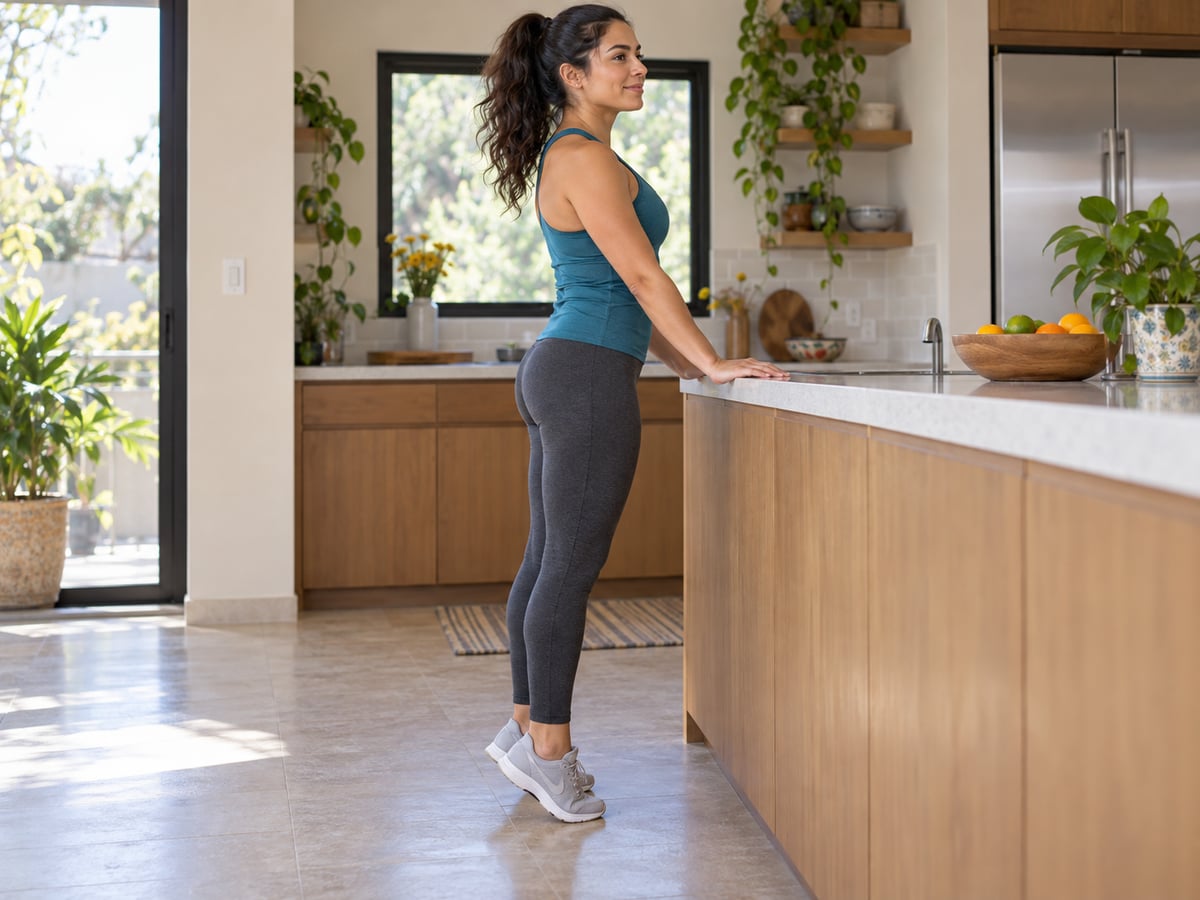
If you want a quiet ten-minute home workout without jumping or lying on the floor, a clear space beside a fixed kitchen counter can be a practical setting. This suggested session uses small mini-squats, calf raises and side-leg lifts, with a short warm-up and a slow finish. It is intended for adults who can stand comfortably and use light support.
The title speaks to women looking for a home routine, but women do not all need the same exercises or intensity. Choose movements that suit you. This is general guidance, not rehabilitation, pregnancy or postnatal advice, or a promise of weight loss. Get individual advice first if an injury, recent surgery, balance concern or health condition affects what activity is appropriate.
Use the kitchen only when it is a suitable exercise space
Before starting, switch cooking off and keep away from hot surfaces, knives, open appliances and trailing cables. Dry the floor and clear enough room to step to either side without contacting cupboards or furniture. Keep children and pets out of that small area while you move. If the kitchen is busy, choose another room rather than exercising beside someone cooking.
Use only a fixed counter that does not shift when you place a hand on it. A wheeled island, folding table or unsecured rolling chair is unsuitable support. Light contact is the aim; do not hang from the edge. Wear comfortable clothes and footwear that stays secure on your floor. Move a loose kitchen mat away if it slips. Read the three movements before starting the timer.
Ten minutes, including every rest
| Clock | What to do |
|---|---|
| 0:00–2:00 | Easy warm-up: small marching steps, then slower weight shifts |
| 2:00–5:00 | Round one: mini-squat, calf raise, side-leg lift, one minute each |
| 5:00–8:00 | Round two: the same three one-minute blocks |
| 8:00–10:00 | Slow marching or supported standing, then an upright finish |
Each one-minute exercise block contains up to 30 seconds of controlled repetitions and 30 seconds of rest and repositioning. Two rounds therefore contain six minutes: three movements × two rounds × one minute. Together with the two-minute warm-up and two-minute finish, that totals ten minutes. Rest longer by shortening a movement interval, not by rushing the next one.
0:00–2:00: Ease into standing movement
March slowly beside the counter for the first minute, lifting each foot only a little. Keep one hand nearby if wanted. For the second minute, reduce the steps to gentle weight shifts while both feet stay close to the floor. Let the arms rest naturally. Choose a pace that lets you breathe comfortably. Easier option: small alternating heel lifts with toes on the ground, or supported upright standing.
Mini-squat: first minute of each round
Stand hip-width apart facing the counter with hands lightly supported. Bend the knees a small comfortable amount, keep the heels down and come back upright slowly. Avoid dropping into a deep squat. Move for up to 30 seconds, then rest upright for the remaining 30. Easier option: a very small knee bend or simply supported standing.
Calf raise: second minute of each round
With feet about hip-width apart and hands lightly on the counter, lift both heels a little and lower them under control. Do not bounce or try to rise as high as possible. Use up to 30 seconds, then rest for 30. Easier option: make a much smaller lift, or keep both feet flat for this interval.
Side-leg lift: third minute of each round
Keep light support and a comfortably upright trunk. Move one leg a small distance sideways, return it and change sides. Keep the pelvis level instead of leaning to gain height. Alternate slowly for up to 30 seconds, then rest for 30. Easier option: slide or tap the toes out to the side while keeping them on the floor.
These are small controlled movements, not a race for a repetition count. The NHS strength-exercise resource explains the underlying movements. This article changes their arrangement, uses a fixed counter and adds a specific clock; it does not reproduce the NHS exercise prescription.
8:00–10:00: Slow down and finish
Spend the first minute marching more slowly or standing with light support. Spend the last minute standing comfortably, lowering the arms and noticing whether you want to sit on a stable chair. Keep breathing normally. This is already part of the ten minutes; no extra round is needed.
Make the session easier before making it longer
Your first attempt could use ten seconds of a movement and fifty seconds of rest in each one-minute block. You can also do only the first round and finish early. Keep a note of which movement felt clear and which needs a trainer's explanation. Our beginner workout log helps you record what you actually did rather than what the plan suggested.
Stop if you develop pain, dizziness, numbness, unusual breathlessness or instability. Do not work through symptoms to complete the clock. Seek appropriate professional help for concerning or persistent symptoms. The counter is a support option, not a guarantee against losing balance.
How this differs from a desk break
The desk-mobility routine focuses on a workday movement break with shoulder and upper-back movements. This home session repeats three standing leg exercises in timed rounds. The walking-break guide is a separate option when a walk fits better. Choose the setting and purpose you need that day.
CDC guidance says activity can be spread across the week in smaller chunks. That does not establish that this light routine meets your full weekly activity needs or counts as moderate exercise for you. Build a broader plan around activities and support appropriate to your situation.
Movement and weekly context sources were checked on 27 October 2026. The routine and timing are original editorial suggestions, not an individually assessed program. The AI-generated photograph depicts a fictional young adult model in fitted activewear at a clear kitchen counter.