Articles are currently available in English.
Yoga
Cross-Legged Yoga Seat: A Blanket or a Chair?
By Sweat & Snack · 2026-10-31
When a yoga video begins with “sit comfortably”, you may spend the opening minute rearranging your legs. A cross-legged seat is one option, not an admission test for the rest of the practice. This guide helps you compare a firm folded blanket with a stable chair before deciding where to sit.
The suggested ten-minute check is for adults beginning a seated home practice. It includes preparation, gentle shoulder movement, short sitting attempts, a leg change and time to move between supports. It is not ten minutes of holding one position. You can use a chair throughout, finish early or ask an instructor to help before trying the floor option.
Decide whether to try the floor
If getting down to or up from the floor is difficult, start on a chair and skip the floor comparison. If you are pregnant, injured, recovering from surgery or managing a condition that affects movement, seek individual guidance. NCCIH recommends qualified instruction and adaptations to individual needs. Stop for pain, tingling, numbness, dizziness or feeling unwell; changing the furniture is not a way to exercise through symptoms.
Arrange two simple options
Place a non-slip mat on a dry, level floor. Fold a clean blanket into a broad, firm, even support, with loose edges tucked away. Avoid a tall, soft pile that shifts when you move. Leave enough room to uncross and extend your legs. Keep a stable, non-folding, non-wheeled chair nearby on a surface where it will not slide. Choose a chair height that lets both feet rest fully on the floor. A chair with a usable backrest gives you somewhere to rest between attempts.
Put the timer within hearing distance. If arranging the room takes longer than the first minute below, allow more time and shorten or skip the sitting attempts. Finishing at exactly ten minutes matters less than moving without rushing.
What changes between the seats?
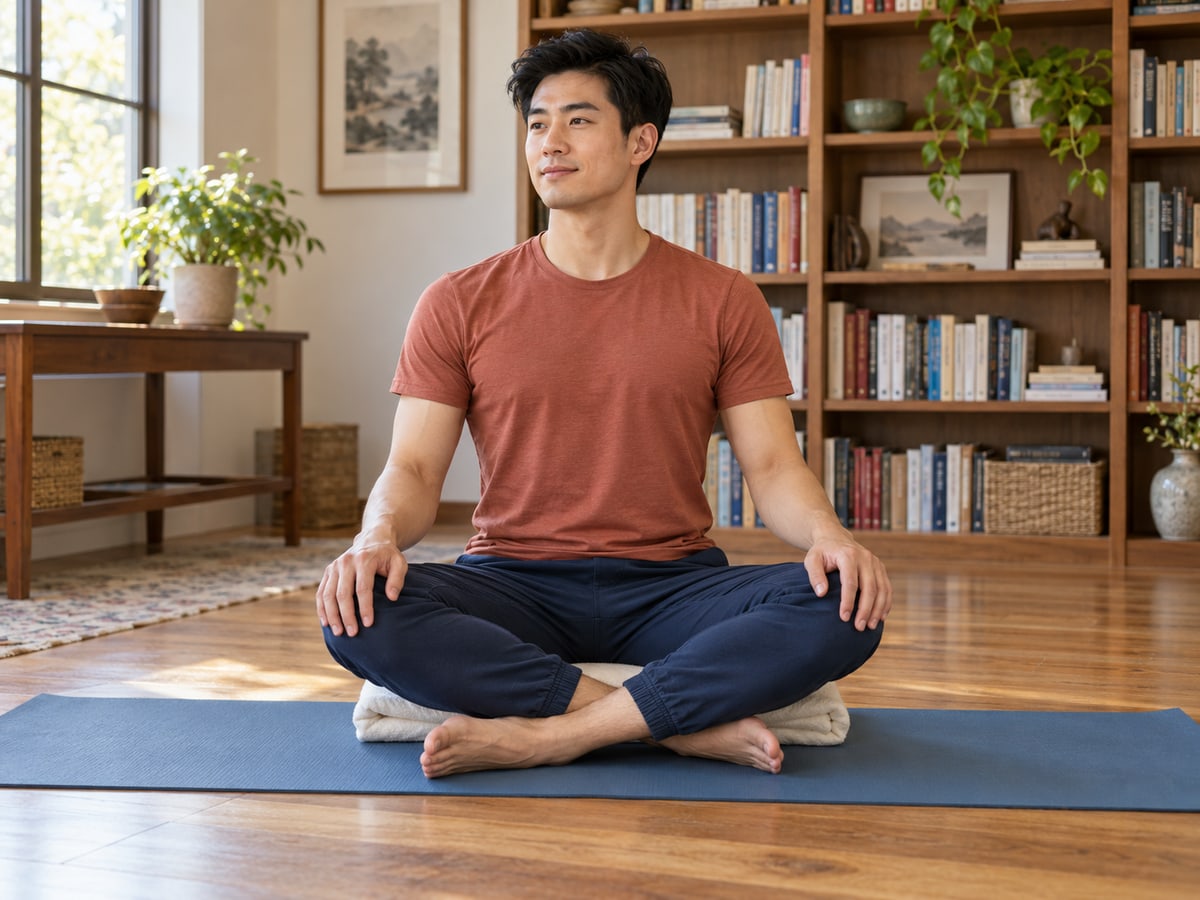
In an easy cross-legged seat, the shins cross loosely and the feet stay below the opposite legs, rather than on top of the thighs. A folded blanket raises the seat; a chair removes the need to cross the legs. Change which shin is in front when repeating the floor option. These are teaching options described in Yoga Journal's Easy Pose reference, not evidence that either seat treats a health condition.
Rest your hands lightly on your thighs. Let your shoulders settle and keep breathing ordinary. Avoid forcing the knees down, pulling the feet inward or bracing into a rigid upright shape. The useful question is whether you can sit without straining. The model's position and blanket height are illustrations, not measurements to reproduce.
A ten-minute setup check
Each window includes its pauses. If you choose the chair throughout, use the floor windows for short comfortable chair sits separated by rests against the backrest. There is no requirement to try both supports.
0:00–1:00 — prepare
Check the floor, chair and folded blanket. Clear the route between them. Begin in your already comfortable seat; do not hurry down to the floor for the timer.
1:00–2:00 — settle and warm up
Rest your hands on your thighs and make a few small shoulder rolls if comfortable. Let them stop, notice your ordinary breathing and check that nothing in the setup is slipping. Keep your neck relaxed.
2:00–4:00 — first supported seat
If floor access is easy, sit on the front portion of the firm blanket and loosely cross your shins. Try a brief sit of about twenty seconds, then uncross and rest with your legs in a comfortable position. Repeat only if it feels suitable, using the remaining time for pauses. Keep your hands available to help with position changes. On the chair path, keep both feet grounded and rest against the backrest whenever needed.
4:00–5:00 — uncross and pause
Release the leg position slowly. Do not use your hands to push down a knee. Notice whether you want to continue, adjust the support with guidance or use the chair. Needing another option is useful information.
5:00–6:00 — change the leg order, if suitable
Cross the shins the other way for one short comfortable attempt, then release and rest. The two sides may feel different. Do not force them to look symmetrical or keep going to make the time equal. If the first attempt was uncomfortable, skip this comparison.
6:00–8:00 — move to the chair
Use the whole window to uncross, get up in your familiar safe way and sit on the chair. Use support as needed and take longer if necessary. Once seated, place both feet on the floor and hands on your thighs. If you were already using the chair, pause against its backrest rather than adding extra movement.
8:00–10:00 — choose and finish
Try a short chair sit without gripping or holding your breath, then rest against the backrest. Finish by noting which setup you would use for the opening of your next class. Stay seated longer if you need time before standing. This clock is an editorial practice suggestion, not a tested protocol or a promise of improved flexibility.
What to bring to an instructor
A useful note is specific: “I could sit briefly on one blanket, but wanted to uncross quickly”, or “the chair let me focus without rearranging my feet”. Ask the instructor to check the support and offer another position when needed. You do not need a deeper stretch as proof that a setup is working.
For the equipment overview, see blocks, straps and blankets. For a complete practice that stays off the floor, use our chair-yoga guide. Our transition guide helps you leave room between shapes. This article concentrates on choosing the starting seat rather than adding another flow.
Sources checked 31 October 2026. Photographs show a fictional AI-generated adult; they are not an individual movement assessment. No pain treatment, posture correction or health result is promised.