Articles are currently available in English.
Yoga
Yoga Transitions Feel Rushed? Rehearse a Short Sequence
By Sweat & Snack Editorial Team · 2026-10-18
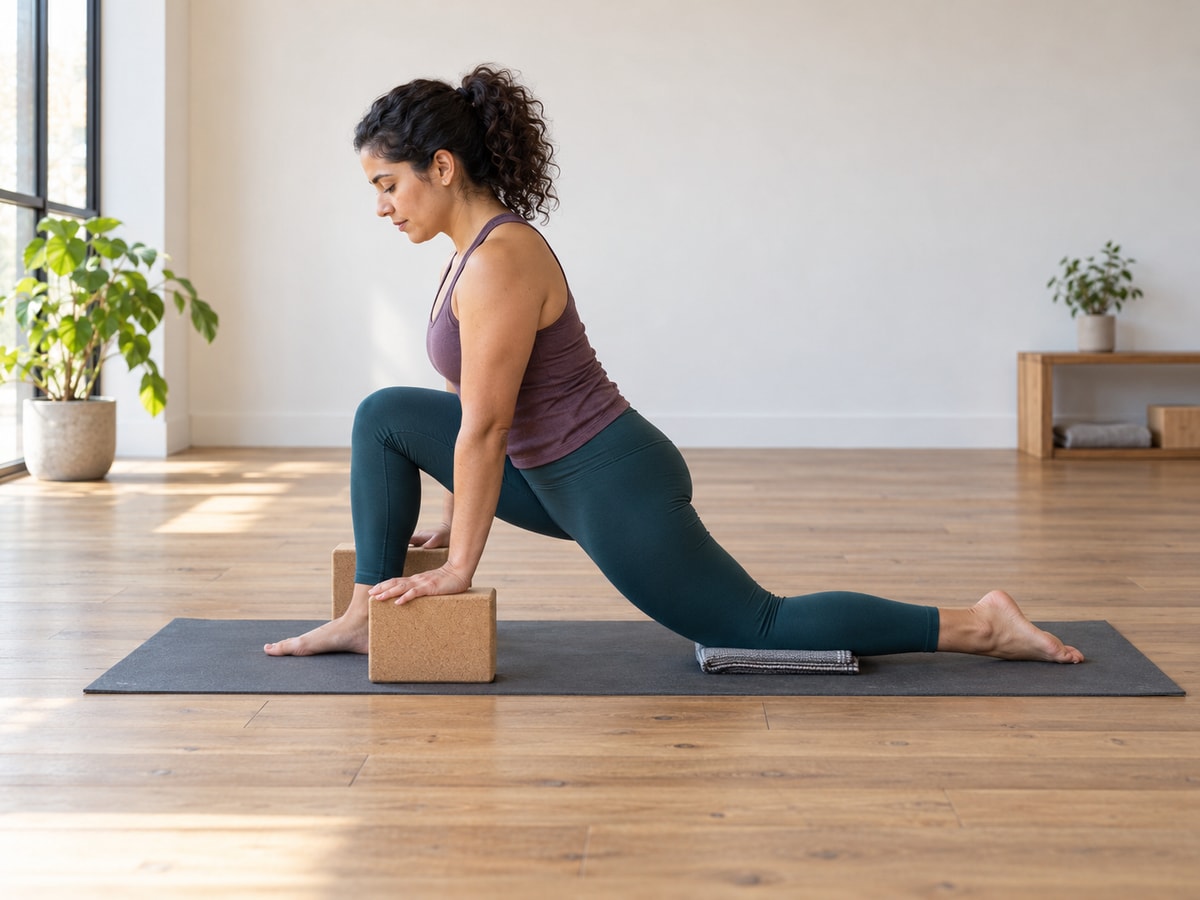
If you know the poses but keep rushing the movement between them, try rehearsing one familiar connection on its own. Choose the start and finish, decide where you can pause or reset, and leave the harder variation for another practice. You do not have to fit every transition into the pace of a video.
This is an intermediate practice-planning guide for adults who already have an instructor-taught sequence. The practice card below is a suggestion, not a tested training protocol or a promise of faster progress. If the postures themselves are unfamiliar, learn them with a qualified teacher before working on their connections.
Give the transition its own question
Instead of writing “improve my flow,” name the moment: “I rush when I bring a foot forward,” or “I lose track of the next step when I turn toward the long edge of the mat.” A useful practice question has a clear beginning and end.
Choose one connection from a sequence you already use. Our Surya Namaskar guide can help you identify the parts of a familiar sequence, but it is not a reason to add an unfamiliar movement today. You can also ask your teacher to select a connection that suits your practice.
Separate knowing the route from choosing the variation
Write down whether you are unsure what comes next, how to place a hand or foot, or which alternative to use. Those are different questions. Replaying the entire class is one option; a focused question for the teacher is another. Avoid assuming that an awkward transition proves you need more flexibility or strength.
Make a small practice card
Use paper or a note on your phone. Fill it in before you begin, so the next action is already decided. Here is a suggested template:
- Connection: the two familiar positions I am linking.
- Setup: the space, mat and any teacher-recommended support I need.
- Pause or reset: the familiar position or alternative I can return to.
- One cue: the single instruction I want to remember.
- Next question: what I will ask if the connection remains unclear.
Keep your normal preparation and closing practice. This card is a small part of a session, not a replacement for the whole class. For example, you might explore the connection twice, pause, and decide whether another attempt is useful. Two is an illustrative choice, not a required dose.
Plan a reset before trying to keep up
For a concrete example, yoga teacher Esther Ekhart discusses the familiar step from Downward Dog toward a lunge. Her published teaching guide includes bringing the back knee down first if the alternative feels unstable. That is an instructor's modification example, not evidence that one route suits every body.
If this connection is already part of your practice, ask your teacher to show the route and reset they recommend for you. Do not turn the example into a challenge to land the foot between the hands in one movement. If it is unfamiliar, choose a different connection you have already learned.
Place any supports before starting. Our yoga props guide gives questions to ask about blocks and other equipment; buying a prop does not determine which transition you should practise.
Progress by changing one decision
First pass: keep the pause
Use the familiar alternative and allow the reset. Your question is simply whether you understand the route. Keep breathing comfortably rather than stretching a breath to match an imagined count. Stop the attempt if you feel pain, dizziness or an inability to continue comfortably.
Next practice: link a little more
If the route feels clear and appropriate, a possible next step is to connect it to one neighbouring familiar posture. Keep the same support and pace. Alternatively, keep the short connection and ask your teacher about a different support. Choose one change so your note describes what you actually tried.
Experienced option: refine the cue
A more experienced practitioner can keep the same postures and compare two teacher-provided cues on separate attempts. Write which cue was easier to follow. There is no need to add a jump, balance or deeper posture to make the session worthwhile.
Use one note to plan the next session
A useful note might read: “Step-forward connection; used the agreed knee-down reset; unclear where to place my hand; ask before repeating.” It records a decision and a question, without scoring your body or claiming a result.
If a video moves ahead, pause playback or choose a class with demonstrations and alternatives. The video-selection checklist is also useful for regular practitioners choosing an unfamiliar teacher.
Keep the safety boundary clear
NCCIH's yoga safety guidance recommends qualified instruction and explains that injuries can occur. Pregnancy, existing injuries and other health circumstances may require individual modifications and advice from a health professional and instructor. A slow pace alone does not establish that a movement is suitable.
For pain or a health concern, stop experimenting and seek appropriate advice. Bring your practice card to a teacher; our class questions guide can help you ask about their experience and available alternatives.
Turn a useful note into a routine
Keep the card for your next class rather than adding several new goals. Interested in Sweat & Snack's planned tools for organising movement and daily routines? Join the app waitlist for product updates.
Sources
Sources checked on 18 October 2026. The practice card and progression choices are editorial suggestions; the sources do not validate this specific plan.
NCCIH: Yoga — Effectiveness and Safety
NCCIH: Five Things You Should Know About Yoga
Esther Ekhart / YogaEasy: Stepping Forward to Lunge