Articles are currently available in English.
Recipe
Puffed Rice & Peanut Snack: Pack It, Then Mix It
By Sweat & Snack · 2026-10-23
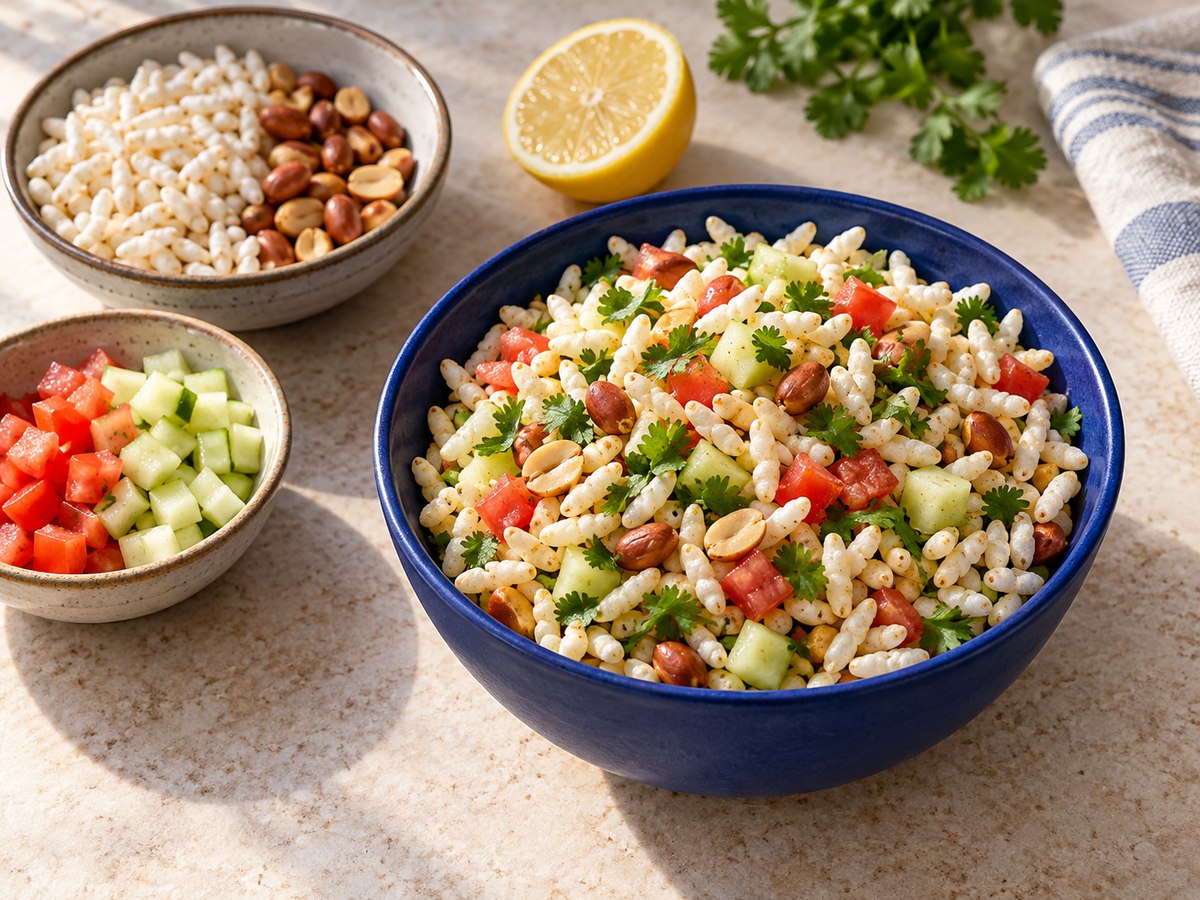
For a puffed-rice snack that you can prepare in parts, keep the rice and peanuts dry, the chopped vegetables chilled, and the lemon separate until you want to eat. Tip the components into a bowl, season lightly and mix just that portion. The packing method is the point: preparing ahead does not have to mean stirring everything together ahead.
This is our simple lemon-dressed, bhel-inspired combination, with no claim to be a traditional street-food recipe. It is a practical suggestion for a savoury afternoon snack or something you feel like eating after everyday exercise. It is not a prescribed recovery meal. For the snack-versus-meal decision, see workout done, dinner soon: snack or wait?
Ingredients for a small batch
Makes one generous snack bowl or two smaller bowls. Allow around 10–15 minutes for washing, chopping and assembly; your pace and equipment will affect the time.
- 2 cups plain, ready-to-eat puffed rice, loosely filled, not crushed
- 3 tablespoons unsalted roasted peanuts, roughly chopped
- 1 small tomato, about 80 g before trimming
- Half a small cucumber, about 80 g before trimming
- 2 tablespoons chopped fresh coriander, optional
- 1 teaspoon lemon juice to start, plus more to taste
- Quarter teaspoon ground roasted cumin
- A small pinch of salt, optional
- A small pinch of chilli powder, optional
Choose plain puffed rice intended to be eaten as sold, rather than dry uncooked rice or flattened rice flakes. Look for it in the cereal or South Asian grocery section; it may be labelled murmura or mamra. Check the packet for ingredients and storage instructions. This recipe uses roasted, ready-to-eat peanuts, not raw peanuts that still need cooking.
Method: prepare, separate, combine
- Set up clean equipment. Wash your hands and use a clean knife, board, mixing bowl and two lidded containers. Rinse the tomato, cucumber and coriander under running water, then dry them. FDA's produce handling guidance advises washing produce before preparing it and keeping equipment clean.
- Make the dry component. Put the puffed rice and roasted peanuts in a clean, fully dry container. Keep the lid on while you prepare the fresh component. Follow the rice and peanut packets' storage instructions.
- Dice the fresh component. Cut the tomato and cucumber into small pieces, roughly the size of a peanut half. If the tomato has a very watery centre, set the loose seed pulp aside for another dish. Put the diced vegetables and coriander in the second container and refrigerate promptly if not eating immediately.
- Portion before dressing. When ready to eat, put half or all of the dry mixture in a wide bowl. Add the matching share of vegetables. Start with less fresh mixture if you prefer a drier bowl; keep any remainder chilled.
- Season at the last moment. Add the cumin, optional salt and chilli, then the lemon juice. Toss briefly, taste a spoonful and add a little more lemon only if wanted. Eat the portion straight away rather than storing it dressed.
Choose your texture before adding more lemon
If the bowl feels too wet
Our suggestion is to pause before squeezing in more juice. Add some reserved dry mixture if available, or make the next portion with fewer watery tomato pieces. Extra seasoning cannot reverse a bowl that is already soft. Make a smaller mixed portion next time and leave the components separate.
If it tastes too plain
Try a little more cumin or coriander first, then a few drops of lemon. Taste between additions. These are flavour preferences, not nutrition upgrades. You can also leave out chilli entirely; the recipe does not depend on heat.
Pack ahead without confusing dry with shelf-stable
The dry tub and fresh tub have different storage needs. A lid keeps them apart; it does not make chopped vegetables suitable for an all-day unrefrigerated bag. Keep the fresh component at or below 4°C (40°F), and use appropriate cold transport if taking it away from home. If you cannot keep it cold, choose another snack or prepare the vegetables where you will eat. Our no-fridge journey guide covers that separate planning question.
FDA storage guidance limits foods needing refrigeration to two hours at room temperature, or one hour above 32°C (90°F). Count the time spent preparing, travelling and serving together. Discard perishable components that exceed those limits. Adding lemon is a flavour step, not a substitute for refrigeration.
For this small recipe, our suggestion is to chop only what you plan to eat that day and keep it chilled until assembly. That is a planning preference, not a tested shelf-life guarantee. Store unused dry ingredients according to their labels. We do not recommend saving an already dressed bowl for its texture.
Substitutions and serving notes
For a peanut-free version, omit the peanuts or use a ready-to-eat seed you personally tolerate; check ingredient and cross-contact information for your needs. See our dietary considerations page for general planning context. The replacement changes the recipe and should not be assumed nutritionally equivalent.
If coriander is unavailable, leave it out. If puffed rice is unavailable, choose a different snack rather than swapping in uncooked rice. For a warm cooked-flake option with a different method, try peanut-lemon poha for one.
No calorie or protein total has been calculated for this recipe. Nutrient values vary by brand, serving size, preparation and any substitutions; a loosely filled cup is not a standardized weight. Use the nutrition reference page for broader food context rather than treating this bowl as a guaranteed post-exercise formula.
Want help fitting practical snacks into your week? Join the Sweat & Snack app waitlist for future planning tools. Keep today's action simple: dry tub, chilled fresh tub, lemon at the end.