Articles are currently available in English.
Exercise
Sit-to-Stand Break: Ten Minutes With a Stable Chair
By Sweat & Snack · 2026-11-03
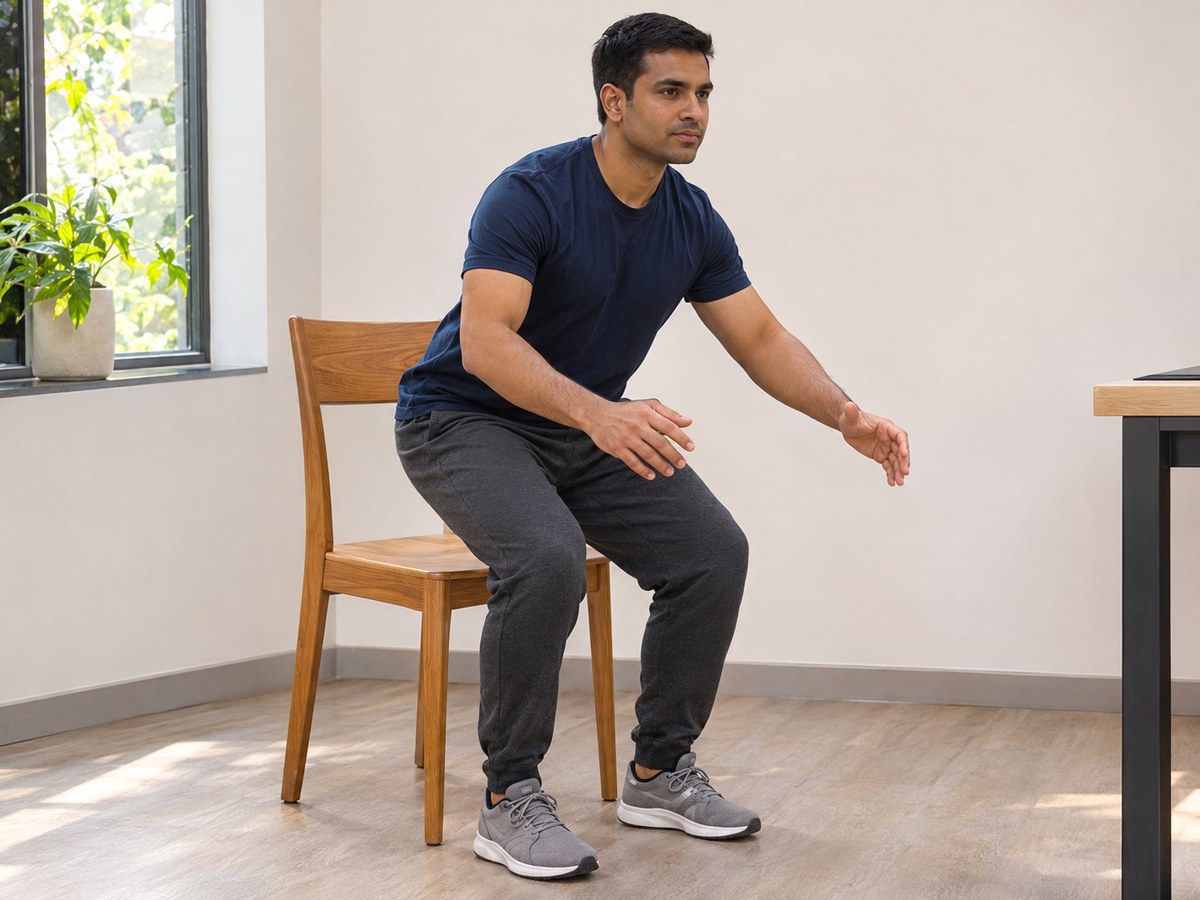
A rolling desk chair is useful for working at a computer and a poor choice for a repeated sit-to-stand break. Before counting repetitions, choose a fixed seat and enough space to stand without bumping a desk. That simple equipment decision is the starting point for this ten-minute office session.
The plan is a short practice of standing from a chair and sitting down under control. It is not a fitness test, a calorie challenge or a substitute for a complete weekly programme. Use it only if ordinary sitting and standing are comfortable for you. Someone with balance concerns, an injury, recent surgery or movement restrictions should ask a qualified professional about a suitable version first.
Choose a chair that stays where you put it
Use a solid, armless chair with four fixed legs. Place its back against a wall, check that it does not rock and make sure the feet do not slide on the floor. Avoid wheels, swivels, soft sofas, folding seats or a desk whose stability you have not checked. Move bags and cables away from your feet.
The NHS strength-exercise guide describes sit-to-stands with a stable, non-wheeled chair and feet flat on the floor. It suggests a slight forward lean, a slow rise and a controlled return. Our timed office format below is an editorial suggestion, not the NHS's prescribed session.
Rehearse one repetition before doing a set
- Sit near the front of the seat with both feet flat, about hip-width apart. Check that the chair height lets you sit comfortably rather than dropping into a very low position.
- Lean your torso forward slightly and rise smoothly, keeping your gaze forward. Do not throw your arms or bounce off the seat to gain momentum.
- Stand comfortably upright without leaning far backward. Pause long enough to know you are balanced.
- Move your hips back toward the seat and lower under control. Make contact with the chair gently, settle and reset your feet before another repetition.
If this is unfamiliar, ask a qualified coach or physiotherapist to check the movement. The photograph shows a moment during a rise, not a depth target. A comfortable higher fixed chair or fewer repetitions may be appropriate; piling loose cushions onto a chair creates a different stability problem and is not the adjustment used here.
The whole ten-minute clock
| Time | Suggested task |
|---|---|
| 0:00–1:00 | Check the chair, wall, footwear and clear floor. Sit and stand once only if comfortable. |
| 1:00–3:00 | Warm up with easy walking in the cleared space and relaxed shoulder movements. Do not hurry. |
| 3:00–4:00 | Rehearse up to three slow sit-to-stands, then use the rest of the minute to pause. |
| 4:00–7:00 | Three one-minute blocks: allow up to30seconds for three to five controlled repetitions, then rest for at least30seconds. Stop the repetitions earlier if needed. |
| 7:00–9:00 | Easy walking or a seated rest. Change position slowly; this is recovery time, not bonus repetitions. |
| 9:00–10:00 | Finish seated or standing comfortably and note whether the chair and movement worked for you. |
Warm-up, rests and transitions are already included. If three repetitions take longer than the movement block, do fewer. Do not accelerate to fit five into30seconds. The clock sets a ceiling for this break; it does not create an obligation to complete every block.
Make a useful easier choice
Reduce the number of repetitions first and leave the rest of the block as rest. If you cannot stand smoothly without a push or loss of balance, do not keep trying to meet this article's version. Seek individual guidance on appropriate hand assistance or another movement. A seated rest is always an acceptable way to finish.
Stop for pain, dizziness, chest discomfort, unusual breathlessness or instability. Concerning symptoms need appropriate medical attention. Office clothing and shoes should let you move and grip the floor securely; change the plan if they do not. Do not add weights, hold a laptop or balance a drink while practising.
Progress the record before the difficulty
Write down the chair used, repetitions completed and how controlled the return felt. For example: “fixed meeting-room chair; three comfortable repetitions per block; long rests.” That tells you more than a total made up of hurried rises and dropped landings. Repeat a manageable version before changing anything.
This differs from our desk-mobility guide, which explores movement around sitting, and from the kitchen-counter session, which uses a different support. For a break without repeated chair rises, see walking in work clothes. You can join the Sweat & Snack waitlist for future planning tools.