Articles are currently available in English.
Nutrition
What to Drink Before a Workout: Start With the Session
By Sweat & Snack · 2026-10-31
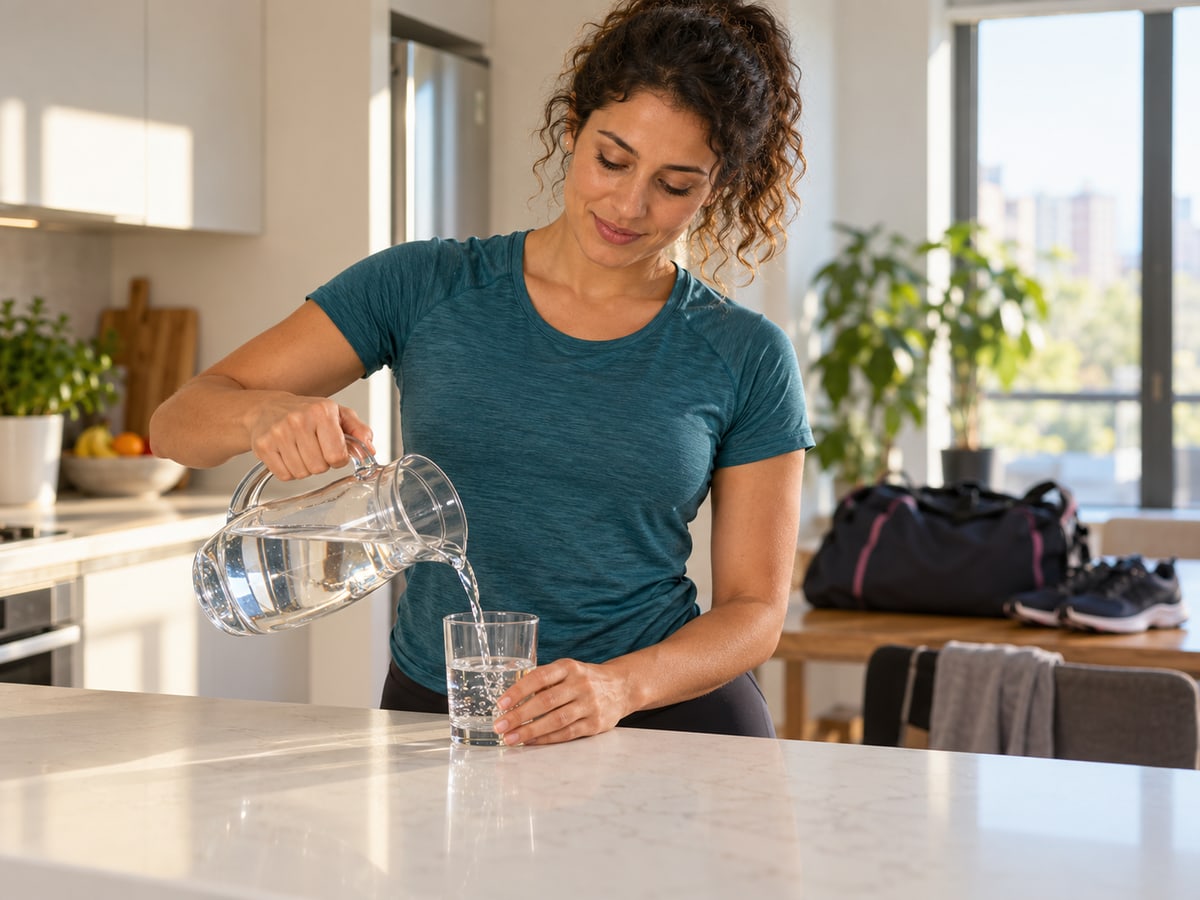
For a short everyday workout, plain water is a useful starting drink. You do not need to buy a special pre-workout beverage simply because you are about to move. The more useful question is whether your drink, access to refills and exercise plan fit the session ahead.
This guide is for generally healthy adults choosing an ordinary drink before exercise. It separates a brief indoor session from longer training and hot-weather activity. It is not an individual fluid prescription. If you have been given a fluid restriction or a medical drinking plan, follow that advice rather than a general workout article.
Make the decision before the last minute
Put water somewhere convenient during your normal day and pack a refillable bottle when leaving for training. Treat these as practical planning suggestions: they make access easier, rather than guaranteeing that a particular amount will suit you. There is no single glass size in this article that everyone must finish.
The Victorian government's Better Health Channel hydration guide recommends water before exercise and explains that fluid needs vary with health, clothing, climate, intensity and duration. A bottle that suited yesterday's cool indoor session is not an automatic plan for a long outdoor session today.
Three situations, three planning questions
| Session ahead | Useful starting point | Check before starting |
|---|---|---|
| Ten-minute home movement session in a comfortable room | Plain water, with access to more | Can you pause and drink comfortably when needed? |
| Longer, demanding training | A planned fluid strategy; a sports drink may have a role | How long and hard, how much sweating, and where are refills? |
| Exercise in heat or humidity | Water access plus a safer time, place and pace | Can you shorten, reschedule or move indoors? |
These are decision prompts, not three measured prescriptions. Start with the actual activity: a short mobility break, an extended training session and an outdoor event do not create the same demands.
When does a sports drink enter the conversation?
A sports drink commonly supplies carbohydrate and electrolytes as well as fluid. Better Health Channel says such drinks may be useful during moderate-to-vigorous activity lasting more than an hour. That does not mean crossing sixty minutes makes a special drink compulsory, or that you must drink it before every workout.
Look at the whole session and what you already plan to eat. If a carbohydrate-containing drink is part of a longer training plan, account for it alongside food rather than automatically adding both. For regular long or demanding sessions, a qualified sports dietitian can help make an individual fluid and fueling plan.
Our whole-fruit-before-workout guide answers the separate food question. A snack and a drink serve different practical purposes; choosing one does not settle the other.
Hot weather changes the exercise plan too
The CDC's heat guidance for athletes advises drinking more water than usual in hot conditions without waiting for thirst, choosing cooler times where possible and building activity gradually. More water is not permission to keep the same demanding session in unsafe heat.
Check your local forecast and the conditions where you will actually train. Late October may bring cooler weather in one region and spring heat in another; tropical humidity and indoor conditions need their own check. Use the forecast, room temperature and planned effort rather than the month or hemisphere alone.
If you feel faint or weak in the heat, stop activity and move somewhere cool. CDC advises immediate medical care for symptoms of heat-related illness. Do not try to solve a worsening situation simply by finishing another bottle.
Do you need a fixed amount before you begin?
This article deliberately gives no universal millilitre target. The HPRC basic hydration guide provides performance-oriented guidance in a military human-performance setting. Its numerical targets should not be copied unchanged onto every ordinary adult doing a short home session.
HPRC also warns that excessive water intake can be dangerous. Do not force large volumes to meet an arbitrary online challenge. If you repeatedly struggle with drinking, heavy sweating or long sessions, seek individual advice instead of escalating the amount by guesswork.
A practical before-you-leave check
- Name the session, expected duration and setting.
- Choose a familiar drink you tolerate; plain water is the straightforward default for a brief everyday session.
- Check the bottle, refill access and opportunities to pause.
- For heat, change timing or intensity as well as planning water.
- For prolonged or repeated demanding training, coordinate drinks, food and recovery with suitable professional guidance.
Afterwards, reassess what actually happened: the weather, effort, sweating and next meal may differ from your plan. See water or a sports drink after a short workout and whether to snack when dinner is soon for those separate decisions. There is no universal deadline here for everybody to eat or drink after exercise.
Photo note: the person and scene are AI-generated. The glass illustrates ordinary preparation, not a prescribed amount or a promise about health or appearance.
For drinks containing other ingredients, nutrient values vary by brand, serving and preparation; check the actual label. Connect drink choices with meals in our nutrition hub. For health-related constraints, see our conditions and individual-guidance overview.